
Structured Settlements 4Real®Blog 2026

Structured settlements expert John Darer reviews the latest structured settlements and settlement planning information and news, and provides expert opinion and highly regarded commentary. that is spicy, Informative, irreverent and effective for over 20 years.

  • 🧱 Why Younger Adults — and Their Attorneys — Are Re‑Evaluating Annuities in the Settlement Process

    By John Darer® CLU ChFC MSSC CeFT RSP CLTC

    Understanding the Younger Adults Annuities Settlement Process

    A recent InsuranceNewsNet article by David Hanzlik highlights a trend that has been quietly building: younger adults are increasingly open to risk‑managed products that offer stability and predictable income. Hanzlik frames younger investors as a generation shaped by volatility — and in the settlement world, that volatility is magnified.

    David Hanzlik’s June 23, 2026 article isn’t about structured settlements, but it highlights something attorneys should pay attention to: younger adults today think differently about stability, risk, and predictable income. That shift matters in the settlement process.

    🔍 ANGLE 1:Younger claimants face a different financial reality than their parents.

    1. They’re supporting aging parents

    Long‑term care costs are exploding. AARP and HHS data show that adult children — often in their 20s, 30s, and 40s — are becoming the default caregivers.

    2. They may need long‑term care themselves

    HHS reports that 40% of people needing long‑term care are under age 65. For a 28‑year‑old claimant, that’s not a distant risk — it’s a planning imperative.

    3. They’ve lived through market trauma

    They entered adulthood during:

    • The 2008 crisis
    • The pandemic crash
    • Inflation spikes
    • Crypto implosions
    • Meme‑stock mania

    They know markets can turn on a dime.

    4. They don’t want to “manage” money — they want predictability

    Younger adults can make impulsive financial decisions — anyone can. And in the secondary market settlement ecosystem, some actors at certain factoring companies exploit that vulnerability with deceptive sales practices. These include:

    • “From the Courts” texts, calls or mailers implying judicial authority
    • Faux front operations impersonating insurers
    • Claims of needing “registration” or “verification” to trigger a call
    • Urgency scripts designed to create false pressure
    • Authority mimicry meant to confuse vulnerable claimants

    These tactics don’t represent the entire industry — but they represent a real and documented subset of bad actors who target younger claimants precisely because they’re more susceptible to high‑pressure or official‑looking solicitations.

    A structured settlement annuity reduces that exposure:

    • It keeps things straightforward — more like pressing “brew,” less like managing a portfolio or decoding a physics textbook.
    • It doesn’t depend on market timing
    • It doesn’t disappear in a recession
    • It doesn’t eliminate high‑pressure sales tactics, but reduces the number of financial decisions that can be exploited — important even with SSPAs in all 50 states and DC, since some claimants still face aggressive outreach.

    It just pays. Predictably. Automatically. Backed by insurers—many of whom have been in business for over 100 years—without handing bad actors an easy opening. And for younger folks who want to know why that kind of staying power matters, see my Structured Settlement Annuity Issuer Longevity Rocks post.

    🔍 ANGLE 2: The Attorney Perspective — Protecting Clients and Reducing Future Liability

    Attorneys have a different set of pressures, and the InsuranceNewsNet article helps validate the conversation.

    1. Attorneys want to avoid future malpractice exposure

    A claimant who burns through cash and later blames the lawyer is a recurring nightmare.

    Annuities — especially structured settlements — provide:

    • Documented prudence
    • Predictable income
    • A buffer against future disputes

    2. Attorneys want to demonstrate holistic advocacy

    Younger clients expect:

    • Guidance
    • Education
    • Protection
    • A plan

    Ignoring financial structure risks appearing transactional.

    3. Attorneys want to reduce emotional volatility on settlement day

    Younger claimants often:

    • Overestimate their ability to manage money
    • Underestimate long‑term care risks
    • Get overwhelmed by lump‑sum decisions

    Annuities simplify the conversation:

    “Here’s the part of your settlement that will always be there for you.”

    4. Attorneys want to align with modern financial planning

    Hanzlik’s article makes it clear: RILAs and indexed annuities are no longer “retirement products.” They’re risk‑managed growth tools.

    5. Attorneys want to avoid the ‘cash‑out regret’ phenomenon

    Younger claimants who take lump sums often:

    • Spend too fast
    • Get pressured by family
    • Get targeted by factoring companies
    • Lose eligibility for benefits

    Attorneys know this. Annuities help prevent it.

    🧱 ANGLE 3: The Industry Perspective — Blanchett’s Research Confirms the Trend

    David Blanchett, PhD, CFA, CFP®, has repeatedly demonstrated that younger individuals often derive more value from annuitization than older individuals because:

    • Mortality credits compound longer
    • Guaranteed income offsets more years of volatility
    • Longevity insurance is more valuable earlier

    This dovetails perfectly with the InsuranceNewsNet article’s thesis: Younger adults want resilience, not just returns.

    And for those who qualify structured settlements are the purest form of resilience.

    Because unlike retail annuities, structured settlements offer:

    • Income‑tax‑free payments for payments for damages under IRC §104(a)(2) for personal physical injury or physical sickness, and/or under IRC §104(a)(1) for workers’ compensation.
    • No contribution limits — the settlement amount, the choices made, and the agreement of the parties determine the funding, not annual caps.
    • No direct market exposure — even index‑based structured settlements use an index as a crediting reference, not as an investment or asset pool.
    • No behavioral risk — no allocation decisions, no timing decisions, no “should I rebalance?” moments.
    • No temptation to “manage” anything — the structure removes decision‑points that can be exploited.
    • Court‑approved protection — especially for minors and many adult settlements requiring judicial review.
    • A payment obligation backed by highly regulated life insurers — subject to capital, reserve, and solvency oversight.

    It is resilience in its most literal, financial, and behavioral form.

    🔍 ANGLE 4: Two Distinct Product Paths for Younger Claimants

    Younger adults are not a monolith. Their needs fall into three broad categories:

    🧱 PART A — Traditional Fixed Structured Settlements (The Core)

    The foundation. The workhorse. The default for decades.

    A structured settlement provides stable, predictable income streams — current or future — that can be used to support a wide range of needs over time.

    Claimants benefit:

    • Guaranteed payments, backed by the full faith and credit of the issuing insurance company
    • No volatility once locked‑in and ultimately funded; a lock‑in preserves rates, but the protection is lost if the case is not ultimately funded.
    • In wrongful death cases where an insurer or defendant agrees to prefund the structure, the claimant can effectively not lose interest while a settled case winds its exhaustive path through multiple courts for approval (for example, in New York, from county Supreme Court approval through final resolution in Surrogate’s Court, which can take years).
    • Customized income streams — income‑tax‑free when damages qualify under IRC §104(a)(1) or §104(a)(2), and tax‑deferred when they do not. In some situations, new legislation may provide tax‑favored treatment for specific categories of damages, and structured settlements can operate within those statutory provisions once enacted.
    • Ideal for minors and vulnerable adults (court oversight; fewer financial decision‑points)
    • Can be helpful in long‑term care planning by providing stable, predictable income that supports ongoing care needs, or the funding of long‑term care insurance premiums, or premiers for life insurance with long‑term care components — without introducing market or behavioral risk

    Who this path fits:

    • Minors
    • Claimants with disabilities
    • Claimants with long‑term care needs
    • Claimants supporting aging parents
    • Claimants vulnerable to exploitation

    Why attorneys like this path:

    • It’s defensible
    • It’s predictable
    • It reduces future disputes
    • It protects vulnerable clients

    🧱 PART B — Index‑Based / Index‑Linked Structured Settlements

    Pacific Life • Prudential • Independent Life

    These are still true structured settlements, but with index‑based crediting strategies. All three annuity issuers offering index based structured settlement solutions sought and received Private Letter Rulings supporting their product designs.

    Why younger claimants benefit:

    • Potential for higher long‑term payouts
    • Still income tax‑free when payments represent excludable damages.
    • Stable payment streams and guaranteed lump sums provide a known baseline.
    • Still reduces behavioral risk
    • Still court‑approved for minors, incompetents, and in wrongful death cases.

    Who this path fits:

    • Younger claimants with long time horizons
    • Claimants who want inflation‑sensitive growth
    • Claimants who want no direct market participation, but are comfortable with index‑based crediting method that provides upside potential without exposing the claimant to market losses.
    • For some claimants, it may provide a more compelling narrative than a strictly “fixed‑only” structure.

    Why attorneys like this path:

    • It blends certainty with opportunity
    • It aligns with modern financial planning
    • For some attorneys, it may provide a more compelling narrative than a strictly “fixed‑only” structure.

    🔍 PART C — Market‑Based Options (RILAs, Indexed Annuities, Accumulation Products)

    The “Hanzlik category” — risk‑managed growth tools.

    These are not structured settlements. They are market‑linked accumulation vehicles used outside the §104 structure.

    Why younger claimants benefit:

    • Buffers and floors
    • Defined outcome ranges
    • Tax‑deferred growth
    • Upside participation
    • Ability to convert to lifetime income later

    Who this path fits:

    • Claimants with higher financial literacy
    • Claimants with other guaranteed income sources
    • Claimants planning for long‑term care funding
    • Claimants who want a “risk‑managed equity sleeve”

    Why attorneys like this path:

    It provides a middle ground between “all cash” and “all guaranteed”

    🎯 Bottom Line

    When even mainstream industry voices are acknowledging that younger adults are embracing annuities, the settlement world should take note. For claimants, it’s protection. For attorneys, it’s prudence. For both, it’s the future.

    Why annuities are gaining traction with younger investors – Insurance News | InsuranceNewsNet June 23, 2026

    AARP Report Finds Long-Term Care Costs Outpace Income June 11, 2026
  • Santa Barbara Judge Vacates Minor’s Settlement Approval

    Judge Vacates Minor’s Compromise Approval in Mathieu Case

    Motion to Enforce Settlement Denied; New Orders Required Under California Probate Code

    A Santa Barbara County Superior Court judge has denied the plaintiff’s motion to enforce the minor’s compromise in Finley Mathieu v. Carin Craig, M.D., et al. and has vacated the previously approved May 8, 2026 order approving the settlement structure. The ruling resets the process for how the multimillion‑dollar settlement must be handled and requires strict compliance with California Probate Code provisions governing minors’ settlements.

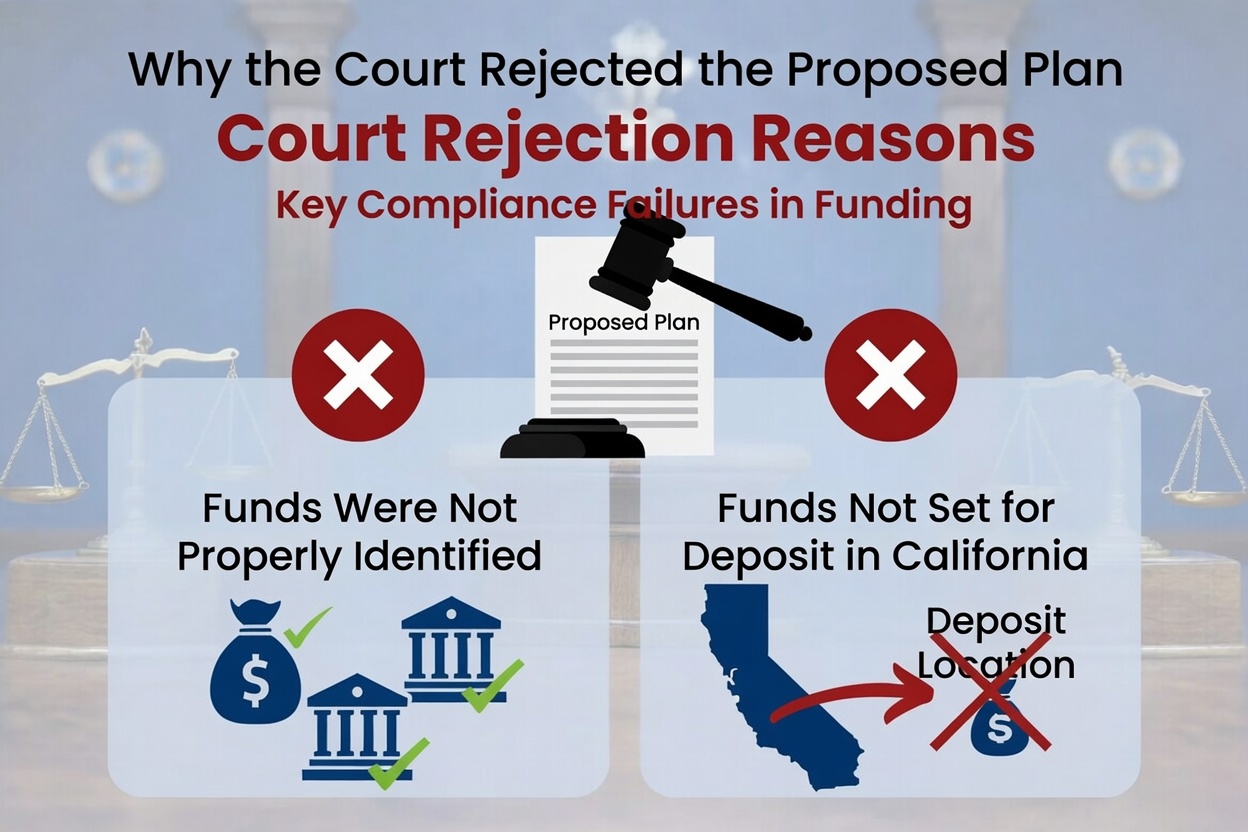
    Why the Court Rejected the Proposed Plan

    Funds Were Not Properly Identified and Not Set for Deposit in California

    The judge found that the plaintiff’s proposed order to deposit funds into a blocked account contained multiple legal defects:

    • The funds were labeled as belonging to “TL4J Finley Mathieu Account,” a non‑party entity not authorized under California law.
    • The proposed blocked account was located at Flatirons Bank in Colorado, despite Probate Code requirements that minor settlement funds be deposited in an FDIC‑insured account within California.
    • The structure resembled a Qualified Settlement Fund (QSF) even though defendants had explicitly rejected the use of a QSF during mediation.
    • The order lacked clarity regarding withdrawal procedures, oversight, and disposition of funds, rendering it too vague for approval.

    Court’s Direction Moving Forward

    Plaintiff Must Submit New Briefing and Orders

    The judge ordered the plaintiff to file:

    • New briefing and proposed orders for the disposition of settlement funds
    • A new proposed minor’s compromise order
    • A new proposed order to deposit funds in a blocked account

    All must be filed no later than July 17, 2026 and must:

    • Clearly identify that the funds belong to Finley Mathieu
    • Specify deposit into an FDIC‑insured California financial institution
    • Provide detailed instructions for scheduled withdrawals
    • Comply fully with Probate Code §§3602, 3610, 3611, and 3604

    Special Needs Trust Likely Path Forward

    Court Signals Preference but Requires Statutory Findings

    The judge noted that, based on plaintiff’s representations—particularly concerns about Medicaid eligibility—a special needs trust may best protect the minor’s interests. If plaintiff pursues this option, the court will require evidence satisfying Probate Code §3604, including:

    • Proof of a qualifying disability
    • Demonstration of unmet special needs
    • Justification that the trust funding amount is reasonably necessary

    Next Deadlines and Hearing

    Defendants to Respond; Court Sets August Review

    • July 31, 2026: Defendants must file objections or notices of non‑opposition
    • August 7, 2026 at 10:00 a.m.: Further hearing on the minor’s compromise and proposed orders

    Bottom Line

    Settlement Funds Remain Frozen Until Court Approves a Legally Compliant Plan

  • 🔥When Google’s AI Flags It Before You Finish Breakfast☕◆🥣

    This morning, after a few bites of breakfast, I typed a simple question into Google’s AI. Nothing formal. Nothing planned. Just a quick check to see whether my instincts matched what a mainstream AI system would say.

    The Question I Asked Google’s AI About Cioppa’s Press Release

    To make the test clean, I pasted the exact paragraph from the August press release — no edits, no commentary:

    “reallocate capital from a slow‑moving annuity into the best‑performing asset class of the past decade… Our Structured Strategy helps people reallocate capital…”

    Google AI’s response came back instantly — no hesitation, no hedging, no “it depends”:

    “Yes, this statement strongly risks being legally classified as providing investment advice.” — Google AI Search Result

    Sources Google AI Cited

    • SEC.gov – Investment Advisers Act of 1940
    • NASAA – State securities regulators’ three‑prong test
    • LII (Cornell Law School) – Legal definitions and commentary

    🔭Why Google AI Flagged It So Clearly

    🔍1. Advice About Securities or Asset Classes

    Google AI highlighted Cioppa’s line:

    “reallocate capital from a slow‑moving annuity into the best‑performing asset class of the past decade.”

    It concluded this is a direct recommendation about asset allocation.

    🔍2. In the Business of Advising

    Google AI pointed to:

    “Our Structured Strategy helps people reallocate capital…”

    This shows a formalized business offering, not a casual remark.

    🔍3. Receiving Compensation

    Google AI explained that factoring companies earn money from the transaction itself, satisfying the compensation prong.

    This wasn’t my interpretation. This was Google’s AI, citing SEC.gov, NASAA, and LII, and concluding that the August statement meets the legal definition of investment advice.

    This Was Not a Fleeting Thought — It Was a National Press‑Release Campaign

    Cioppa didn’t say this on a podcast. He didn’t mention it casually in an interview. He didn’t float it as a personal opinion.

    He put it into national press releases — paid, distributed, intentionally crafted messaging designed to reach consumers across the country.

    When you choose that medium, you’re not:

    • spitballing
    • musing
    • or thinking out loud

    You are:

    • making a public recommendation,
    • tying it to a commercial service,
    • and distributing it through a national marketing channel.

    ✅ SIDEBAR: How Business Wire Distribution Actually Works

    Business Wire isn’t a single website — it’s a national and international distribution network. When a company publishes a release on Business Wire, it is automatically syndicated across a broad array of downstream outlets. This includes:

    U.S. National Financial Platforms

    • Yahoo! Finance
    • Morningstar
    • NASDAQ
    • Benzinga
    • MarketWatch (via feeds)
    • AP News partner ingestion
    • Google News ingestion

    Regional & Local News Outlets

    Business Wire pushes releases into:

    • Regional newspapers
    • Local business journals
    • City‑level news aggregators
    • FinancialContent‑powered sites (hundreds of them)

    International Distribution

    Business Wire’s global network republishes releases across:

    • France (ZoneBourse, CentralCharts, Boursica)
    • Germany (Wallstreet Online, Manager Magazin, Comdirect)
    • Italy (ANSA, Il Giornale)
    • Netherlands (NovumPR)
    • Poland (PAP)
    • Czech Republic (CTK)
    • Denmark (Ritzau)
    • Finland (STT)
    • Hungary (MTI)
    • Slovakia (TASR)

    Why This Matters

    A Business Wire release is not a local communication. It is a national and international broadcast, typically reaching dozens to hundreds of outlets automatically.

    For regulatory purposes, this means:

    • The message is public,
    • Intentionally distributed,
    • Commercial in nature,
    • And designed to influence consumer behavior at scale.

    In other words: A Business Wire release is treated as a formal, national‑level corporate communication — not a casual remark.

    Regulators treat press releases as formal statements of corporate intent.

    That’s why the AI flagged it so quickly — the medium amplifies the message.

    This Isn’t About Motive — It’s About Conduct

    Nothing in Cioppa’s public persona suggests he intended to cross regulatory lines. If anything, the August press release reads like someone who genuinely believed he was offering a modernized financial option.

    But intention doesn’t change the regulatory analysis.

    The language he used — in a national press‑release campaign — fits the legal definition of investment advice.

    Why Readers Can See It Too

    🔍1. The Recommendation Is Explicit

    “Reallocate capital” is not repositioning. It’s a call to action.

    🔍2. The “Structured Strategy™” Makes It a Business Activity

    Once you tie a recommendation to a branded service, you’re holding yourself out as being in the business of advising.

    🔍3. Compensation Is Embedded

    Factoring companies earn a discount rate and profit from the transaction. That satisfies the third prong.

    🔍4. The Audience Is Legally Vulnerable

    Structured settlement recipients are:

    • financially inexperienced
    • often injured
    • dependent on guaranteed income

    Regulators treat them as a protected class.

    🔍5. The BlackRock Name‑Drop Is a Suitability Shortcut

    “Bitcoin is embraced by BlackRock” is the kind of institutional‑validation language regulators scrutinize.

    🔍6. Our Steady Price Updates Show the Real‑World Impact

    We’ve kept a steady flame burning on this story — quietly, consistently — through performance updates and pricing analysis.

    The results speak for themselves.

    The Bottom Line

    When even a consumer‑facing AI — using SEC.gov, NASAA, and LII sources — instantly identifies the investment‑advice problem, it tells you how clear the issue is.

    And when you place that August national press release next to the performance data we’ve been updating for months, the risk to consumers becomes undeniable.

    This wasn’t a fleeting thought. It wasn’t a casual remark. It wasn’t repositioning.

    It was a nationally distributed investment recommendation tied to a commercial service.

    And the facts speak for themselves.

    • February 2023 — “Outside the Box Funding Sources Through Structured Settlements & Annuities” (Nick Lamagna Podcast) In this earlier interview, Cioppa describes structured settlement payment streams as “outside‑the‑box funding sources” for real estate investors — positioning guaranteed income as deployable capital long before the August 26, 2025 press release reframed annuity payments as something to be “reallocated” into Bitcoin. This episode shows the early version of the same narrative arc: reframing protected income streams as investment fuel.

  • The Bridge to Bitcoin — Expanded

    Latest Tale of the Tape

    A span measured only by arithmetic. Four products, four paths, one direction.

    Asset8/26/2025 Price6/24/2026 Price% Change
    Bitcoin (BTC)$111,802.66$59,360.00–46.9%
    IBIT$63.10$33.88–46.3%
    MSTR$351.36$94.26–73.2%
    BITX (2× Bitcoin ETF)$18.55$10.79–41.8%
    A person holds a press release about cryptocurrency investment amid Bitcoin price crash

    A Hobson’s Choice

    The numbers outline the choice without needing interpretation:

    • Lose almost half your money,
    • or lose almost three‑quarters of it,
    • or lose slightly less than half through a leveraged product whose long‑term math works differently than its label suggests.

    The only question left is the one you framed:

    How much of your hide are you prepared to see missing?

    The tape answers quietly.

  • A 17‑Year‑Old New Yorker With a Structured Settlement Got This Letter from a Factoring Company

    Note: Use the -+ buttons to resize to fit to your device and preferred viewing size

    What The Monteverde Equity Partners Letter Claims — and Why It’s So Dangerous

    The letter, dated May 29, 2026, purports to speak on behalf of Pacific Life & Annuity Company (stating):

    • “Your settlement check has either been issued or is scheduled for issuance…”
    • “Should you not receive it… call 702‑703‑2200…”
    • “Checks may be withheld pending confirmation from the original annuitant…”
    • “If you wish to arrange direct deposit… contact our office…”

    1. Monteverde Equity Partners has no relationship with Pacific Life.

    None. Zero. Not a shred. I confirmed that today. Pacific Life reaches out to its own annuitants with branded communications featuring its trademarked logo. Monteverde does not.

    And when an unlicensed, opaque operator with no relationship to the carrier starts sending off‑brand, authority‑implying letters to a 17‑year‑old original annuitant, the issue stops being academic.

    That’s the line. And the Monetverde Equity letter crosses it.

    2. A 17‑year‑old cannot legally:

    • assign payments
    • authorize direct deposit changes
    • negotiate with a factoring company
    • consent to financial transactions of this type

    3. “Checks may be withheld pending confirmation” is a fabricated procedure.

    Carriers do not withhold payments pending “confirmation” from a third‑party funding company.

    4. The phone numbers are VoIP lines — not Pacific Life.

    702‑703‑2200 is a Las Vegas VoIP. 888‑229‑5696 is a dead toll‑free line. 240‑401‑2493 is a Maryland mobile.

    5. The company’s website has no privacy policy.

    The link leads to a 404 error. No disclosures. No licensing. No compliance language. No nothing.

    6. The letter invites a minor to provide banking information.

    This is the most alarming part.

    This Is Not an Isolated Incident — It’s Part of a Pattern in the Factoring ecosystem

    What happened here is not random.
    It’s not a one‑off.
    It’s not a clerical error.
    It’s not a misunderstanding.

    This is not the first time an opaque operator has attempted to contact a young annuitant using false authority or misleading language.

    2024 — The Sara George Incident

    A Lion Grace representative falsely claimed to be “from the Courts” and contacted the mother of a teenage California annuitant. She identified herself as an “annuity” “at an Annuity Company” on LinkedIn. She used pretext to capture data.

    Child’s Structured Settlement: Protect Your Minor – Structured Settlements 4Real®Blog August 2, 2024

    Annuity Issues Facing Teenagers Today – Structured Settlements 4Real®Blog November 6, 2024

    2025 — Additional Quiet Incidents

    Families reported:

    • fake “verification calls”
    • fake “audit reviews”
    • callers with data they should not have
    • attempts to capture phone numbers and emails

    2026 — Now a 17‑Year‑Old New Yorker Receives a Letter

    Not a call. Not a text. A letter, implying authority over Pacific Life payments and inviting a minor to set up direct deposit.

    This is a new escalation.

    Why This Matters for the Industry

    Structured settlements exist to protect vulnerable people — including minors — from exactly this kind of predatory outreach.

    When a brand‑new, opaque company with:

    • no privacy policy
    • no disclosures
    • no licensing information
    • a dead toll‑free number
    • a VoIP footprint
    • a “coming soon” website
    • a Delaware mailbox
    • a residential NJ agent

    …begins contacting minors with misleading claims about payment issuance, the risk is no longer theoretical.

    It is immediate. It is real. It demands attention.

    A Warning to Carriers, Attorneys, Guardians, and Regulators

    If a company is willing to:

    • impersonate a payment administrator,
    • fabricate procedures,
    • direct minors to VoIP numbers,
    • and attempt to capture banking information,

    …then the industry has a problem that goes far beyond one letter.

    You’ve Got a Structured Settlement: Tips for Teens – Structured Settlements 4Real®Blog February 3, 2026

  • Joseph Gargan, the former settlement‑industry executive who pled guilty in 2020 to stealing nearly $7 million in structured settlement funds, attempted to end his federal supervision early — and the court rejected the request. Although the judge refused to cut supervision short, the three‑year term has since run its natural course.

    After serving only about 21 months of his original 70‑month sentence due to compassionate release, Gargan filed a motion asking the judge to terminate his supervised release ahead of schedule. He cited ongoing medical issues and the inconvenience of travel restrictions, but the government opposed the motion, and the court agreed.

    The scale of Gargan’s fraud and the limited time he actually served made continued oversight appropriate

    After serving only about 21 months of his original 70‑month sentence due to compassionate release, Gargan filed a motion asking the judge to terminate his supervised release ahead of schedule. He cited ongoing medical issues and the inconvenience of travel restrictions. The government opposed the motion, and the court agreed.

    Medical conditions justified compassionate release but DID NOT justify eliminating supervised release entirely

    In May 2024 the court also noted that the same medical concerns that justified compassionate release did not automatically justify ending supervision, and that travel limitations can be handled through routine probation requests rather than eliminating supervision entirely. In short, Gargan remained under federal supervision, and the court made clear that further leniency was not warranted. For readers who followed his unusually large sentence reduction and the circumstances surrounding his release, this update closes the loop: Gargan may be out of prison, but the federal court wasn’t ready to cut the cord.

    For readers who followed:

    • Gargan’s unusually large sentence reduction,
    • the circumstances surrounding his early release, and
    • his unsuccessful attempt to shed supervision early,

    this update closes the loop:

    Gargan may have regained his freedom early, but the court made clear it wasn’t willing to give him any more breaks along the way.

    🔎 Explainer: How Federal Supervised Release Works (and Why Gargan’s Ended Automatically)

    Supervised release is the period of federal oversight that follows a prison sentence. It is not parole, and it does not shorten a prison term — it begins after a defendant leaves custody.

    Here’s how it works in practice:

    1. The term starts the day the defendant is released from custody

    For Gargan, supervised release began the moment he was granted compassionate release after serving about 21 months of his 70‑month sentence.

    2. The length of the term is fixed at sentencing

    Gargan received a three‑year supervised release term. That clock runs continuously unless the court extends it (rare) or revokes it (only if violations occur).

    3. Early termination is possible — but only with a judge’s approval

    A defendant can ask the court to end supervision early, but the judge must find:

    • “exceptional circumstances,” or
    • that continued supervision is no longer necessary for deterrence, public safety, or rehabilitation.

    Gargan asked for early termination in 2024. The judge denied it.

    4. Denial of early termination does NOT extend the term

    This is the key point for readers:

    • The judge’s denial meant “you must continue supervision until the term expires.”
    • It did not add time.
    • It did not reset the clock.

    5. When the term ends, supervision ends — automatically

    No hearing. No order. No docket entry. It simply expires.

    Because Gargan’s supervised release began upon his compassionate release, his three‑year term has now run out, and he is no longer under federal supervision.

    For all prior coverage of Joseph Gargan — newest posts first — see the full archive: [Joseph Gargan Archive]

  • 🔹Insurance Informant Gets Independent Life Dreadfully Wrong

    by Structured Settlement Watchdog

    The word informant gets thrown around loosely in some corners of the insurance world, usually by people who don’t understand what the word actually means. According to Merriam‑Webster, an informant is someone who supplies information covertly, often in a law‑enforcement or criminal‑investigative context.

    As Aunt Merriam reminds us, the primary synonyms for “informant” include snitch, rat, stool pigeon, and tipster — terms that belong in crime dramas and prison movies, not structured‑settlement education.

    Nothing about the Structured Settlement Watchdog® is covert, secret, or directed by any authority. Everything published here is public, sourced, documented, and transparent.

    And speaking of misused terms and misunderstood facts…

    Somebody else has gotten something dreadfully wrong.

    Insurance Informant claims to “demystify the insurance industry.” Yet its April 27, 2026 profile of Independent Life Insurance Company demonstrates the opposite: a stitched‑together blend of unrelated companies, contradictory timelines, and factually impossible statements.

    The article conflates three separate entities:

    • Independent Life & Accident Insurance Company (Jacksonville, FL) — a legacy insurer that merged into American General Life & Accident in 1997.
    • Independent Life (Independent Insurance Group, founded 2018) — the structured‑settlement annuity carrier.
    • Sterling National Life Insurance Company — acquired by Independent Insurance Group in 2021.

    This is not “demystification.” It is content barfing by Insurance Informant, with no demonstrable subject‑matter understanding.

    Below is the factual correction.

    🔸 Insurance Informant Claim (Myth)🔹 Documented Reality (Fact)
    “Independent Life… was acquired by The Hanover Insurance Group in 2012.”False twice. Hanover Insurance Group has no connection to any Independent Life entity. Insurance Informant confuses Hanover with Hannover Re, the reinsurer of the modern Independent Life (2018). Different spelling, different companies, no relationship.
    “Independent Life is currently inactive” (Florida entity 009456).Florida entity 009456 is the legacy Independent Life & Accident, merged into AGL in 1997. The 2018 structured‑settlement carrier is active and licensed.
    “Independent Life was founded in 1896 / 1920 / 2018.”Insurance Informant collapses three different companies. Only the 2018 entity is the structured‑settlement carrier.
    “Independent Life merged with American General Life and Accident in 1997.”True — but only for the legacy company. The 2018 Independent Life did not exist at that time.
    “Independent Life launched its new entity recently” (while also calling it inactive).The structured‑settlement carrier was formed in 2018. Later filings (2026) relate to the 26North Re transaction, not the creation of the company.
    “Independent Life has secured committed sales predominantly from plaintiff settlement recoveries.”This describes the 2018 company, not the legacy Jacksonville insurer.
    “Independent Life and Accident Insurance Company of Jacksonville is the same company as the structured‑settlement carrier.”False. They are completely unrelated companies with different ownership, histories, and regulatory filings.
    “Reinsurance details unclear / part of old company’s lineage.”Incorrect. Reinsurance applies only to the 2018 company. Independent Life entered a quota‑share treaty with Hannover Life Reassurance Company of America effective October 1, 2020.
    • Early 20th‑century insurer
    • Merged into American General Life & Accident in 1997
    • Now part of AIG/Corebridge
    • Florida entity 009456 (inactive)
    • Structured‑settlement annuity specialist
    • Backed by Kilter Finance and LKHW
    • Acquired Sterling National Life in 2021
    • Entered agreement to be acquired by 26North Re (2026)
    • Reinsured by Hannover Life Reassurance Company of America
    • No lineage to the legacy Jacksonville company
    • Acquired by Independent Insurance Group
    • Not part of the old Independent Life & Accident lineage

    The reinsurance relationship is one of the clearest indicators of the modern Independent Life’s identity:

    • Reinsurer: Hannover Life Reassurance Company of America
    • Agreement type: Quota‑share
    • Effective date: October 1, 2020
    • Coverage: In‑force + new structured‑settlement annuity business
    • Cession: 65% initially → later increased to 75%
    • Retention: Independent Life remains the direct writer

    This treaty applies only to the 2018 company. It has nothing to do with the legacy Independent Life & Accident.

    Insurance Informant’s failure to distinguish these entities is the root of its confusion.

    Insurance Informant’s profile of Independent Life is not just inaccurate — it is structurally unsound. It conflates unrelated companies, misstates corporate history, misattributes regulatory filings, and presents contradictory timelines.

    If the mission is to “demystify insurance,” the Insurance Informant article does the opposite.

    Related Reading

  • Guaranteed to Outperform? The Secondary Market Annuity Mole Resurfaces — C++ “Top Rated” BS and Court‑Approved Theater

    by Structured Settlement Watchdog®

    🧭Leskus Discussus: Holiamus Moly Moly Molé

    🦟Bitten by mosquitoes, itching at the same old spots — the Holy Moly, the MOLY MOLY MOLÉ — the pattern🔁 always resurfaces.

    For more than a decade, the structured settlement secondary market has evolved in ways that reflect regulatory guidance, industry consensus, and simple accuracy. Terminology has tightened. Disclosures have improved. Most participants have adjusted their language to reflect what is actually being sold.

    Most — but not all.

    🔍Lesk’s Behavioral Continuity

    Across multiple redesigns, one element of Lesk’s marketing has remained constant: a presentation style that emphasizes confidence, yield comparisons, and institutional‑sounding language even when the underlying product has not changed. The imagery, slogans, and framing shift with each iteration, but the core behaviors remain:

    • continued use of the term “secondary market annuity”
    • continued emphasis on “top‑rated” carriers without context
    • continued reliance on “court approved” as a marketing anchor
    • continued presentation of payment rights as annuity‑like products
    • continued contrast between bold headlines and cautious disclosures

    The most recent redesign reinforces this pattern. The graphics are updated. The layout is modernized. The tone is more polished. But the terminology, the structure of the pitch, and the underlying inconsistencies remain the same.

    ⚠️The Persistence of an Inaccurate Term

    Every deal sheet begins with:

    “CURRENTOFFERING · SECONDARYMARKETANNUITY”

    Yet each disclosure section states:

    “Purchasers acquire the rights to specific structured settlement payments, not annuity contracts.”

    This contradiction appears in all three deals. It is not new. It is not subtle. It is a long‑documented pattern.

    📘Why Accuracy Matters

    The term “annuity” carries a meaning — and a regulatory framework — that does not apply to these transactions. Using it creates an effect: investors may reasonably believe they are purchasing an insurance product when they are not.

    That is why the industry moved away from the term years ago. Lesk did not.

    📄The Deals: Updated Design, Same Underlying Behavior

    The redesigned sheets look cleaner than earlier versions — tighter tables, more whitespace, a more “institutional” tone. But the underlying presentation remains unchanged. The same terminology, the same framing, the same contradictions between headline and disclosure appear across all three offerings.

    📑Deal #3196‑2 (Genworth Life)

    • Marketed as a 20‑month income stream.
    • Payments actually begin December 2038 and end July 2040 — a 20‑payment stream spanning three calendar years.
    • Headline yield: 6.50%
    • APR: 6.314%
    • Disclosure:“Purchasers acquire the rights to specific structured settlement payments, not annuity contracts.”

    The redesign did not change the underlying structure or the terminology.

    📑Deal #S‑9489 (Talcott Life)

    • Marketed as a 5‑year income stream.
    • Payments begin July 2043 and end June 2048 — exactly 60 payments.
    • Same 3% annual step framing.
    • Same 3.43× invested multiplier.
    • Same “top‑rated carrier” language.
    • Same disclosure contradiction.

    📑Deal #9489 (Talcott Life)

    • Identical structure to S‑9489, but larger.
    • Same 60‑payment schedule.
    • Same 3% step.
    • Same 3.43× invested.
    • Same “top‑rated carrier” language.
    • Same disclosure contradiction.

    Across all three deals advertised on MJ Settlements website June 19, 2026, the structure is the same. The language is the same. The framing is the same.

    ♻️Redesigns Change. The Behavior Doesn’t.

    Website redesigns come and go. Fonts change. Tables change. Graphics change. Marketing language shifts. But the core terminology — the one piece that matters most for accuracy — remains frozen in time.

    Most actors in the space have evolved. Lesk’s marketing has not.

    📚A Long‑Documented Pattern

    This is not about personalities. It is not about motives. It is not about speculation.

    It is about classification, accuracy, and a long‑documented pattern that continues unchanged even as the rest of the industry adapts.

    🛣️Closing

    🚗 The documents run straight. 🛣️ The disclosures stay in their lane. 🛞 The terminology drifts in the same, familiar direction. 👁️ And the behavior… that slight, repeatable veer you only notice when you’ve been watching the road this long.

    No emphasis needed. No color added. The record stands on its own. The pattern stands on its own. And the pattern, as ever, speaks for itself.

  • ACA Medical Insurance as NY Collateral Source Cast Further Adrift by 2027 Requested Rate Increases

    by John Darer CLU ChFC MSSC CeFT RSP CLTC

    Health insurers request steep ACA premium hikes for 2027 Health insurers are requesting significant premium increases for 2027, with some proposals as high as 30%. The increases are attributed to rising medical costs and the expiration of enhanced Affordable Care Act premium tax credits. Some states are pushing back, with Connecticut’s attorney general calling the requests “unaffordable, excessive, and unacceptable.”

    I’ve written extensively on how Affordable Care Act (ACA) medical plans were pitched as a collateral sources in personal injury and medical malpractice cases.

    ACA was originally pitched as a way to provide guaranteed health insurance coverage, potentially reducing the need for large jury awards. In theory, if a plaintiff’s future medical expenses are covered by an ACA-compliant plan, that coverage can be presented as a collateral source to reduce damages. However, I’ve previously cautioned that market realities and insurer behavior have complicated this.

    Key Challenges I’ve Previously Identified

    • Uncertain insurer participation: Several major insurers have exited ACA exchanges, raising questions about long-term coverage availability 4structures.
    • Premium volatility: Without stable rates, it’s difficult to fund ACA premiums with a structured settlement. Darer warns that if premiums rise significantly (e.g., 10% over a 3% COLA), the settlement may not cover costs over the long term 4structures and Navigating ACA Collateral Source Arguments in NY Courts – Structured Settlements 4Real®Blog November 7, 2015
    • Burden of proof: In New York, courts require defendants to show by clear and convincing evidence that it is “highly probable” the plaintiff’s future medical expenses will be paid by ACA coverage. This requires identifying a specific plan and demonstrating exactly what care it covers Affordable Care Act and Settlement Negotiations– Structured Settlements 4Real Blog November 11, 2025
    • Precedent: Before the ACA, courts were skeptical of health insurance as a collateral source due to risks like job loss, divorce, or insurer refusal to cover pre-existing conditions. The ACA’s mandate is meant to address some of these, but I’ve emphasized that continued coverage is not guaranteed.

    Strategic Uses in Settlements

    Defendants can:

    • Prepare multiple cost scenarios comparing life care plan costs with and without ACA coverage.
    • Use annuity cost projections and medical underwriting to show potential savings.
    • Combine ACA coverage with other vehicles like special needs trusts or Medicare Set Asides to ensure future needs are met 4structures.

    While the ACA offers a potential collateral source for future medical expenses, it is not a guaranteed or fully reliable mitigation tool. And the drift is moving further away from shore, given the revelations about potential price increase filed by health insurers for 2027 alone!

    Success depends on insurer stability, rate predictability, and the ability to meet the high evidentiary burden in court. In practice, ACA coverage can be part of a broader settlement strategy, but it should be treated with caution due to ongoing market and legal uncertainties.

  • Vervent Successor to SuttonPark Structured Settlement Receivables Payment Servicing

    Vervent (NEWS UPDATE)

    Vervent, formerly Bank of the Internet is the new structured settlement payment servicing company for the structured settlement receivables formerly serviced by SuttonPark that were not taken on by DRB Capital. Going forward those serviced payments will come from Vervent.

    After making some inquiries, following a few calls from receipients who reported payment delays, I learned that the cash flow management transition just happened last week and there appear to have been a few hiccups. In a return phone call 24 hours after hearing from one of the recipients that reported a delay, the payment was in her account.

    Proven Primary Servicing & Capital Markets Solutions | Vervent

    Payment Servicing Arrangement May Be a Requirement of Annuity Issuer NOT Factoring Company – Structured Settlements 4Real®Blog May 24, 2025

    Understanding Structured Settlement Payment Servicing – Structured Settlements 4Real®Blog February 3, 2023

    Structured Settlement Receivables Are Misleadingly Marketed as Annuities | Investors Beware – Structured Settlements 4Real®Blog April 18, 2025

    Investing in Structured Settlements A Guide for Unwary Investors (4structures.com) June 28, 2025

    SuttonPark Nightmare Finally Over

    A big thank you goes out to a certain board member of the National Association of Settlement Purchasers who came through in the clutch a few days before Thanksgiving in November 2024 who responded to my call and timely action, saved a structured settlement annuitant’s credit by helping to dig a payment out of the SuttonPark morass and assured “Betsy Ross” (a pseudonym for the structured settlement annuitant), and her guests that the 2024 Thanksgiving dinner was still on.