Judge Vacates Minor’s Compromise Approval in Mathieu Case
Motion to Enforce Settlement Denied; New Orders Required Under California Probate Code
A Santa Barbara County Superior Court judge has denied the plaintiff’s motion to enforce the minor’s compromise in Finley Mathieu v. Carin Craig, M.D., et al. and has vacated the previously approved May 8, 2026 order approving the settlement structure. The ruling resets the process for how the multimillion‑dollar settlement must be handled and requires strict compliance with California Probate Code provisions governing minors’ settlements.
Why the Court Rejected the Proposed Plan
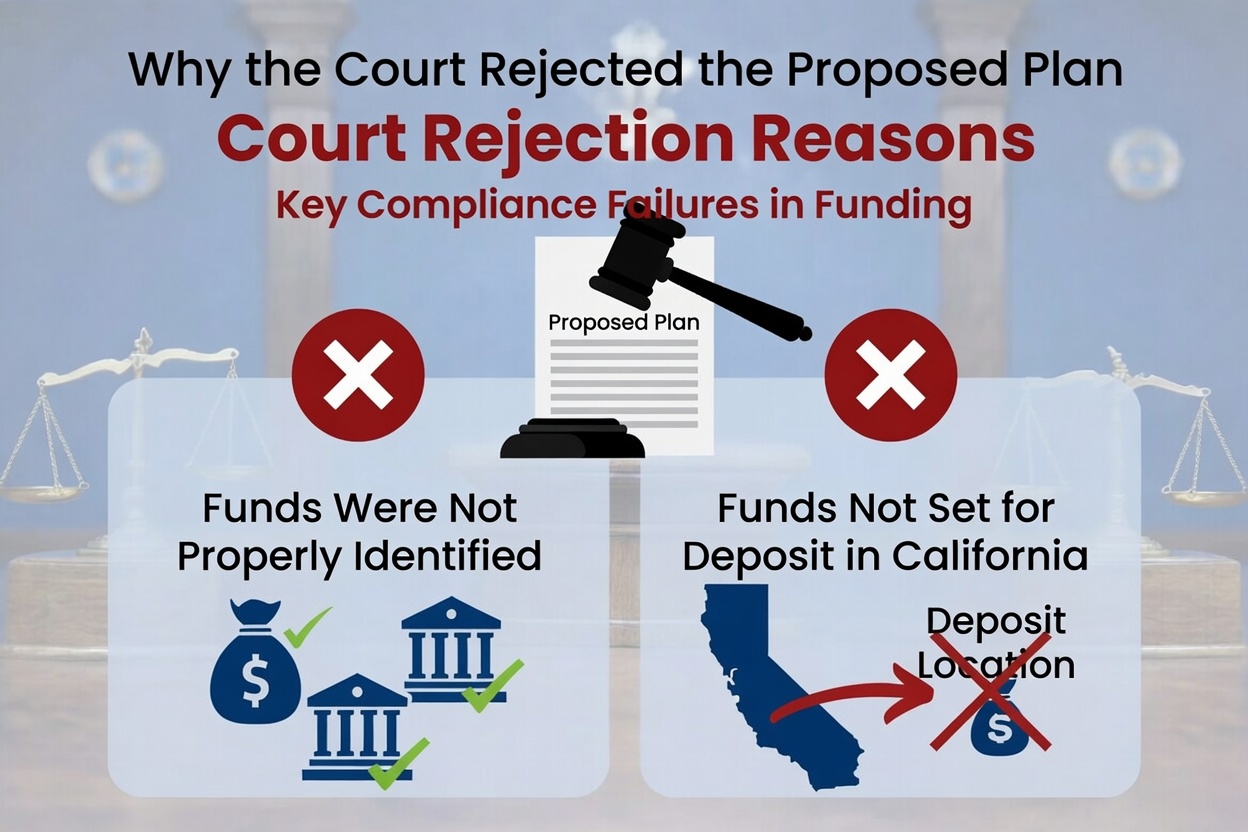
Funds Were Not Properly Identified and Not Set for Deposit in California
The judge found that the plaintiff’s proposed order to deposit funds into a blocked account contained multiple legal defects:
- The funds were labeled as belonging to “TL4J Finley Mathieu Account,” a non‑party entity not authorized under California law.
- The proposed blocked account was located at Flatirons Bank in Colorado, despite Probate Code requirements that minor settlement funds be deposited in an FDIC‑insured account within California.
- The structure resembled a Qualified Settlement Fund (QSF) even though defendants had explicitly rejected the use of a QSF during mediation.
- The order lacked clarity regarding withdrawal procedures, oversight, and disposition of funds, rendering it too vague for approval.
Court’s Direction Moving Forward
Plaintiff Must Submit New Briefing and Orders
The judge ordered the plaintiff to file:
- New briefing and proposed orders for the disposition of settlement funds
- A new proposed minor’s compromise order
- A new proposed order to deposit funds in a blocked account
All must be filed no later than July 17, 2026 and must:
- Clearly identify that the funds belong to Finley Mathieu
- Specify deposit into an FDIC‑insured California financial institution
- Provide detailed instructions for scheduled withdrawals
- Comply fully with Probate Code §§3602, 3610, 3611, and 3604
Special Needs Trust Likely Path Forward
Court Signals Preference but Requires Statutory Findings
The judge noted that, based on plaintiff’s representations—particularly concerns about Medicaid eligibility—a special needs trust may best protect the minor’s interests. If plaintiff pursues this option, the court will require evidence satisfying Probate Code §3604, including:
- Proof of a qualifying disability
- Demonstration of unmet special needs
- Justification that the trust funding amount is reasonably necessary
Next Deadlines and Hearing
Defendants to Respond; Court Sets August Review
- July 31, 2026: Defendants must file objections or notices of non‑opposition
- August 7, 2026 at 10:00 a.m.: Further hearing on the minor’s compromise and proposed orders
Bottom Line
Settlement Funds Remain Frozen Until Court Approves a Legally Compliant Plan
Although the underlying medical malpractice case has settled, no funds will be released until the court receives and approves a new, fully compliant plan that protects the minor’s interests under California law
Leave a Reply