by John Darer CLU ChFC MSSC CeFT RSP CLTC
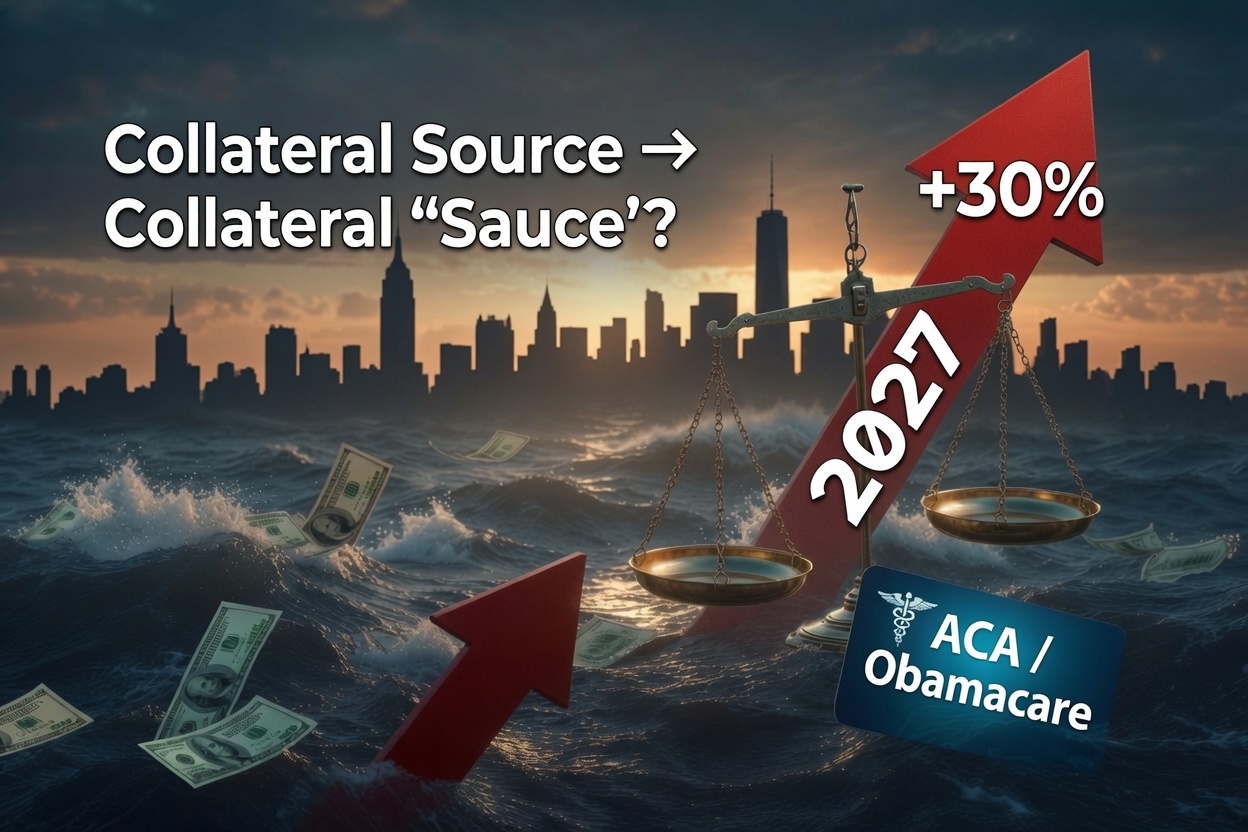
| Health insurers request steep ACA premium hikes for 2027 Health insurers are requesting significant premium increases for 2027, with some proposals as high as 30%. The increases are attributed to rising medical costs and the expiration of enhanced Affordable Care Act premium tax credits. Some states are pushing back, with Connecticut’s attorney general calling the requests “unaffordable, excessive, and unacceptable.” |
I’ve written extensively on how Affordable Care Act (ACA) medical plans were pitched as a collateral sources in personal injury and medical malpractice cases.
ACA as a Collateral Source
ACA was originally pitched as a way to provide guaranteed health insurance coverage, potentially reducing the need for large jury awards. In theory, if a plaintiff’s future medical expenses are covered by an ACA-compliant plan, that coverage can be presented as a collateral source to reduce damages. However, I’ve previously cautioned that market realities and insurer behavior have complicated this.
Key Challenges I’ve Previously Identified
- Uncertain insurer participation: Several major insurers have exited ACA exchanges, raising questions about long-term coverage availability 4structures.
- Premium volatility: Without stable rates, it’s difficult to fund ACA premiums with a structured settlement. Darer warns that if premiums rise significantly (e.g., 10% over a 3% COLA), the settlement may not cover costs over the long term 4structures and Navigating ACA Collateral Source Arguments in NY Courts – Structured Settlements 4Real®Blog November 7, 2015
- Burden of proof: In New York, courts require defendants to show by clear and convincing evidence that it is “highly probable” the plaintiff’s future medical expenses will be paid by ACA coverage. This requires identifying a specific plan and demonstrating exactly what care it covers Affordable Care Act and Settlement Negotiations– Structured Settlements 4Real Blog November 11, 2025
- Precedent: Before the ACA, courts were skeptical of health insurance as a collateral source due to risks like job loss, divorce, or insurer refusal to cover pre-existing conditions. The ACA’s mandate is meant to address some of these, but I’ve emphasized that continued coverage is not guaranteed.
Strategic Uses in Settlements
Defendants can:
- Prepare multiple cost scenarios comparing life care plan costs with and without ACA coverage.
- Use annuity cost projections and medical underwriting to show potential savings.
- Combine ACA coverage with other vehicles like special needs trusts or Medicare Set Asides to ensure future needs are met 4structures.
Bottom Line
While the ACA offers a potential collateral source for future medical expenses, it is not a guaranteed or fully reliable mitigation tool. And the drift is moving further away from shore, given the revelations about potential price increase filed by health insurers for 2027 alone!
Success depends on insurer stability, rate predictability, and the ability to meet the high evidentiary burden in court. In practice, ACA coverage can be part of a broader settlement strategy, but it should be treated with caution due to ongoing market and legal uncertainties.
Leave a Reply