by Structured Settlement Watchdog
- ⚡MJ Settlements’ website continues to present factored structured settlement receivables as if they were annuity‑like, A‑rated, guaranteed products.
- 📉The company’s marketing still leans on the tagline “Guaranteed to Outperform” and
- 🕰️Continues to use the term “SSA” in ways that obscure the true nature of the product and
- ⚖️Misleads investors about the level of safety, regulation, and protection involved. This pattern of misrepresentation is visible across the company’s website.
📉Misleading Claims About “A‑Rated” Backing
MJ Settlements continues to assert that its receivables are “backed by A‑rated life insurance companies.” Its current listings feature receivables from:
- Talcott Life Insurance Company
- Genworth Life insurance Company
🔄Misrepresentation Through the “SSA” Label
MJ Settlements continues to describe its offerings as “SSAs,” a term that mimics “structured settlement annuity” but does not transform a receivable into an annuity. These are factoring‑company receivables, not insurance products. Using the abbreviation SSA does not make the representation accurate or exculpatory.
- However, Genworth does not hold a single A‑level rating from any major rating agency.
- A.M. Best rating for Genworth Life Insurance Company: C++ (Marginal). Source: Genworth Life Insurance Company website; A.M. Best, March 1, 2026.
Genworth last held an A‑ rating in 2019, but that rating was withdrawn years ago. A C++ rating is considered “marginal”—far below the A‑level financial strength implied in MJ Settlements’ marketing.
⏳All Current Deals Involve Deeply Deferred Payments
A review of MJ Settlements’ current inventory shows that every deal being marketed involves payments that do not begin for 10 or more years. These are not short‑duration, near‑term receivables. They are long‑tail obligations, often with first payments scheduled 10, 15, or even 19 years into the future.
Long deferrals significantly magnify investor risk:
- Extended credit‑quality exposure to insurers like Genworth, currently rated C++ (Marginal).
- No interim cash flow, meaning no liquidity or risk offset.
- Greater vulnerability to future downgrades, restructurings, or insolvency events.
- No guaranty association protection, because these are not annuities.
The duration risk is not disclosed with the same emphasis as the marketing claims, creating a mismatch between investor expectations and the actual risk profile.
🛑No Protection From Any State Insolvency or Guaranty Scheme
None of the receivables marketed by MJ Settlements are eligible for protection under any state life and health insurance guaranty association. These protections apply only to insurance products, such as legitimate structured settlement annuities issued directly to injury victims. Factored receivables — the type MJ Settlements sells — are not insurance, not annuities, and not covered by any insolvency safety net.
If the underlying insurer fails, restructures, or enters rehabilitation, the investor has no guaranty association protection, no statutory backstop, and no priority status.
📵Licensed Agents Cannot Use Guaranty Funds as a Sales Inducement
State insurance laws prohibit licensed agents from advertising, referencing, or implying the existence of state guaranty association protection in connection with the sale of any insurance product. These rules exist to prevent agents from using guaranty funds as a substitute for proper disclosure of insurer financial strength.
This matters because MJ Settlements’ marketing uses annuity‑adjacent language — “SSA,” “A‑rated backing,” “Guaranteed to Outperform” — language that naturally leads an unsophisticated investor to assume the same protections that apply to regulated insurance products.
But the products being sold are not annuities, not insurance, and not eligible for any insolvency or guaranty scheme. Even if they were insurance products, a licensed agent would still be prohibited from using guaranty‑fund concepts as a marketing tool.
The result is a presentation that avoids explicitly mentioning guaranty funds but relies on the investor believing the protections exist.
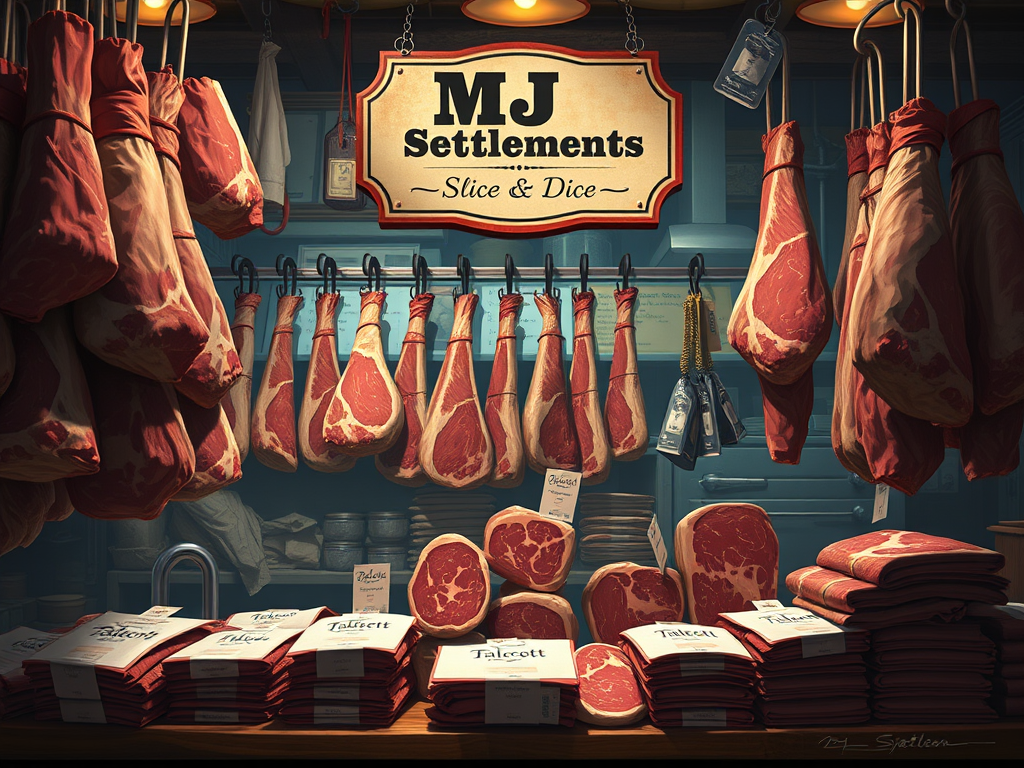
🔪The Butcher‑Block Problem: How These Deals Are Packaged
MJ Settlements continues to present its offerings the way a butcher wraps raw meat: tightly, neatly, and in a way that hides what’s actually inside. The receivables are sliced, bundled, and re‑labeled as “SSAs,” then wrapped in marketing paper that emphasizes “Guaranteed to Outperform” while concealing the underlying credit quality and the extreme deferral periods.
🥩“Slice and Dice”
The metaphor fits because the presentation is clean, but the product underneath is not. The receivables are not annuities, the insurers behind them are not A‑rated, the payment streams are not near‑term, and the risks are not disclosed. Just as butcher paper hides the cut, the marbling, and the freshness of the meat, MJ Settlements’ marketing hides the C++ (Marginal) rating of Genworth and the fact that every current deal involves payments deferred 10 or more years into the future.
The wrapping is clean. The product is not.
🥩 When “CD Replacements” Aren’t CDs at All
MJ loves to describe its sliced payment streams as “CD replacements,” a phrase that sounds reassuring until you remember one small detail: certificates of deposit come with FDIC insurance. The butcher’s “daily special” does not.
A real CD sits inside a federally regulated banking system with explicit, statutory protection up to $250,000 per depositor, per bank. If the bank fails, the FDIC steps in. Your principal is protected by law, not by marketing copy.
A factored structured‑settlement receivable has none of that.
- It is not a bank product.
- It is not insured.
- It is not guaranteed by the FDIC, a state guaranty association, or any insurer.
- It is simply a court‑approved assignment of someone else’s future payments, wrapped in butcher paper and sold as if it were a federally protected instrument.
Calling these receivables “CD replacements” is like calling a butcher’s wrapped ribeye a “replacement for USDA‑inspected packaged beef.” The packaging may be white, but the regulatory protections are not remotely comparable.

🎭“Guaranteed to Outperform” — A Tagline Without Support
Despite the deteriorated ratings of at least one of the companies behind its receivables and the long‑deferred nature of the payments, MJ Settlements continues to use the tagline:
“Guaranteed to Outperform.”
There is no evidence of any guarantee, and no basis for claiming outperformance. When combined with:
- Misrepresented credit quality
- Misleading product labeling
- Deeply deferred payment schedules
…the result is a marketing presentation that is materially inconsistent with the underlying risk.
Leave a Reply