by John Darer® CLU ChFC MSSC RSP CLTC
Tax Benefits of Structured Settlements
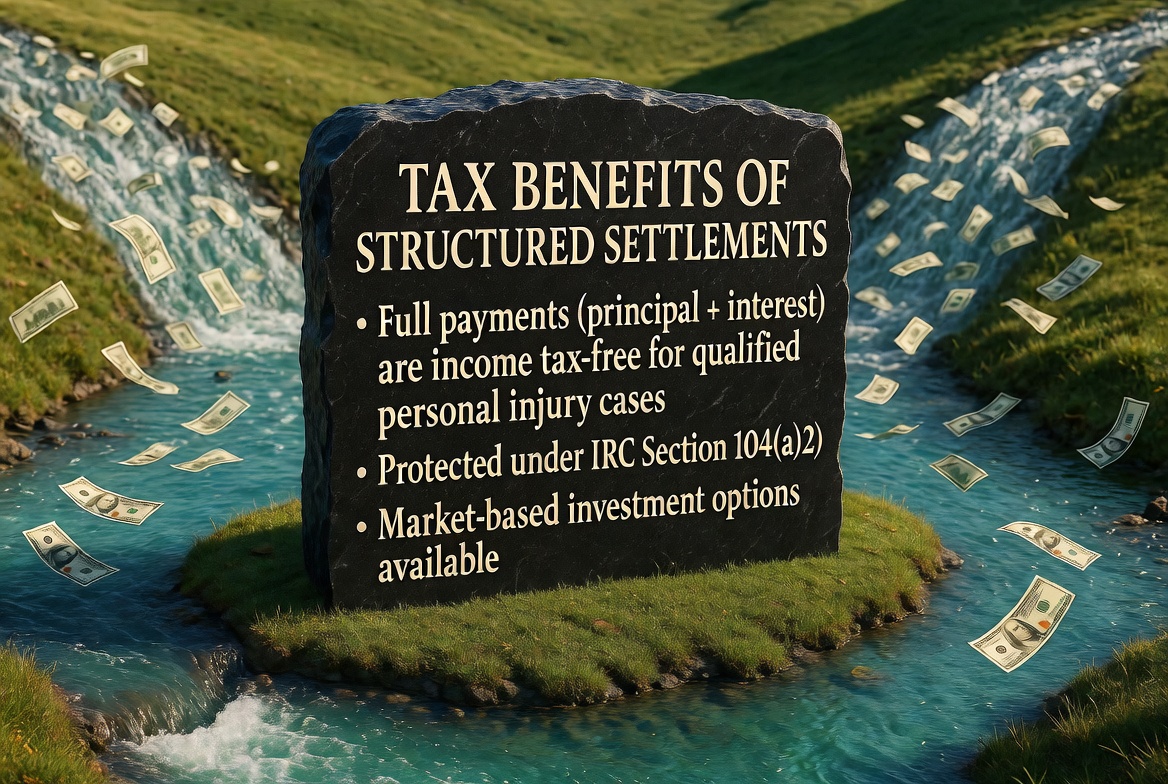
One of the benefits of a structured settlement is that if you qualify the structured settlement payments are income tax-free. That’s free of Federal, State and City income taxes if you are a New York state resident and Federal and State income tax free for Connecticut residents.
How do you qualify for a Tax-Free Structured Settlement?
To qualify for the federal income tax exclusion, the periodic payments must represent damages being paid to you on account of a physical injury or physical sickness, wrongful death or payments from a claim for workers compensation [See Internal Revenue Code Section 104(a)(1) for workers compensation and 104(a)(2) for the physical injury and sickness]. Since most structured settlements today involve a qualified assignment, the requirements of IRC 130(c) also must be complied with.
An annuity payment includes both principal and interest. So the interest is built into the payment
AN IMPORTANT DISTINCTION
Some may also refer to the following as structured settlements but payments are not income tax free:
A. The non-qualified structured settlement, which is a financial planning solution for taxable damage cases such as employment, punitive damages, property settlements and wrongful birth (in states that don’t recognize an infant’s cause of action for wrongful life). Spreading out the payment through a non qualified assignment or periodic payment reinsurance may provide some tax relief.
B. Structured settlement payment rights acquired by a buyer in the secondary market, whether directly from the seller or by assignment. It is commonly assumed that payments the acquired rights will be taxed like a regular income annuity (a portion return of principal and a portion interest), although it has not been codified. At least one financial adviser has opined that the acquistion of such rights by an individual’s Roth IRA and held for 5 years may provide some tax relief.
Leave a Reply