Structured Settlements 4Real®Blog 2026

Structured settlements expert John Darer reviews the latest structured settlements and settlement planning information and news, and provides expert opinion and highly regarded commentary. that is spicy, Informative, irreverent and effective for over 20 years.

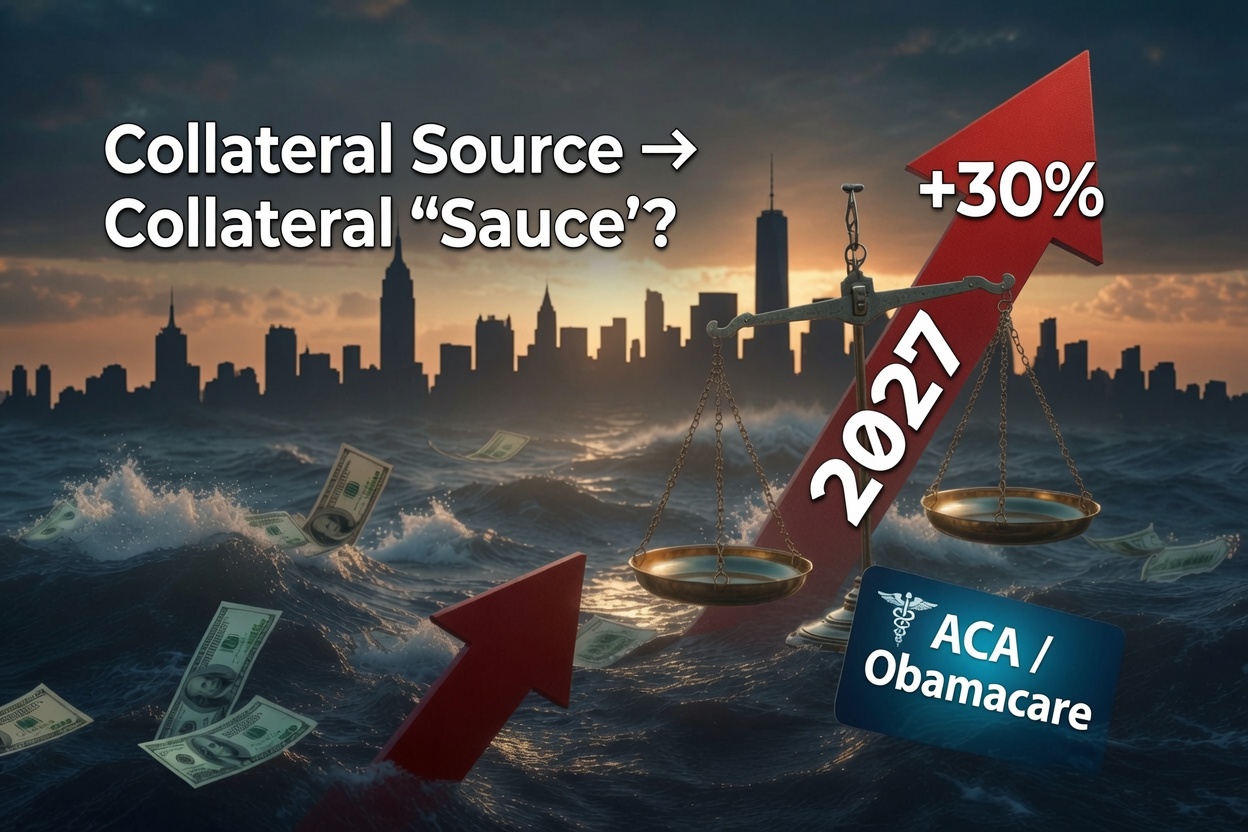
  • ACA Medical Insurance as NY Collateral Source Cast Further Adrift by 2027 Requested Rate Increases

    by John Darer CLU ChFC MSSC CeFT RSP CLTC

    Health insurers request steep ACA premium hikes for 2027 Health insurers are requesting significant premium increases for 2027, with some proposals as high as 30%. The increases are attributed to rising medical costs and the expiration of enhanced Affordable Care Act premium tax credits. Some states are pushing back, with Connecticut’s attorney general calling the requests “unaffordable, excessive, and unacceptable.”

    I’ve written extensively on how Affordable Care Act (ACA) medical plans were pitched as a collateral sources in personal injury and medical malpractice cases.

    ACA was originally pitched as a way to provide guaranteed health insurance coverage, potentially reducing the need for large jury awards. In theory, if a plaintiff’s future medical expenses are covered by an ACA-compliant plan, that coverage can be presented as a collateral source to reduce damages. However, I’ve previously cautioned that market realities and insurer behavior have complicated this.

    Key Challenges I’ve Previously Identified

    • Uncertain insurer participation: Several major insurers have exited ACA exchanges, raising questions about long-term coverage availability 4structures.
    • Premium volatility: Without stable rates, it’s difficult to fund ACA premiums with a structured settlement. Darer warns that if premiums rise significantly (e.g., 10% over a 3% COLA), the settlement may not cover costs over the long term 4structures and Navigating ACA Collateral Source Arguments in NY Courts – Structured Settlements 4Real®Blog November 7, 2015
    • Burden of proof: In New York, courts require defendants to show by clear and convincing evidence that it is “highly probable” the plaintiff’s future medical expenses will be paid by ACA coverage. This requires identifying a specific plan and demonstrating exactly what care it covers Affordable Care Act and Settlement Negotiations– Structured Settlements 4Real Blog November 11, 2025
    • Precedent: Before the ACA, courts were skeptical of health insurance as a collateral source due to risks like job loss, divorce, or insurer refusal to cover pre-existing conditions. The ACA’s mandate is meant to address some of these, but I’ve emphasized that continued coverage is not guaranteed.

    Strategic Uses in Settlements

    Defendants can:

    • Prepare multiple cost scenarios comparing life care plan costs with and without ACA coverage.
    • Use annuity cost projections and medical underwriting to show potential savings.
    • Combine ACA coverage with other vehicles like special needs trusts or Medicare Set Asides to ensure future needs are met 4structures.

    While the ACA offers a potential collateral source for future medical expenses, it is not a guaranteed or fully reliable mitigation tool. And the drift is moving further away from shore, given the revelations about potential price increase filed by health insurers for 2027 alone!

    Success depends on insurer stability, rate predictability, and the ability to meet the high evidentiary burden in court. In practice, ACA coverage can be part of a broader settlement strategy, but it should be treated with caution due to ongoing market and legal uncertainties.

  • Vervent Successor to SuttonPark Structured Settlement Receivables Payment Servicing

    Vervent (NEWS UPDATE)

    Vervent, formerly Bank of the Internet is the new structured settlement payment servicing company for the structured settlement receivables formerly serviced by SuttonPark that were not taken on by DRB Capital. Going forward those serviced payments will come from Vervent.

    After making some inquiries, following a few calls from receipients who reported payment delays, I learned that the cash flow management transition just happened last week and there appear to have been a few hiccups. In a return phone call 24 hours after hearing from one of the recipients that reported a delay, the payment was in her account.

    Proven Primary Servicing & Capital Markets Solutions | Vervent

    Payment Servicing Arrangement May Be a Requirement of Annuity Issuer NOT Factoring Company – Structured Settlements 4Real®Blog May 24, 2025

    Understanding Structured Settlement Payment Servicing – Structured Settlements 4Real®Blog February 3, 2023

    Structured Settlement Receivables Are Misleadingly Marketed as Annuities | Investors Beware – Structured Settlements 4Real®Blog April 18, 2025

    Investing in Structured Settlements A Guide for Unwary Investors (4structures.com) June 28, 2025

    SuttonPark Nightmare Finally Over

    A big thank you goes out to a certain board member of the National Association of Settlement Purchasers who came through in the clutch a few days before Thanksgiving in November 2024 who responded to my call and timely action, saved a structured settlement annuitant’s credit by helping to dig a payment out of the SuttonPark morass and assured “Betsy Ross” (a pseudonym for the structured settlement annuitant), and her guests that the 2024 Thanksgiving dinner was still on.

  • When “Repositioning” Means Losing: The Structured‑Settlement Bridge to Crypto Is Collapsing

    Injury victims and structured‑settlement recipients have always been vulnerable to sales narratives that promise more flexibility, more control, or more “growth” than their guaranteed payments provide. But in the last two years, a new pitch has emerged — one that dresses up liquidation as strategy and speculation as sophistication. And with crypto now down 45–67%, the consequences of that pitch are becoming painfully clear.

    🔹 The 2025 “Bridge to Bitcoin” Pitch

    In August 2025, a Florida company issued a national BusinessWire press release promoting what it called a “bridge to Bitcoin” for structured‑settlement recipients. It purported to be the first to “connect structured‑settlement buyouts with a high‑growth asset,” invoked BlackRock to create FOMO, hinted at inflation to create FORO, and wrapped the whole thing in “new era of wealth‑building” language.

    What the press release never mentioned:

    • no FINRA license
    • no insurance license
    • no IAPD record
    • no suitability obligation
    • no volatility assessment

    Yet it was written as if it came from a financial professional.

    And even the terminology was borrowed for effect. A real crypto bridge — as any basic crypto reference explains — is a technical, on‑chain mechanism that moves assets between blockchains using smart contracts, validators, wrapping, and interoperability protocols.

    What Anthony Cioppa was offering was nothing of the sort. It was simply:

    “Sell your stable, tax‑free income stream for pennies on the dollar, then go buy Bitcoin.”

    That’s not a bridge. That’s a liquidation followed by a speculative purchase dressed up in fintech.

    🔹 The Connecticut Case

    In November 2025, a Connecticut man contacted me directly after reading one of my articles. What happened to him followed a familiar — and deeply troubling — pattern. According to his account, when he disclosed his brain injury to the factoring company, a representative told him not to disclose it to the court because it might jeopardize approval. Another company declined the deal after learning of the brain injury. The one that proceeded allegedly coached him into silence. He sold his structured settlement payments in March 2025, moved into crypto, and by November 2025, the money was gone. Structured Settlement and Cryptocurrency: A Cautionary Tale – Structured Settlements 4Real®Blog December 17, 2025

    For clarity, I have no evidence that Cioppa, AAS, or any other entity referenced in this post had any involvement in that case.

    The issue is not who participated. The issue is the pattern — especially when the people most vulnerable to harm are the ones being encouraged to “reposition.”

    🔹 The April 2026 Warning

    On April 4, 2026, I wrote From Bridge to Bitcoin to $337M Daily Losses: Less Than a Year Apart to describe a mindset — the belief that selling guaranteed payments at a discount to chase speculative upside is somehow a “strategy.” It was a warning about the psychology, not the actors.

    What I did not expect was to see that same psychology formalized in a national sales blog post.

    🔹 The American Annuity Funding Discovery

    The American Annuity Funding blog post — published April 2026 — lays out the danger in its own words.

    First, it admits the haircut:

    • You receive only the present‑day value of your payments
    • Future payments “are not worth the full amount today”
    • A discount rate reduces them further based on timing and market conditions

    That is the loss. That is the haircut.

    Then, immediately after acknowledging the loss, the post pivots into investment‑style prompts:

    • “Would investing that money create more long‑term growth?”
    • “Invest in higher‑return opportunities”

    And then comes the tell — the line that exposes the entire psychological mechanism:

    “You’re not ‘losing money’ — you’re repositioning it.”

    That single word — repositioning — is the bridge. Not to Bitcoin. Not to opportunity. But to rationalizing a guaranteed loss.

    It is the same emotional doorway the August 2025 press release pushed people through. It is the same type of doorway the Connecticut man walked through. It is the same doorway countless others are being nudged toward right now.

    The AAF blog post blurs the line between the primary structured‑settlement market and the secondary factoring market — exactly the confusion the industry relies on.”

    🔹 And Now Crypto Is Collapsing

    Crypto is down 45–67%* from the time of Cioppa’s August press release to June 9, 2026. Anyone who “repositioned” their guaranteed payments into speculative assets is now staring at losses that cannot be undone.

    The timing could not be clearer.

    *depending on a purchase of Bitcoin, buying shares in the IBIT Bitcoin ETF, or stock in Strategy Inc..(NASDAQ: MSTR) a company that has significantholdings of Bitcoins, shown in table in my June 9, 2026 post Structured Settlement to Crypto Bridge is Falling Down? – Structured Settlements 4Real®Blog

    🔹 Final Thoughts

    Crypto’s unraveling has exposed what the sales language never did. A “bridge,” a “strategy,” or now a “repositioning” doesn’t change the underlying math: a guaranteed, tax‑free income stream is being converted into a discounted lump sum and pushed toward speculative assets at the worst possible time.

    The American Annuity Funding blog post didn’t invent this framing — it simply made the subtext explicit. When a guaranteed income stream is reduced to its present‑day value, discounted again, and then marketed as an opportunity to “reposition” into something riskier, the outcome is not innovation. It’s harm.

    And as the current crypto downturn shows, the people encouraged to “reposition” are the ones absorbing the losses.

    The actors change. The pattern doesn’t. And the consequences, once realized, are irreversible.

  • Structured Settlement to Crypto Bridge is Falling Down?

    If you experienced a severe case of Fear of Missing Out (FOMO) last August and decided to sell settlement payments for pennies on the dollar, enthusiastically cartwheeling and caterwauling into investments such as Bitcoin, the IBIT ETF, or Strategy stock, here is how your performance would have fared from August 26, 2025, to June 9, 2026, at the time of posting.

    If you sold a structured settlement at pennies on the dollar and invested the proceeds using a “Bridge to Crypto” strategy on August 26, 2025, the following table reflects the resulting prices as of the market close on June 9, 2026—less than nine months after the “Bridge to Crypto” press releases by a Florida company. These are not hypothetical risks; they represent real, irreversible drawdowns that sharply contrast with the guaranteed income structured settlement sellers forfeit when pursuing the volatility of cryptocurrency.

    AssetAug 26, 2025June 9, 2026Change
    Bitcoin (BTC)$111,802.66$61,788.38–44.77%
    IBIT$63.10$35.14–44.31%
    MicroStrategy (MSTR)$351.36$117.02–66.69%

    Sources: CoinMarketcap and Wall Street Journal, Yahoo Finance

    In considering this today, remember that it’s not just the loss shown in the table — it’s also what preceded it, the sales pitch involving the pennies‑on‑the‑dollar sale of the income‑tax‑free structured settlements to raise the funds for the investment. And there must be a reason regulators insist on reminding investors that past performance is not a guarantee of future results: the warning exists precisely because people tend to forget it at the moment they need it most.

    Is “Past performance is no guarantee of future results” a legal requirement? 🎯In regulated investments, the warning is legally required in principle (SEC + FINRA). The exact sentence is not mandated verbatim, but the disclosure is mandatory in substance.Yes — in substance.

    For anyone still unclear on how FOMO and FORO drive these decisions, the illustration below captures the emotional physics. Keep in mind the dubious “Structured Settlement Bridge to Crypto” Strategy that was the subject of national press release campaign in August 2025 out of South Florida.

    A split image contrasting two financial concepts: on the left, a man promoting selling structured settlements with the text 'Sell Safe' and an emphasis on Bitcoin; on the right, a chaotic scene highlighting cryptocurrency volatility with the text 'Buy Crypto Volatility' and negative drawdown percentages.
    A group of animated children run excitedly in a park, holding signs that read 'Crypto Bridge is Falling Down!' and 'Structure Your Lunch Money Park.' In the background, a cartoonish stone bridge marked with Bitcoin symbols appears to be collapsing.

    Sing along! (to the tune of “London Bridge is Falling Down”)

    Crypto bridge is falling down,
    Falling down, falling down!
    Crypto bridge is falling down,
    My fair laaadyyy!

    Build it up with stablecoins,
    Stablecoins, stablecoins!
    Build it up with stablecoins,
    My fair laaadyyy! Stablecoins will wash away,
    Wash away, wash away!
    Stablecoins will wash away,
    My fair laaadyyy!

    Build it up with DeFi apps,
    DeFi apps, DeFi apps!
    Build it up with DeFi apps,
    My fair laaadyyy! DeFi apps will rug-pull away,
    Rug-pull away, rug-pull away!
    DeFi apps will rug-pull away,
    My fair laaadyyy! Send it down with leverage high,
    Leverage high, leverage high!
    Send it down with leverage high,
    My fair laaadyyy!

  • Wanted: Dead or Alive

    How SEO “Rating” Sites Like How SEO “Rating” Sites Like ConsumerAdvocate.org Keep Defunct Factoring Companies Alive for Profit

    By Structured Settlement Watchdog

    There’s a whole cottage industry of SEO‑driven “rating” sites that keep structured settlement factoring companies alive online long after they’ve gone out of business. Seneca One is a perfect example: a company that no longer exists, still earning a mathematically impossible 6.5 out of 5 on a “consumer review” site that claims to be updated in 2026 — while linking to content written in 2020.

    These pages aren’t reviews. They’re digital saloons with swinging doors, propping up companies that are wanted… dead or alive.

    And the headline itself is the first tell:

    “Top 10 Structured Settlements of 2026.”

    Screenshot of a webpage titled '10 Best Structured Settlements of 2026' featuring a review of SenecaOne Structured Settlements with an improbable rating of rating of 6.5 out of 5 stars, despite 3 out of 5 for reputation, 0 out of 6 for customer support, and 0 out of 5 for educational resources.

    And once again, for those in the back, a company is not a structured settlement — we’ve already dealt with the Henderson, Nevada outfit that called itself a ‘structured settlement,’ so ConsumerAdvocate.org repeating the same misreference just reinforces the pattern.

    A structured settlement is defined in IRC § 5891(c)(1) as a periodic payment of damages established by settlement or judgment. A factoring company buying payment rights is no more a “structured settlement” than a pawn shop is a Rolex.

    But the SEO machine doesn’t care about accuracy. It cares about traffic.

    • Company Reputation: 3 out of 5
    • Customer Support: 0 out of 6
    • Educational Resources: 0 out of 5
    • Overall Score: 6.5 out of 5

    That’s not a rating. That’s a hallucination with a badge.

    A screenshot displaying a rating summary for SenecaOne with a headline rating of 6.5/5, accompanied by subcategory ratings of 3.0/5 for Company Reputation and 0.0/5 for Customer Support and Educational Resources, highlighting a discrepancy in ratings.

    It’s the structured settlement equivalent of a coroner declaring a corpse among the “Top 10 healthiest men in town.”

    These sites exist for one reason: to sell leads back to the very companies they “rate.”

    They auto‑update timestamps to look current. They recycle boilerplate across industries. They contradict themselves sentence by sentence. They keep dead companies alive because dead companies can still generate live clicks.

    Meanwhile, the real record — the one found in court filings, petitions, and judicial orders — tells a very different story. Cases like Wilder, Nesbitt, and the Okaloosa rescission show discount rates, forum shopping, disclosure failures, and economic harm that no “Top 10” list will ever mention.

    A company can be “highly rated” on these sites while simultaneously:

    • extracting 18.94% discount rates
    • leaving sellers with 23.27% of present value
    • forum shopping into friendly venues
    • violating statutory disclosure requirements
    • and, in some cases, no longer existing at all

    But the badge stays. The stars stay. The “Updated 2026” timestamp stays.

    Because the rating isn’t about truth — it’s about traffic.

    If you want the real story, you won’t find it in a 6.5‑out‑of‑5 rating. You’ll find it in the public record.

    Settlement Directory Review: Assessing Credibility Issues – Structured Settlements 4Real®Blog 2026 February 20, 2026

  • MJ Settlements PERSISTS with Exaggerated Financial Ratings for Genworth Payment Receivables

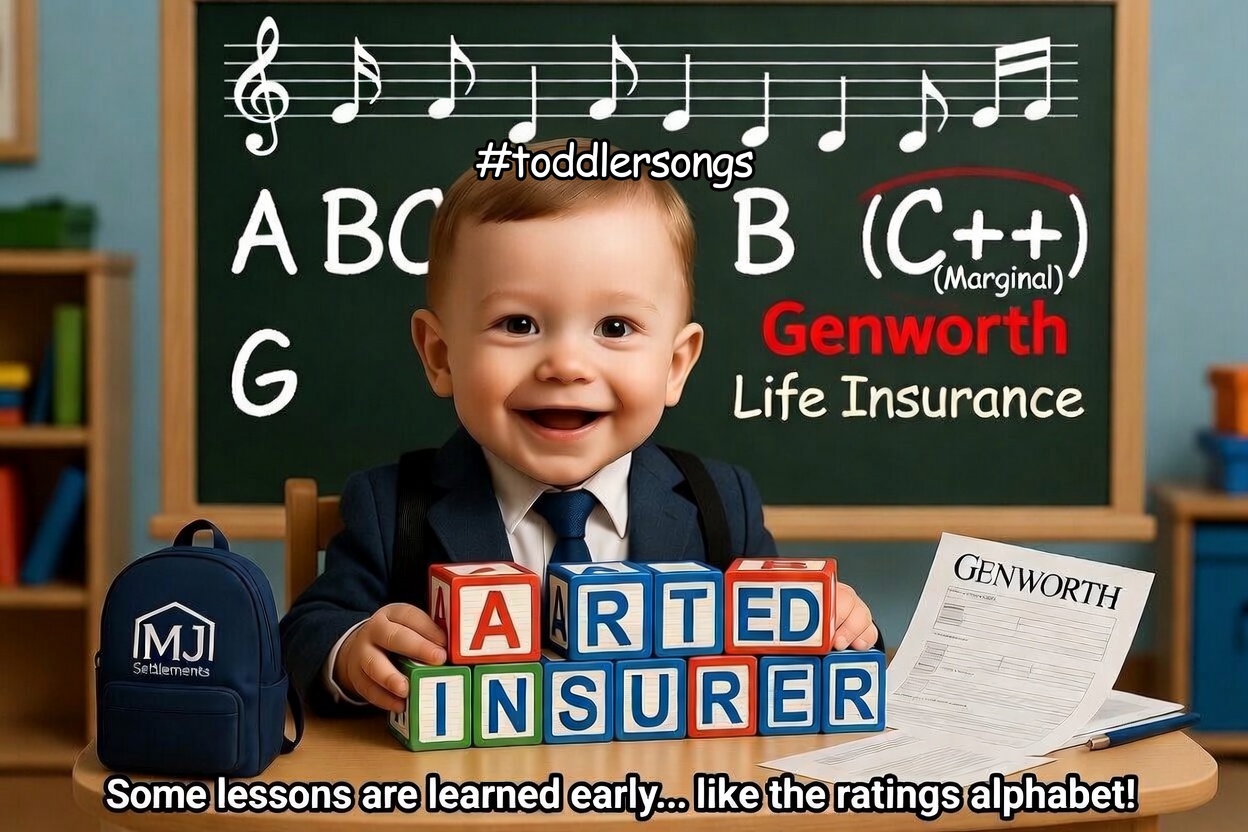
    #toddlersongs

    MJ Settlements continues to market Genworth‑backed payment receivables as if they were supported by A‑rated insurers, even though every credible source places Genworth at C++ or B‑.

    Some lessons are learned early in life. Children learn their ABCs in nursery school. The point is simple: Todd Lesk doesn’t know his ABCs — his A.M. Best ratings — and most people learn their ABCs in nursery school. That’s why I tagged this pattern #toddlersongs. MJ Settlements continues to market Genworth‑backed payment receivables as if they were supported by A‑rated insurers, even though every credible source places Genworth at C++ or B‑.

    That’s the part MJ Settlements keeps hoping no one notices. They continue to present Genworth‑backed structured settlement receivables as if they were supported by “A‑Rated Insurance Carriers,” even though Genworth Life Insurance Company is C++ (Marginal), Genworth Life and Annuity is B‑, and Genworth Life of New York is C++. There is no A‑rated insurer anywhere in the chain, yet the marketing language keeps insisting otherwise.

    This isn’t a one‑off slip. It’s a pattern — a persistent, almost stubborn refusal to acknowledge the actual A.M. Best ratings. And now, with the newly discovered line claiming “Court Order + A‑Rated Carrier + Tax‑Deferred,” the misrepresentation has evolved into a three‑layer stack of assurances that simply do not exist.

    So let’s break it down, starting with the first and most basic problem: the ratings alphabet. If you can’t distinguish A from C++, you shouldn’t be marketing financial products to investors. Yet here we are.

    Misrepresentation Exhibit 1: The A‑Rated Illusion

    MJ Settlements’ website currently claims:

    “A‑Rated Insurance Carriers Payments are backed by household names — New York Life, MetLife, Berkshire Hathaway, John Hancock, Pacific Life, and more — among the strongest insurers in the world.”

    Only a very small receivable from one of the companies listed — MetLife — appear anywhere in the actual inventory of investor opportunities.

    Just one.

    That aside, every currently available receivable posted on the date of this post, is s receivable llisted from Genworth or Talcott Resolution, not by any of the prestige‑name higher rated insurers invoked to create a false halo effect.

    Let’s be honest: Lesk has demonstrates he doesn’t know his ABCs — his A.M. Best ratings — and most people learn their ABCs in nursery school, ironically . That’s why I tagged this whole pattern #toddlersongs. Sometimes the metaphor chooses itself.

    (For those who appreciate the full nursery‑school motif:

    Key Fact — June 1, 2026: The Actual Ratings

    CompanyA.M. Best Rating
    Genworth Life Insurance CompanyC++
    Genworth Life and Annuity Insurance CompanyB‑
    Genworth Life Insurance Company of New YorkC++

    Source: Genworth Industry Ratings | Genworth; A.M. Best

    MJ Settlements has repeatedly made false or misleading claims about insurer ratings, as documented in:

    Misrepresentation Exhibit 2: “Court Order + A‑Rated Carrier” as A “Principal Guarantee

    MJ Settlements has now escalated the pattern with a new marketing line:

    “Structured Settlement Income Stream — Up to 7.50% — Court Order + A‑Rated Carrier — Tax‑Deferred.”

    This is the same two‑layer misrepresentation in a single sentence:

    • “Court Order” — falsely implying judicial backing or guarantee
    • “A‑Rated Carrier” — falsely implying insurer strength that Genworth simply does not have as a “principal guarantee”

    The receivables being sold are not backed by any A‑rated insurer. They are backed by Genworth Life Insurance Company (C++), Genworth Life and Annuity (B‑), and Genworth Life of New York (C++).

    Courts do not guarantee payments. Genworth is not A‑rated. Yet MJ Settlements continues to present both as if they were settled facts.

    It’s the same nursery‑school ABC problem: A ≠ C++. But MJ Settlements keeps singing the same tune. #toddlersongs

    A New Sludgsicle: “Backed by the Judicial System”

    MJ Settlements has now added a fresh sludgsicle to its marketing freezer: the claim that every receivable is “reviewed and approved by a court of law” and that buyers are “stepping into a legally binding, in‑force obligation backed by the U.S. judicial system.”

    Courts do not back payments. Courts do not guarantee insurer performance. Courts do not transform C++ and B‑ Genworth receivables into A‑rated obligations.

    A court order under a Structured Settlement Protection Act simply authorizes a transfer. It does not underwrite the insurer, certify financial strength, or provide any form of judicial guarantee.

    Suggesting otherwise is not just misleading — it’s the same frozen‑thawed‑refrozen sludge that has appeared in MJ Settlements’ marketing for months.

    To Lesk’s credit, he is finally calling them receivables instead of “annuities.” But the refusal to accurately describe what courts do — and do not do — is toddler‑like, the regulatory equivalent of “No, I won’t eat those strained carrots.” #toddlersongs

    Why It Matters

    A receivable beginning in 2038 is not “outperforming” anything. It is simply a discounted future payment with:

    • downgrade risk
    • duration risk
    • liquidity risk
    • insurer‑specific credit risk

    Yet MJ Settlements continues to wrap these high‑risk, long‑deferred receivables in marketing language that suggests institutional‑grade safety.

    It’s the financial‑literacy equivalent of singing the ABCs while insisting you’re teaching calculus.

    Misrepresentation #3 The”Structured Settlement Offering”

    The Nursery‑School Motif

    This is where #toddlersongs earns its place.

    Children learn their ABCs in nursery school. MJ Settlements still can’t get its A, B, or C++ straight.

    The metaphor isn’t an insult — it’s an observation:

    • Adults understand insurer solvency.
    • Adults understand third‑party ratings.
    • Adults understand the difference between A‑rated and C++ (Marginal).

    MJ Settlements continues to behave like someone proudly reciting the alphabet while misidentifying the letters.

    And like any toddler song, the tune repeats. And repeats. And repeats.

    Children learn their ABCs in Nursery School, Ironically hashtagged #toddlersongs

    Bottom Line

    MJ Settlements isn’t confused. They’re committed — committed to a marketing narrative that collapses the moment a consumer checks the actual ratings.

    Until that changes, the industry will keep hearing the same refrain

  • QSF Tax Malpractice Allegations in UCLA Settlement Administration

    A West Hollywood law firm that helped secure hundreds of millions for UCLA sexual‑abuse survivors now accuses Robert W. Wood and Wood LLP of providing fatally flawed QSF tax malpractice advice — allegedly costing clients $2 million in settlement interest.

    This case presents a rare, public look at how QSF tax malpractice allegations can surface when interim‑interest handling breaks down. It frames the broader context for understanding the exposure that follows in the sections below.

    🔑 Key Points

    • A California state court lawsuit alleges professional negligence and breach of fiduciary duty tied to Wood LLP’s guidance on a Qualified Settlement Fund (QSF).
    • The claimed error: tax advice that failed to protect interest income accruing inside the QSF, resulting in a $2 million loss to sexual‑abuse survivors.
    • The case places unusual scrutiny on Wood — a nationally recognized QSF authority, Forbes contributor, and author of the field’s leading treatise — raising questions about the gap between published expertise and applied practice.

    ⚖️ Why This Case Is Different

    Most legal malpractice cases disappear into the profession’s background noise — a missed deadline, a misdrafted clause, a settlement offer never conveyed. Insurers pay, courts move on, and the bar barely notices.

    This case is different.

    Robert W. Wood is not a generalist who wandered into a complex tax matter. He is, by nearly any measure, the most prolific published authority on Qualified Settlement Funds in the United States.

    • His treatise, Qualified Settlement Funds and Section 468B, is widely regarded as the definitive practitioner guide.
    • His companion volume, Taxation of Damage Awards and Settlement Payments, is standard reference material for plaintiff’s firms nationwide.
    • His dozens of Tax Notes Federal articles and high‑visibility Forbes columns have shaped how the profession understands QSF mechanics.

    The plaintiffs now allege that the very technical nuances Wood spent years teaching were not applied correctly in their own engagement.

    When a generalist makes a tax error, it is a cautionary tale. When the nation’s most visible QSF commentator is accused of misapplying the rules he helped define, it becomes a reckoning — for the individual, for specialist practice norms, and for clients who relied on credentials they had every reason to trust.

    The stakes are amplified by who the ultimate victims are: survivors of sexual abuse by a former UCLA gynecologist. After years of trauma and litigation, they secured a historic settlement. To then allegedly lose $2 million of those proceeds through a preventable tax error is, if proven, a profound and compounding failure.

    📄 What the Lawsuit Says

    The plaintiff is a West Hollywood boutique law firm formed specifically to represent UCLA sexual‑abuse survivors. The firm helped deliver nearly $700 million in settlements — one of the largest institutional sexual‑abuse resolutions in California history.

    In April 2026, the firm sued Robert W. Wood and Wood LLP, alleging:

    • Professional negligence
    • Breach of fiduciary duty

    The core allegation: Wood’s tax advice failed to protect interest income generated inside the QSF.

    🏛️ QSF Mechanics (Briefly)

    Under IRC § 468B:

    • A defendant may pay a lump sum into a court‑supervised or government‑approved fund, extinguishing its liability.
    • The QSF holds the money while allocation issues are resolved — often months or years.
    • During that time, the fund invests the proceeds.
    • In large settlements, even modest returns can generate seven‑figure interest income.

    The lawsuit alleges that Wood’s guidance did not properly address:

    • Who bears tax responsibility for interim interest
    • How the QSF documents should be structured to protect that interest

    The claimed result: a $2 million loss to the survivors.

    As of publication, Wood LLP has not publicly responded. All allegations remain unproven.

    🎯 The Reliance Question

    This is the heart of the case — and its sharpest irony.

    The plaintiff firm did not stumble upon Robert W. Wood. They hired him because:

    • His treatises define the field
    • His Tax Notes articles shape practitioner understanding
    • His Forbes columns reach a national audience
    • His firm markets him as “a national authority” on QSFs

    In malpractice law, specialist status is a double‑edged credential. It opens doors — and raises the standard of care.

    A cardiologist is judged against cardiologists. A securities specialist is judged against securities specialists. And an attorney who authored the definitive QSF treatise is judged against the highest standards of QSF practice.

    The plaintiff firm is a litigation boutique — expert in advocacy, not tax. They hired Wood precisely to supply the expertise they lacked. If the advice was deficient, the reliance argument is powerful.

    Courts in California and nationally have long recognized that reliance on a specialist’s expertise is central to the standard‑of‑care analysis.

    📚 The Writings at the Center of the Storm

    Wood’s published work on QSFs is extensive — and on the issue of interest income, unusually on‑point.

    In April 2024, Wood and Alex Z. Brown published Qualified Settlement Fund Interest: Who Gets It and Why in Tax Notes Federal. The article examined the exact issue now at the center of the lawsuit: who bears tax responsibility for interim interest.

    The alleged harm predates the article.

    This raises a pivotal question:

    Did the 2024 article reflect knowledge Wood already possessed — and should have applied — during the earlier engagement?

    Or was it a synthesis of lessons learned after the fact?

    His broader QSF portfolio includes:

    • Is Borrowing From Qualified Settlement Funds Taxable (2021)
    • Actually, Single‑Claimant Settlement Funds Are Valid (2020)
    • Qualified Settlement Funds Named Like Lawyer Trust Accounts (2019)
    • Qualified Settlement Funds in Corporate Transactions (2014)

    The irony is unmistakable: the attorney who taught the profession about QSF interest risks is now accused of mishandling those risks in practice.

    🌐 Wider Tremors: What This Case Means for the Bar

    1️⃣ Specialist Standard of Care

    If a court finds Wood’s advice fell below the standard for a nationally recognized QSF expert, the message will be clear: publishing credentials do not substitute for precision in client work.

    2️⃣ Structural Scrutiny of QSF Engagements

    Plaintiff firms may now demand explicit written guidance on interest income, documented QSF reviews, or second opinions.

    3️⃣ Publishing vs. Practice

    Wood’s prolific output invites a question — fairly or not — about whether high‑volume publishing diverts bandwidth from meticulous client work.

    4️⃣ Malpractice Risk for Specialist Boutiques

    Concentrated expertise brings prestige — and concentrated liability.

    🗂️ Key Events at a Glance

    • UCLA Settlement — Nearly $700M paid to more than 5,500 survivors.
    • QSF Established — Held hundreds of millions, generating substantial interim interest.
    • Wood LLP Engaged — Retained based on Wood’s national reputation.
    • Apr. 1, 2024 — Wood & Brown publish QSF interest article in Tax Notes Federal.
    • Alleged Harm Discovered — Plaintiff firm claims $2M in interest was lost.
    • Apr. 2026 — Lawsuit filed in California state court.
    • May 2026 — Legal News Feed and Law360 coverage triggers national attention.

    The Reckoning

    QSF Tax Malpractice is not just a headline — it is a warning signal for every practitioner who structures, administers, or advises on Qualified Settlement Funds. The allegations in this case, if proven, illustrate how a single overlooked tax‑treatment detail can convert routine QSF interest into a seven‑figure exposure. And because the mechanics of §468B are uniform, any practitioner handling a QSF with similar fact patterns should be watching this case closely.

    This fact pattern also underscores how QSF administration errors—especially around interim interest—can quietly accumulate into significant tax exposure when not handled with precision

    The issues raised here are not exotic. They recur in mass‑tort settlements, institutional‑abuse cases, class actions, and any matter where a fund holds money long enough to generate meaningful interest. Interim interest is not incidental; in large settlements it can represent meaningful value for claimants. When the tax treatment of that interest is not clearly addressed, documented, or allocated, the consequences can be significant.

    This is also a case that underscores the professional‑standards dimension of specialist practice. When firms rely on outside QSF tax counsel, they do so because §468B is technical, unforgiving, and outside the core competencies of most litigators. That reliance is not unusual — it is the norm. And it is precisely why the legal, settlement, and tax community will want to be watching this case. The outcome may influence how practitioners document interest‑income treatment, how QSF agreements are drafted, and how specialist advice is evaluated in high‑stakes settlement administration.

    If the allegations are ultimately sustained, the lesson will be clear: published expertise and applied expertise are not interchangeable, and the gap between them can cost claimants the very money a QSF is designed to preserve. The case is pending. The defendants have not publicly responded. But the implications extend far beyond the parties, and the settlement‑tax community is paying attention.

    All allegations described here come from the complaint and remain unproven in court. This article does not constitute legal advice.

    Counsel‑Managed QSFs: Why They Fail Under Banks Doctrine May 14, 2026

  • A Review of Genex Capital’s Fixed Rate Runner™🟦

    For years, one of the recurring problems in the structured‑settlement tertiary market has been linguistic drift — the habit of describing receivables as if they were insurance‑issued annuities. Genex Capital was no exception. Its former Assured Annuity branding created avoidable confusion, particularly when the underlying legal instrument was a Receivables Purchase Agreement, not an annuity contract.

    With the launch of the Fixed Rate Runner™, Genex has taken a clearer, more disciplined, and very constructive approach.

    🔍📘Clearer Terminology and a Cleaner Value Proposition

    The most notable improvement is that Genex now calls the product what it is: payment receivables, not annuities. The “How It Works” section explains that Genex buys fixed‑income, fixed‑term structured settlement payment‑certain insurance obligations at a discount and re‑offers these Payment Receivables to investors at preferred rates.

    That is the correct term. That is the correct legal characterization. And it is a welcome departure from the earlier branding.

    The site also makes clear that these are insurance company obligations, not life‑contingent annuities, and that the yield comes from the discount at which Genex acquires the receivables — not from derivatives or exotic structures.

    📈💵A Straightforward Explanation of the Yield Story

    The Fixed Rate Runner™ is positioned as an alternative fixed‑income, fixed‑term, fixed‑rate investment designed to maximize yield while preserving capital. The site highlights:

    • Annual yields from 5.25% to 8.00%
    • Terms from 5 to 40+ years
    • Underlying payors rated A to A++
    • Liquidity and right‑of‑survivorship options

    These are the details sophisticated investors expect, and the presentation is cleaner and more professional than in the past.

    🧭🔧A Very Positive Step Forward

    Genex Capital has taken a very positive step by fully retiring its Assured Annuity platform and replacing it with a structure that uses accurate terminology and aligns with regulatory reality. In a tertiary market where many participants still cling to the outdated and inaccurate “SMA” label — even after the 2017 revisions to the NAIC Life & Health Insurance Guaranty Association Model Act (#520) adopted by most states — Genex’s move stands out. It brings clarity to investors, reduces long‑standing confusion, and helps align the tertiary market with the standards and expectations that govern the primary annuity space.

    🔎🧊Crystal‑Clear on What It Is — and What It Isn’t

    One of the strongest aspects of the Fixed Rate Runner™ presentation is that Genex is crystal clear that this is not an insurance product. The site states plainly that investors are purchasing payment receivables, not annuities, not insurance contracts, and not products backed by guaranty association protection. In a market where some participants still blur that line — sometimes aggressively — this level of clarity is not only welcome but essential. It respects investors, aligns with regulatory reality, and reinforces the distinction between insurance‑issued annuities and the receivables that circulate in the tertiary market.

    🏁💡A Competitive Market — and a Strong Concept

    The very use of the “Fixed Rate Runner™” name signals something important: this is a competitive market, and firms are constantly looking for ways to differentiate. In that race, Genex has come up with a genuinely good concept — one that pairs accurate terminology with a cleaner, more disciplined presentation of what investors are actually buying.

    📣📘A Call for Industry‑Wide Clarity

    Genex’s shift should serve as a signal to the rest of the tertiary market: it’s time to abandon the use of “annuity” language when selling receivables. The term has never been accurate, and its continued use — especially after the 2017 NAIC Model Act revisions adopted by most states — only perpetuates confusion. Receivables are not annuities, they do not carry guaranty association protection, and describing them as such misleads consumers and undermines confidence in the primary annuity market. The industry would benefit greatly if more participants followed Genex’s example and adopted terminology that reflects the actual legal and economic nature of the product.

    ⚖️📝A Balanced Take

    This review is not a call to “run out and buy” anything. Receivables are not annuities, they are not risk‑free, and they require proper due diligence, legal review, and suitability analysis.

    But credit where it’s due: Genex Capital’s Fixed Rate Runner™ is a materially clearer, more transparent, and more professionally presented offering than its earlier Assured Annuity era. And by embracing accurate terminology and modernizing its platform, Genex has taken a very positive step forward.

  • 🌿 THE PLANTIFF HEDGE — Q2 2026

    by John Darer CLU ChFC MSSC CeFT RSP CLTC

    A quarterly botanical‑forensic survey of the nation’s most persistent legal flora.

    I. EASTERN REGION — THE ROOT SYSTEM

    Henry County, Georgia

    Henry County, Georgia has rekindled its civil docket Plantiff activity, to the rejoice of observers who track these blooms with the same solemnity normally reserved for the first Cherokee Rose pushing through stubborn red clay.

    This is the first major Plantiff event of 2026 — not a resurgence, not a renaissance, but a rhizome remembering its purpose.

    Q2 Notes:

    • Pure, unhybridized Plantiff spelling.
    • Dormant root system → active sprout.
    • Clerks unfazed, suggesting prior exposure.
    • SEO uplift measurable.
    Topiary garden scene featuring a smiling donkey statue holding Oh Henry! candy bars, surrounded by sculpted greenery, peaches, and a plant‑formed scale of justice, labeled “Henry County, Georgia — East Coast Plaintiff Epicenter.”

    Hinds County, Mississippi

    The epicenter of typographical evolution. The only known jurisdiction where the Plantiff Hedge has entered a mutational phase.

    A. Plantiffus litigatorius hindsensis typica

    The classic Hinds County Plantiff. Stable. Abundant. Aggressively self‑seeding.

    B. Plantiffus litigatorius hindsensis mutata (The Planintiff)

    The advanced mutation. Adds letters instead of losing them — a behavior botanically inconsistent with known drift models.

    C. Plantiffus litigatorius hindsensis dualskiensis (The Dualski Hybrid)

    The rare hybrid bloom where Plantiff and Planintiff appear in the same ecosystem. A once‑in‑a‑generation event.

    Q2 Notes:

    • The official docket header now reads Planintiff.
    • Mutation fixation achieved.
    • No Plaintiffs detected.
    • Hinds County is now a monoculture.

    II. WESTERN REGION — THE BLOOM CYCLE

    Orange County, California (OCTLA)

    The first confirmed Orange County Plantiff sighting of 2026 appears, as usual, in the OCTLA event cycle. The language shows the familiar drift — not explicitly botanical, but unmistakably chlorophyll‑adjacent — as if the organization has once again been lightly pollinated by the Jacaranda canopy.

    Q2 Notes:

    • Floral surnames in the CLE lineup.
    • Pricing structures that echo the 2025 $65 Plantiff Attorney Member tier.
    • A general “Plant‑Advocate‑Friendly” tone.
    • The hedge behaves like a seasonal ornamental: it blooms annually, confuses the gardeners, and refuses pruning.
    Satirical OCTLA announcement poster listing plant and floral surnames eligible for Plantiff Attorney Member pricing.

    Plate OC‑1 — OCTLA Announcement Poster (2026). Evidence of anthroponymic bloom cycle in Orange County. (Satire)

    The Madison Law Taproot (2024–2026)

    Madison Law (Irvine, CA) remains the foundational stone of the West Coast Plantiff lineage. Though the firm has since corrected the spelling, its April 7, 2024 “Plantiff” page stands as the earliest complete fossil of the species — the taproot from which the Western hedge continues to grow.

    The correction does not diminish its significance. If anything, it elevates it:

    • the first documented West Coast Plantiff, and
    • the first documented corrective event

    A firm that bloomed early and then pruned responsibly is the perfect hinge between the OCTLA recurrence and the broader Western drift. It anchors the lineage, providing the geological layer that makes the Orange County bloom cycle legible.

    Madison Law is not merely a historical footnote. It is the living fossil that gives the entire Western Plantiff ecosystem its root structure.

    III. CENTRAL REGION — THE WANDERING TENDRILS

    Central Region Dual Mutuation Event: C-2 Hashtag Bloom (National Law Review, on X.Com 3/31/26)

    Because the tweet contains two independent Plantiff occurrences in the same micro‑environment:

    1. Metadata mutation#plantiff
    2. Textual mutation — “plantiff” in the tweet copy itself

    …it qualifies as a C‑2 Dual Mutation Event, defined as:

    C‑2 — A simultaneous malaprop in both metadata (hashtags, tags, captions) and the surrounding editorial text, originating from an institutional or national‑level legal publisher.

    Why this is Central Region (not Peripheral, not Deep)

    • It’s not Peripheral, because the host is a national legal publication, not a county clerk or boutique firm.
    • It’s not Deep, because the mutation is not in the article body, PDF, or legal document — only in the social‑media wrapper.
    • It is squarely Central, because the error appears in editorially controlled public‑facing text.

    Why C‑2 matters

    C‑2 events are rare and highly diagnostic:

    • They show parallel propagation vectors (text + metadata).
    • They indicate editorial breakdown, not just a stray hashtag.
    • They often precede T‑series incursions (full‑text “plantiff” inside the article itself).

    This is the kind of event that suggests the Hedge is not just creeping — it’s testing structural weaknesses.

    Taxonomic Summary

    RegionCodeDescriptionExample
    CentralC‑2Dual mutation: metadata + text in same institutional postNational Law Review tweet, 3/31/26

    This specimen fits squarely into the Central Region of the Plantiff Hedge map — the zone where:

    • Institutions with editorial controls
    • Accidentally propagate the malaprop
    • In metadata, headlines, or hashtags
    • Without the mutation appearing in the article body

    It’s the region between:

    • Peripheral Zone — small firms, county clerks, CLE vendors
    • Deep Zone — full‑text “plantiff” in pleadings, orders, or published opinions

    The National Law Review hashtag is a textbook Central Region incursion:

    • National‑level publisher
    • Controlled social media channel
    • No body‑text contamination
    • Public‑facing metadata error
    • High‑visibility propagation vector

    Classification: H‑1 (Hashtag Bloom)Central Region

    Why it matters: Central Region events are the bridge species — they show the Hedge can cross from local/accidental to national/structural. They’re the ones that precede the T‑series (Textual) mutations in the same ecosystem.

    2026 Major Touchstone

    2026 Minor Sightings

    The hedge has begun to meander, sending exploratory tendrils into the Midwest and Mountain West.

    Q2 Notes:

    • Missouri: “Plantiff’s Mothion.”
    • Nevada: “Plantiff‑Forward Representation.”
    • Colorado: Plaintiff + Plantiff hybridization in the same sentence.

    The hedge behaves like a volunteer plant: uninvited, thriving, and confusing.

    IV. THE LINEAGE — 2024 TO PRESENT

    2024 — The Seed

    Madison Law’s “Plantiff” results page. The soil is inoculated.

    2025 — The Institutional Wink

    OCTLA’s $65 Plantiff Attorney Member tier. The wink becomes a nod in 2026.

    2026 — The Annual Bloom

    Henry County rekindles. Hinds County mutates. Orange County recurs. The hedge stabilizes.

    V. STRAIGHT‑FACED SUMMARY

    By Q2 2026, the Plantiff Hedge is:

    • Perennial in the East
    • Seasonal in the West
    • Migratory in the Central corridor

    The Plantiff is no longer a typo. It is a botanical condition, a jurisdictional phenomenon, and a species of legal flora that refuses to be weeded out.

  • Bad Faith Structured Settlements

    Bad faith in insurance has nothing to do with morals, manners, or how anyone spent their Sunday. It’s about insurers cutting corners — slow‑walking a claim, dodging clear liability, or refusing to settle. When that happens, the policyholder loses the protection they paid for. This article explains how bad faith structured settlements help manage exposure and resolve claims within limits.

    🔹 Bad faith isn’t about virtue — it’s about conduct. When a carrier delays, denies, or deflects instead of evaluating a claim reasonably, that’s where exposure begins.

    🔹 The duty is straightforward: protect the insured when liability is reasonably clear. If the insurer mishandles a settlement opportunity, the insured can be left staring at an excess verdict the carrier should have prevented.

    🔹 Most bad‑faith cases aren’t born from malice — they’re born from mismanagement. Missed deadlines, incomplete investigations, low‑ball offers, or failure to respond to a policy‑limits demand can turn an ordinary claim into a seven‑figure problem.

    Understanding Bad‑Faith Exposure

    Insurance bad faith arises when an insurer fails to protect its insured from excess exposure by refusing to settle a claim within policy limits when liability is reasonably clear. While structured settlements rarely appear explicitly in published opinions, they are often the most effective tool for resolving the underlying disputes that create bad‑faith risk.

    Bad‑faith exposure can arise in:

    🔹 motor vehicle liability claims 🔹 medical malpractice disputes 🔹 commercial liability matters 🔹 professional liability cases 🔹 catastrophic injury claims 🔹 multi‑claimant accidents with limited limits

    When an insurer mishandles a settlement opportunity, the insured may face a verdict far exceeding their coverage — and the insurer may be responsible for the entire excess judgment.

    Why Structured Settlements Matter in Bad‑Faith Cases

    Structured settlements solve problems that lump sums cannot:

    🔹 stretch limited dollars 🔹 provide payment security 🔹 reduce long‑tail risk 🔹 demonstrate good‑faith claims handling 🔹 create settlement pathways when negotiations stall

    In bad‑faith‑sensitive cases, these features become claims disaster‑recovery tools.

    Examples of How Structured Settlements Resolve Bad‑Faith Exposure

    Below are practical, visual scenarios showing how structures prevent or neutralize bad‑faith risk.

    1. Clear‑Liability Auto Case With Inadequate Limits

    A claimant suffers a traumatic brain injury. Liability is uncontested. The policy limit is $100,000; the life‑care plan exceeds $3 million.

    A structure can:

    🔹 stretch limited dollars 🔹 fund lifetime medical needs 🔹 protect the insured from excess exposure 🔹 demonstrate good‑faith claims handling

    2. Commercial Liability Claim With Long‑Tail Damages

    A business faces decades of projected wage loss. The claimant demands payment security.

    A structure can:

    🔹 match payments to future‑loss projections 🔹 reduce the present‑value cost of settlement 🔹 use funding agreements or reinsurance‑supported designs 🔹 resolve the claim before excess exposure develops

    3. Catastrophic Injury Case Where the Claimant Requires Payment Security

    The plaintiff refuses to settle unless future payments are guaranteed.

    A structure can:

    🔹 provide secure, guaranteed lifetime benefits 🔹 eliminate solvency concerns 🔹 satisfy the claimant’s long‑term needs 🔹 avoid litigation over alleged failure to settle

    4. Professional Liability Claim With Disputed Future Earnings

    The parties disagree on future‑loss assumptions.

    A structure can:

    🔹 provide indexed income streams 🔹 reduce the cost of settlement 🔹 satisfy the claimant’s need for long‑term security 🔹 avoid an excess verdict driven by future‑loss testimony

    5. Employment or Wrongful‑Termination Claim With Multi‑Year Pay Exposure

    A claimant seeks multi‑year wage continuation.

    A structure can:

    🔹 replicate salary continuation 🔹 provide tax‑efficient periodic payments 🔹 reduce upfront cost 🔹 eliminate the risk of a verdict exceeding limits

    6. Multi‑Claimant Accident With Limited Limits

    Several injured parties must divide a single policy limit.

    A structure can:

    🔹 stretch limited dollars 🔹 provide individualized payment streams 🔹 resolve all claims without triggering bad‑faith exposure

    Medical Malpractice Scenario: Bad‑Faith Exposure With a Med‑Mal Insurer

    Medical malpractice claims create some of the most volatile bad‑faith environments because damages are often catastrophic and juries can produce outsized verdicts.

    Scenario: Missed Policy‑Limits Demand in a Birth Injury Case

    A newborn suffers HIE during delivery. The life‑care plan projects $12–18 million in future medical needs. Plaintiff makes a policy‑limits demand for $1 million.

    The med‑mal insurer:

    🔹 delays evaluation 🔹 disputes causation 🔹 fails to respond within the demand window

    The case moves toward trial. The insured OB/GYN faces catastrophic personal exposure.

    How a Structure Solves the Disaster

    A structured settlement becomes the only viable path to resolve the claim:

    🔹 stretches limited dollars 🔹 funds lifetime medical needs 🔹 demonstrates good‑faith claims handling 🔹 protects the insured physician or hospital 🔹 satisfies the plaintiff’s need for lifetime care 🔹 prevents a catastrophic excess judgment

    This is a textbook example of a structure functioning as a claims disaster‑recovery tool.

    🔹 Plaintiff Recovery Trusts in Bad‑Faith Cases With Taxable Damages

    Some bad‑faith cases — especially employment, commercial, or professional liability disputes — involve taxable damages such as lost earnings or front pay. When a policy‑limits demand is mishandled and the case edges toward excess‑exposure territory, both sides may need a settlement structure that provides long‑term stability without relying on tax‑free periodic payments.

    A Plaintiff Recovery Trust (PRT) can serve that role in a straightforward, practical way:

    🔹 manages taxable periodic payments 🔹 provides fiduciary oversight 🔹 supports budgeting and long‑term planning 🔹 helps resolve cases within limits by smoothing taxable income 🔹 demonstrates good‑faith claims handling in high‑pressure negotiations

    For a more expansive explanation of the technique, see the Plaintiff Recovery Trust overview on 4structures®.

    🛡️ Disaster Recovery Planning in Bad‑Faith‑Sensitive Cases

    Bad‑faith exposure is a claims disaster scenario. Structured settlements are often the most effective disaster‑recovery tool because they create settlement pathways that lump sums cannot.

    Disaster Scenarios & Recovery Solutions

    🔹 Policy limits inadequate → structure stretches dollars and resolves within limits 🔹 Future damages disputed → structure bridges valuation gaps 🔹 Claimant demands payment security → structure provides guaranteed future payments 🔹 Multiple claimants, one policy → structure allocates limited dollars fairly 🔹 Long‑tail commercial risk → structure transfers obligations to a carrier or reinsurer 🔹 Negotiations stall → structure creates a middle ground

    Purpose:

    Prevent a claims disaster from becoming a bad‑faith disaster.

    Options for Structuring Settlements in Bad‑Faith‑Sensitive Cases

    🔹 Guaranteed periodic payments (annuity‑funded) 🔹 Funding‑agreement‑based periodic payments 🔹 Reinsurance‑supported periodic payment structures 🔹 Trust‑administered Treasury solutions 🔹 Plaintiff Recovery Trusts (for taxable damages) 🔹 Portfolio‑style, market‑based structures 🔹 Offshore assignment companies (when a portfolio‑style structure or non‑domestic assignment vehicle is required)

    Benefits for Plaintiffs

    🔹 guaranteed payment security 🔹 lifetime medical or wage‑loss funding 🔹 protection against lump‑sum dissipation 🔹 tax‑efficient income 🔹 earlier settlement and closure 🔹 reduced trial risk 🔹 structured oversight for taxable recoveries via a PRT

    Benefits for Defendants and Insurers

    🔹 resolves within limits when damages exceed limits 🔹 demonstrates good‑faith claims handling 🔹 reduces present‑value cost of settlement 🔹 transfers long‑tail risk 🔹 satisfies claimant demands for security 🔹 prevents excess judgments and bad‑faith exposure

    📝 Checklist: When to Consider a Structure in a Bad‑Faith Case

    For Plaintiffs

    🔹 need for guaranteed future payments 🔹 long‑term medical or wage‑loss needs 🔹 concern about lump‑sum dissipation 🔹 distrust of insurer solvency 🔹 desire for tax‑efficient income 🔹 need for early resolution 🔹 taxable damages requiring structured oversight (PRT)

    For Defendants/Insurers

    🔹 exposure exceeds policy limits 🔹 future damages disputed 🔹 need to demonstrate good‑faith handling 🔹 long‑tail risk must be transferred 🔹 multi‑claimant allocation problems 🔹 claimant requires payment security

    Have a Bad‑Faith‑Sensitive Case? Let’s Talk Through the Options.

    Whether you represent a plaintiff or a defendant, structured settlement tools can help manage exposure, secure long‑term obligations, and create settlement pathways that avoid unnecessary risk.

    You can reach me directly at 888‑325‑8640.

    Bad Faith in Insurance: Understanding the Issue – Structured Settlements 4Real®Blog July 5, 2011 Updated October 30, 2025

    Good Faith Use of Structured Settlements in Bad Faith Claims April 19, 2016