by John Darer® CLU ChFC MSSC CeFT RSP CLTC
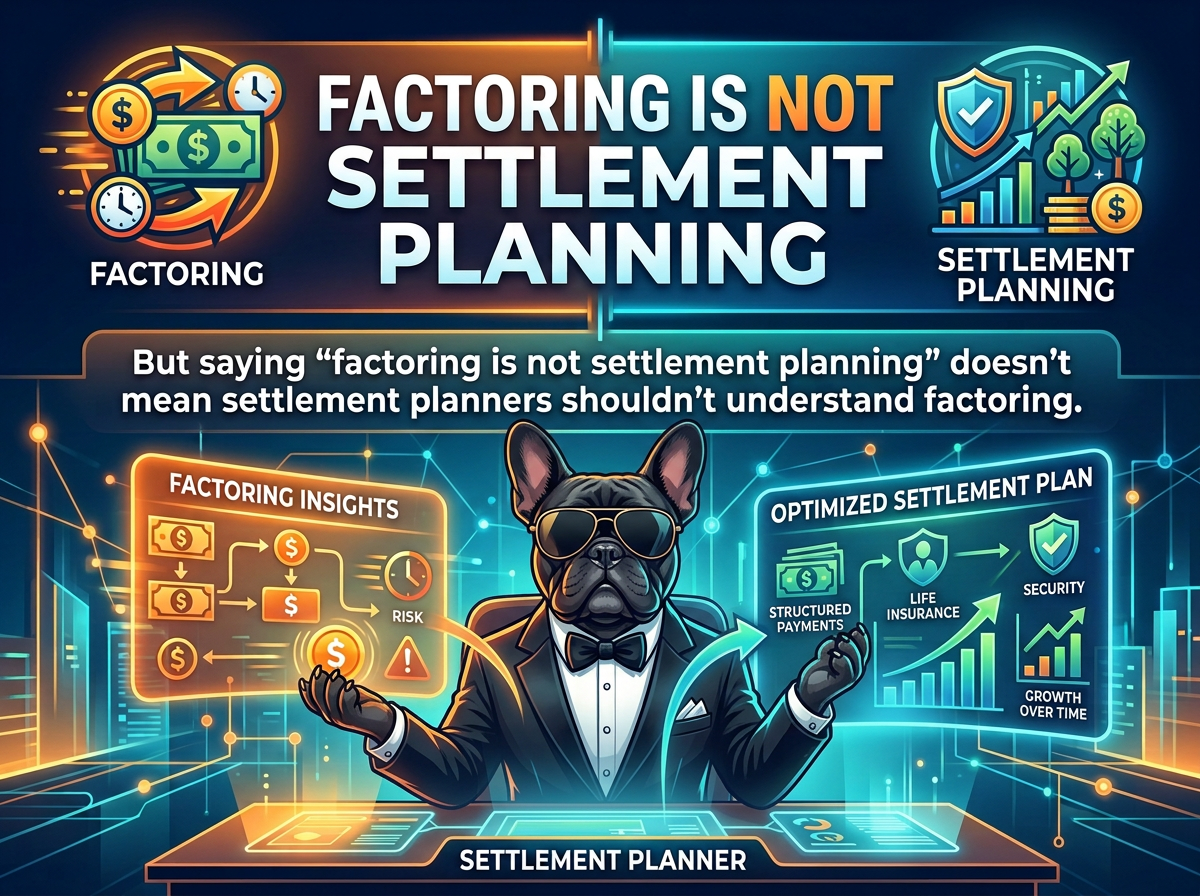
Factoring IS NOT Settlement Planning.
But saying “factoring is not settlement planning” doesn’t mean settlement planners shouldn’t understand factoring.
A few months back I participated in a rather heated debate with a number of individuals in my industry on this very question.
My opponents in the debate were settlement planners who purportedly work exclusively or primarily have a fiduciary responsibility to plaintiffs and plaintiff’s attorneys.
For those who aren’t yet familiar with it, factoring might sound like a cool trick pulled off by a magician, but let’s be real—it’s all about turning future cash flow into the elusive pot of gold at the end of the rainbow. Yes, you can sell your structured settlement payments, lottery winnings, accounts receivables, and other deferred payments for a lump sum today, but don’t forget to ask yourself: is it worth trading your future riches for a pile of cash that’s smaller than your dream of buying an island? In this post, we’re diving into the whimsical world of structured settlement factoring, where promises float around like balloons, and opportunities might just be hiding behind a rubber chicken!
My opponents in the debate would have you believe that merely acknowledging the legal possibility of selling structured settlement payments under IRC §5891 — if a plaintiff obtains a qualified order under a state’s structured settlement protection statute — is enough to make factoring part of “settlement planning.”
But that framing is misleading and dangerous.
It suggests that:
- the existence of a liquidation mechanism
- automatically makes liquidation a planning tool
- and that planners can ethically position themselves to profit on both ends — first on the creation of the structure, then on the dismantling of it.
That’s the problem. Knowledge of factoring is necessary; calling factoring “settlement planning” is deceptive.
I couldn’t find a single client who agreed that factoring is part of settlement planning. If there is a plaintiff attorney who feels that it is, then I challenge you to speak up and respond to this post!
At the November 2005 NSSTA meeting in Washington, a representative from a life insurance company shared a conversation he had with a distinguished trial lawyer from the South. According to this conversation, there are significant concerns within ATLA regarding the practice of factoring. The apprehension hinges on the possibility that plaintiffs with structured settlements may sell their future payments at substantial discounts, leading to the question, “If this is highly probable, what is the rationale for utilizing structured settlements at all?” This concern was reiterated on Thursday by another panelist during the conference, as she addressed a group of attorneys and referenced it in a white paper that outlined various reasons against the use of structured settlements. It is worth noting that my fellow panelist serves as a Senior VP at a notable investment firm looking to attract funds for management; nonetheless, her statements lend considerable weight to my argument in this ongoing debate.
Structured Settlement Factoring is a Potential Solution to a Crisis
Structured Settlement Factoring is Not Settlement Planning
In the opinion of the author, that factoring serves as a solution born out of desperation, utilized only after all other sources of cash have been exhausted to critical needs. While it may be a solution, factoring does not constitute part of settlement planning The author unaware of any factoring companies or their representatives who function as settlement planners. That is where the matter begins and ends.
If you are a plaintiff or plaintiff attorney you owe it to yourself and your client to find out where your settlement planner sits on this question.
Leave a Reply