Structured Settlements 4Real®Blog 2026

Structured settlements expert John Darer reviews the latest structured settlements and settlement planning information and news, and provides expert opinion and highly regarded commentary. that is spicy, Informative, irreverent and effective for over 20 years.

  • When a Brochure Uses the Word “Annuity” for Something That Is Not an Annuity

    Updated April 2026

    This review examines the MJ Settlements brochure and its use of annuity terminology

    The MJ Settlements brochure looks and reads like an annuity brochure. It uses insurer logos, annuity terminology, and annuity‑style framing. But the product being marketed by MJ Settlements is not an annuity.

    The brochure repeatedly describes “Secondary Market Structured Settlement Annuities” as “fixed investments guaranteed to outperform” and claims they are “backed by a major Insurance Company” — even though the product being sold is factored structured‑settlement payment rights, not an annuity contract issued to the investor.

    This distinction is not cosmetic. It is statutory.

    1. The Brochure Is Engineered to Trigger “Annuity” Recognition

    The brochure uses:

    • “Structured Settlement Annuities” as a product label
    • “guaranteed, fixed income stream”
    • “backed by a major Insurance Company”
    • “AAA to A rated insurance carriers”
    • “fixed term annuity” language in the glossary

    All of these appear in the brochure’s text .

    A retiree reading this will reasonably believe:

    • the product is an annuity
    • the insurer stands behind it
    • the insurer’s solvency matters
    • the guaranty association protects them

    But none of this is true for factored structured‑settlement payment rights.

    The MJ Settlements website prominently displays insurer logos, creating the visual impression of insurer affiliation. The downloadable brochure does not contain logos, but it repeatedly uses annuity terminology and claims that every offering is “backed by a major Insurance Company” . Because the brochure is distributed through the same website that displays insurer logos, retirees experience the two as a single marketing system. The website supplies the visual cue; the brochure supplies the verbal cue. Together, they reinforce the incorrect belief that the investor is purchasing an annuity backed by an insurer, when in fact the investor is purchasing factored structured‑settlement payment rights.

    A number of the logos used are for insurers that are no longer issuing structured settlement annuities and may have sold off the lines (e.g. Allstate—> Everlake and Allstate NY——> Wilton Re}

    .

    3. Why the Terminology Will Not Change

    The brochure repeatedly calls these products “Secondary Market Structured Settlement Annuities” and “SSA’s” and claims they are “backed by a major Insurance Company” .

    The terminology persists because retirees respond to the word annuity, and the brochure is designed to create the impression of insurer‑issued guarantees.

    But the 2017 NAIC Life & Health Insurance Guaranty Association Model Act revisions specifically exclude structured‑settlement factoring transactions from guaranty association protection — and the exclusion applies retroactively.

    When a seller continues to use the word “annuity” while omitting a retroactive statutory exclusion, the retiree is left with a reasonable but incorrect belief about the nature and safety of the product.

    Still, if there’s a payment servicing agreement in place, the annuity issuer’s guarantee for the assignment company might not apply.to investors.

    4. To Think It’s an Annuity — and Reckless to Omit the Exclusion

    The brochure states:

    “Every structured settlement/lottery we offer is backed by a Major Insurance Company…” “Structured Settlement Annuities are backed by annuity contracts issued by ‘AAA’ to ‘A’ rated…insurance carriers.” says MJ Settlements.

    But the investor is not buying an annuity contract. They are buying assigned payment rights from a factoring transaction.

    The Model Act exclusion means:

    • the insurer does not guarantee the investor
    • the insurer’s solvency is irrelevant
    • the guaranty association provides no protection
    • the investor has no annuity contract

    The brochure’s omission of this exclusion — while using annuity‑style language — is the structural risk.

    That notwithstanding, the Standard & Poor’s rating for Genworth at the time of posting is BB-, while A.M. Best gives it a C++. Source: Genworth website, Standard & Poor’s, and A.M. Best respectively. As the song goes, “A-B-C, it’s easy as 1-2-3.” Well, maybe not…

    5. The Licensing Reality: Licensed, But Actively Appointed with only One Insurance Carrier in Home State

    Holding an insurance license is not the same as having access to the insurance marketplace.

    Actual access comes from carrier appointments, because appointments determine what a producer is legally authorized to sell.

    Licensee Detail April 20, 2026 Florida Department of Financial Services

    If someone is not appointed with any carriers — and neither issues structured‑settlement annuities — then they have no lawful access to the products implied by the brochure’s language.

    Yet the brochure claims:

    “MJ Settlements has direct access to capital markets…”

    Retirees may interpret this as institutional legitimacy. The reality is far narrower.

    6. The Capital‑Markets Claim and Regulatory Reality

    The brochure asserts:

    “MJ Settlements has direct access to capital markets and the expertise to take advantage of them…”

    But “capital markets access” is institutional language. Institutional access requires:

    • carrier appointments
    • distribution agreements
    • securities licensure
    • institutional authorization

    A producer with only two insurance appointments — neither of which issues structured‑settlement annuities — does not have the institutional reach implied by “capital markets access.”

    The phrase creates an impression of legitimacy that does not exist.

    7. Why This Matters for Your Retirement Income

    When retirees believe they are buying an annuity, they believe:

    • the insurer is guaranteeing the payments
    • the insurer’s solvency protects them
    • the guaranty association stands behind the insurer
    • the product is regulated as insurance

    But factored structured‑settlement payment rights expose the retiree to:

    • counterparty risk
    • assignment‑chain risk
    • servicing‑company risk
    • documentation‑integrity risk
    • court‑order risk

    These are not annuity risks. They are transactional risks — and retirees are not told they are taking them.

    8. If You’re Unsure, You Can Ask Your State Regulator

    If a brochure uses the word “annuity” to describe factored structured‑settlement payment rights, and you are unsure what you are being offered, you can ask your state insurance regulator for clarification.

    This is not a complaint. It is a request for information.

    Regulators can explain:

    • whether the product is an annuity under state law
    • whether any guaranty association protections apply
    • whether the use of insurer logos may create a misleading impression

    Retirees deserve clarity before making irreversible decisions.

    9. The Structural Lesson

    The MJ brochure is not an outlier. It is an example of a broader pattern:

    • annuity‑style language
    • annuity‑style design
    • insurer references
    • institutional‑sounding claims
    • omission of the retroactive exclusion
    • narrow licensing presented as broad access

    Retirees are left believing they are buying something they are not.

    The correction is simple:

    If it is not an annuity, do not call it one. If it is excluded from guaranty protection, disclose it. If access is narrow, do not imply it is broad.

    That is the standard retirees deserve.

  • John Darer Reviews Structured Settlement Lock Ins… What You Should Know

    by John Darer CLU ChFC MSSC CeFT RSP CLTC

    A structured settlement lock-in (or lock in) means that the structured settlement annuity issuer will guarantee the cost of a structured settlement, including the specific payment stream in exchange for the “quid pro quo” of a commitment to accept or purchase. The guarantee could be a week or, even a year.

    A structured settlement lock-in (or lock in) is a critically important tool available to those who place structured settlement annuities such as structured settlement brokers, settlement consultants, settlement professionals and settlement planners.

    A structured settlement lock-in offers significant benefits to claimants, plaintiffs, defendants and insurers alike at the time of case resolution.

    While most structured settlement annuity issuers will lock-in without charge for 30-60 days (Pacific Life will charges no lock-in fee for up to 6 months) , the longer lock ins generally require a rate commitment fee that is typically 0.2% of premium for each 30 days

    • Secure the cost of a structured settlement payment stream that must be enumerated in a petition for Court approval of a settlement for minors or wrongful death action.
    • Protect against downward interest rate fluctuations during the time period between the date that the parties have reached agreement to compromise and the date the structured settlement is funded.
    • Protect the intricate weave of the rates in an integrated structured settlement plan with more than one structured annuity issuer.
    • Increase parties satisfaction with the overall process
    • Court approval for a minor’s settlement or wrongful death settlement can take months, during which time the benefits outlined in the petition may no longer be fundable at the original price. This would necessitate submitting a new petition for a revised benefit stream, resulting in unnecessary additional delays.
    • The intricate weave of an integrated structured settlement plan with more than one annuity issuer could be disrupted.
    • You might be fortunate if structured settlement rates move in a favorable direction between the date the compromise agreement is reached and the date the settlement documents are executed (note the distinction). The settlement documents must clearly outline the specific stream of periodic payments.
    • If the structured settlement payment stream is composed of deferred periodic payments the wrong guess could be devastating.

    If you are going to gamble then gamble. If you want assurance then lock in. But you must understand that when a lock-in is submitted the carrier has to purchase assets to secure the benefit stream.  If the case is not funded the annuity issuer may have to sell the bonds. Holding higher yielding bonds in a downward interest rate environment may not be a problem, but the reverse is true in a generally upward rate environment

    “Once you lock in a rate, you lock in the bond math: when interest rates rise, the value of earlier commitments falls.”U.S. SEC, Office of Investor Education and Advocacy, 2026.

    One carrier indicated to me that it has been flooded with requests to change lock-ins commitment by structured settlement brokers or settlement planners and hammered by lawyers with structured attorneys fee deals that threaten to pull out if they don’t get a better rate.

    Phantom Lock-ins by Unethical Brokers

    I also understand that there is a structured settlement broker or two whose business practice appears to be to lock in a phantom benefit stream to get a rate before a benefit stream has actually been fully agreed to and then go back to the carrier with a modification. There may also be parties who will agree to lock-in with one broker and then go to another broker to circumvent the lock in.

    • The carrier must buy assets to match the promised stream. Once the lock is submitted, the insurer begins securing the bonds or derivatives needed to fund the future payments.
    • If the case doesn’t fund, the insurer may have to unwind those positions. In a falling‑rate environment, selling higher‑yielding bonds is not harmful; they sell at a gain.
    • In a rising‑rate environment, the opposite is true. When rates rise, the market value of the bonds the carrier just purchased falls — the SEC’s 2026 guidance states plainly: “When interest rates rise, the prices of existing bonds fall.”
    • That loss has to be absorbed somewhere. The carrier will not voluntarily take it. The only way to reopen the lock is to make the carrier whole, which shrinks the option set to almost nothing.

    Carriers could remove or restrict the lock-in privileges of structured settlement brokers, settlement consultants, settlement planners and settlement professionals who abuse the lock in process. It’s important that ALL primary structured settlement stakeholders understand this process and what the commitment means.

    Insurance companies want to be seen as having and, may be required to have, fair and consistent business practices.

    Consider a case resolved with a single claimant 468B qualified settlement fund. The IRS could audit, review the activities of the single claimant  468B qualified settlement fund and conceivably argue that the pattern of agreeing to a lock in followed by the rejection of that lock in, followed by a one or more locks and re-locks for higher interest rates over a limited period of time demonstrates that the major purpose of the QSF was an economic benefit, an element of control, abusive, and not to resolve outstanding claims. 

  • Qualified Assignment Annuity: Stopping a Misnomer Before It Starts

    The phrase “qualified assignment annuity” has begun showing up in secondary‑market marketing, and it needs to be corrected before it spreads any further. It’s a mash‑up of two unrelated statutory concepts, and if it isn’t stopped now, it risks becoming another piece of misinformation that consumers absorb as if it were part of the structured‑settlement architecture.

    The category heading already establishes that qualified assignment annuity is misnaming. This article expands on that definition by explaining why the term has begun appearing in cash‑now marketing, why it has no basis in IRC §130, and how it blurs two distinct structured‑settlement markets.

    In a structured‑settlement transaction between a plaintiff and a defendant (or the defendant’s insurer), §130(c) defines the qualified assignment as the transfer of the liability to make future periodic payments. After assuming that liability, the assignee may purchase a qualified funding asset under §130(d), and an annuity is simply one permissible type.

    • The qualified assignment transfers the obligation.
    • The qualified assignment company becomes the new obligor.
    • The annuity is purchased as a qualified funding asset to fund the liability the assignee has just taken on.

    This is the primary market. It is the only place where these terms exist.

    Secondary‑market transactions involve an assignment of rights to receive periodic payments, not a transfer of liability. No qualified assignment occurs. No qualified funding asset is purchased. §130 is not part of the transaction.

    Yet the phrase “qualified assignment annuity” has begun showing up in marketing copy, as if combining the words might confer statutory legitimacy. This is the kind of linguistic drift that, if not corrected early, becomes entrenched and misleads consumers for years—much like the earlier spread of “secondary market annuity.”

    When naming clarifies

    Industries evolve, and language evolves with them. Thoughtful naming can sharpen understanding. You’ve coined terms yourself—360‑degree framework being one example—where the language helped articulate something that already existed and improved how practitioners understood it.

    When misnaming distorts

    “Qualified assignment annuity” is misnaming: a splice of two primary‑market statutory terms—qualified assignment and annuity as a qualified funding asset—dropped into a secondary‑market context where neither applies. The phrase has no footing in §130, no presence in primary‑market practice, and no role in any secondary‑market transaction.

    If this term spreads, it will:

    • misinform the public about how structured settlements are created,
    • blur the line between liability transfers and receivables transfers,
    • create false equivalence between regulated and unregulated markets, and
    • promote financial illiteracy at scale.

    Better to stop it now—before the parrot learns the phrase and starts repeating it into the marketplace. Polly don’t want this cracker, and neither should the industry.

    The statutory terms are clear. The architecture is clear. The markets are distinct. The language should be too.

  • Petal One: Continuing Jurisdiction and the Newman Affidavit

    Continuing jurisdiction is one of the core requirements for a Qualified Settlement Fund under 26 C.F.R. §1.468B‑1. It must be real, ongoing, and supported by transparency. In this first petal, the July 16, 2025 Newman affidavit becomes the factual window into how that requirement functions when tested.

    Mayor Thomas Newman’s affidavit outlines a sequence that goes directly to the heart of QSF qualification:

    • Flatirons Bank solicited the Town of Lovell to serve as the governmental authority for its Justice Escrow QSF platform.
    • Once designated, Lovell’s counsel requested the operational and tax information required to exercise continuing jurisdiction.
    • Those requests included tax returns, proof of tax payments, and compliance materials.
    • Flatirons and its officers refused to provide the information.

    These are not peripheral documents. They are the very materials a governmental authority must review to satisfy federal law.

    See Affidavit of Thomas Newman Case 1:25-cv-01787-RDA-IDD Doc. 71-5 Pacer.gov

    Under §1.468B‑1, a QSF must be subject to the continuing jurisdiction of a governmental authority. That jurisdiction is not ceremonial. It requires visibility into operations, access to tax filings and tax payments, and the ability to intervene if compliance issues arise.

    If the governmental authority cannot obtain the information it needs, the QSF fails the qualification test. The affidavit describes a situation in which the governmental authority attempted to perform its role and was blocked.

    In September, I wrote about the importance of continuing jurisdiction as a best‑practice imperative. That post emphasized that the governmental authority must have full transparency, oversight must be continuous, and operators must support—not obstruct—the supervisory role.

    The Newman affidavit shows that the risk described in September was not theoretical. It was already unfolding.

    The affidavit also touches a second question: whether Lovell had the statutory authority to serve as a governmental authority in the first place under Wyoming’s strict Dillon’s Rule framework. That issue is addressed in a separate post and is not revisited here. Petal One remains focused on continuing jurisdiction.

    On January 29, 2026, a federal judge dismissed Flatirons Bank’s lawsuit against Eastern Point Trust Company alleging interference with contracts. That ruling does not resolve the issues raised in the Newman affidavit, but it is part of the broader context in which these questions about continuing jurisdiction now sit.

    Maintaining balance and transparency

    I reached out to Flatirons for comment, as I have in other posts in this series, and provided them with a copy of Mayor Newman’s affidavit. As of this writing, no response has been received. If Flatirons offers clarification or additional context, I will update this analysis so readers have the fullest possible picture.

    • Continuing jurisdiction must be active, not ceremonial.
    • Governmental authorities need access to operational and tax information.
    • When visibility is blocked, the QSF structure is compromised.

  • “From ‘Bridge to Bitcoin’ to $337M Daily Losses: Less Than a Year Apart.”

    In August 2025, a Florida company issued a national BusinessWire press release promoting what it called a “bridge to Bitcoin” for structured‑settlement recipients. It framed itself as the first to “connect structured‑settlement buyouts with a high‑growth asset,” invoked BlackRock to create FOMO, hinted at inflation to create FORO, and wrapped the whole thing in “new era of wealth‑building” language.

    What the press release never mentioned:

    • no FINRA license
    • no insurance license
    • no IAPD record
    • no suitability obligation
    • no volatility assessment

    Yet it was written as if it came from a financial professional.

    And even the terminology was borrowed for effect. A real crypto bridge — as any basic crypto reference explains — is a technical, on‑chain mechanism that moves assets between blockchains using smart contracts, validators, wrapping, and interoperability protocols.

    What Cioppa was offering was nothing of the sort. It was simply:

    “Sell your stable, tax‑free income stream for pennies on the dollar, then go buy Bitcoin.”

    That’s not a bridge. That’s a liquidation followed by a speculative purchase dressed up in fintech language.

    And it wasn’t just BusinessWire. Wire releases get scraped and republished automatically across financial‑content networks — including regional news portals and market aggregators — meaning the pitch reached far beyond its original source.

    I don’t think Cioppa is malicious. He’s a young guy in his early 30s, working hard and trying to make his way. But after more than 40 years in this field — over 30 of them in structured settlements — I’ve sat with the people behind these payments. I understand what their cases cost them, what their stability represents, and why risking it isn’t a casual decision.

    I’ve even spoken with a Connecticut annuitant witha brain injury (who did not deal with Cioppa), a deal that JG Wentworth rejected, who lost his entire investment to this very strategy, selling in March 2025 and had lost it all by the end of 2025.. It’s one thing to debate theory; it’s another to see the real‑world impact on someone who trusted the wrong pitch at the wrong time. See Structured Settlement and Cryptocurrency: A Cautionary Tale – Structured Settlements 4Real®Blog December 17, 2025

    And then look at what happened less than a year later.

    By Q1 2026, the strongest hands in the ecosystem — whales and sharks — were realizing $337 million per day in losses, the worst quarter since 2022 . That’s not “wealth‑building.” That’s capitulation.

    Illustration of two cartoon sharks with expressions suggesting sadness or loss, with the text 'Q1 2026 Crypto losses' overlaying the image.

    If whales couldn’t withstand the volatility, minnows never stood a chance.

    And minnows don’t just lock in losses. They often trigger short‑term capital gains on the way out, taxed at ordinary income rates — with only a limited capital‑loss write‑off each year, and only if they even have taxable income to offset.

    So the behavioral sequence becomes:

    • Minnows bail first
    • Whales bail later
    • Minnows
      • sell early
      • sell low
      • miss the recovery
      • get taxed at the worst rate
      • with almost no write-off relief

    The August 2025 press release never addressed volatility tolerance because it couldn’t. If it had, the entire pitch would have collapsed on contact.

    One only hopes people didn’t fall for it .

    MSN.com Rich bitcoin traders lost $337M daily in first quarter of 2026 April 4, 2026

    Cointelegraph. “Bitcoin whales and sharks have locked in $30.9 billion in BTC losses this year, resembling the 2022 bear market, as on‑chain data points to continued downside risk.” April 4, 2026.

  • MetLife Announces NQA-Flex Deferred Payment Solution for Non-Physical Injury Settlements

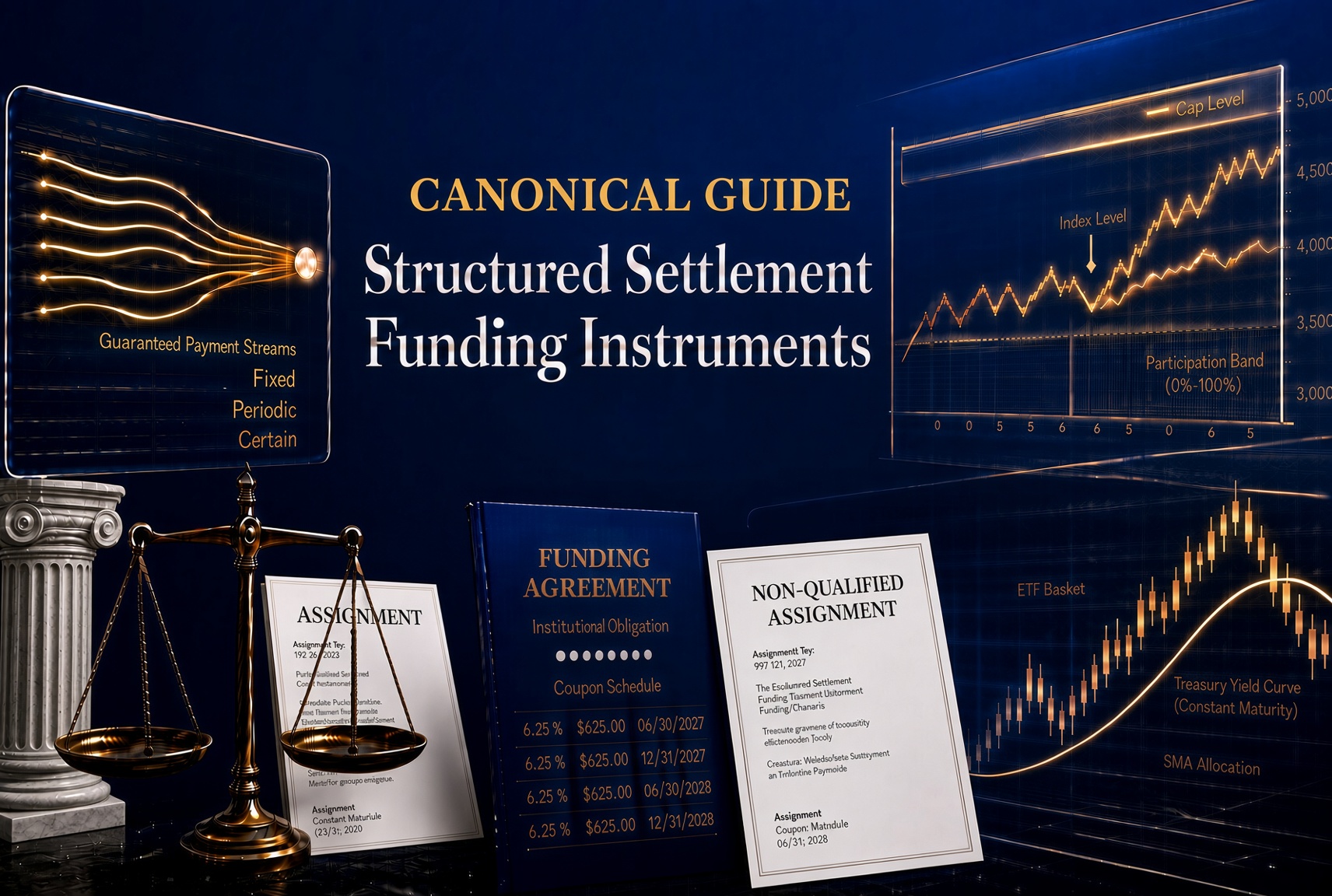
    NQA-Flex Agreement is not constrained by IRC 72(u)

    MetlIfe has introduced the Non-Qualified Assignment Flex Agreement (NQA-FA) The NQA FA solution provides anthe same reliability and strength you expect from MetLife, while offering enhanced payment flexibility beyond our traditional Non-Qualified Assignment solution. 

    Key Highlights of NQA-Flex Funding Agreement

    • New alternative and complementary settlement tool defendants/insurers can use to resolve non-physical injury claims and lawsuits through periodic payments while transferring those payment obligations to MetLife’s Assignment Company.
    • Issued by MetLife Assignment Company, Inc. and Metropolitan Tower Life Insurance Company, both domestic US-based entities.
    • Not Subject to IRC 72(u)
    • Deferred Lump-sum payments are possible‒
    • Annual increases and customized payment designs•
    • Payments must be guaranteed and not life-contingent•
    • May allow non-natural persons (e.g., businesses or corporations) as payees (requires MetLife home office approval)
    • Maximum Deferral 15 years (compared to one year for the annuity funded non qualified assignment),
    • Maximum certain period is 40 years
    • MetLife traditional Non-Qualified Assignment (NQA) product is an annuity-based solution designed to accept the transfer of a defendant’s/insurer’s periodic payment obligation for certain non-physical injury cases.
    • Key Payment Characteristics of Traditional NQA
      • Subject to IRC 72(u)•
      • Requires immediate payments, to begin within one year from purchase
      • Must be made in substantially equal amounts
      • Life-contingent payments are permitted

    Potential Uses for Both NQA and NQA-Flex

    The NQA and the NQA-FA may be used to resolved non-physical injury matters including, but not
    limited to:

  • 🔹Structured Settlements and Bankruptcy of the Payee: What Courts Actually Look At

    Attorneys have been writing recently about how structured settlement payments are treated when a payee files for bankruptcy. It’s an important topic, and one where the outcome often turns less on the product itself and more on the documentation and purpose of the payments.

    This post focuses on bankruptcy of the payee — the injured person or the attorney — not bankruptcy of the insurer. Those are two entirely different conversations, and the guaranty system is not relevant here.

    After 43 years in this business, one pattern is clear: Bankruptcy courts care about the “why,” not just the “what.”

    🔹1. Courts Look at Purpose, Not Just Payment Streams

    A structured settlement payment stream doesn’t automatically become exempt just because it’s periodic. Courts look at:

    • the purpose of the payments
    • the nature of the underlying claim
    • how the settlement agreement characterizes the payments
    • whether the payments are tied to future needs or simply represent deferred cash

    The documentation has to support the exemption. If it doesn’t, trustees will challenge it.

    This is the part attorneys appreciate most when it’s said plainly:

    Allocation is a legal act. The planner can advise, but the lawyer owns the allocation.

    If the release and settlement documents don’t clearly allocate damages — or if the allocation is inconsistent with the facts — the bankruptcy court may treat the payments as non‑exempt.

    Good planning helps, but the legal documents carry the weight.

    🔹3. The Release Matters More Than People Think

    Courts routinely examine:

    • the release
    • the settlement agreement
    • the retainer (at altitude)
    • the petition
    • the schedules

    If the release is vague, generic, or silent on purpose, the trustee has room to argue that the payments are simply an asset of the estate.

    A well‑drafted release reduces that risk dramatically.

    🔹4. Entity Structure Can Affect Outcomes (At Altitude)

    Without going into product mechanics or anything that touches regulated territory, it’s fair to say:

    How the settlement is structured — legally, not commercially — can influence how a trustee views the payments.

    Courts look at:

    • who owns the rights
    • who controls the payments
    • whether the payee has any incidents of ownership

    Again, this is legal structure, not product structure.

    🔹5. Planning Discipline Protects the Debtor

    When the planning, documentation, and allocation are aligned, the debtor is far better positioned to defend the exemption.

    When they’re not, trustees notice.

    This is why attorneys who handle injury cases benefit from understanding how bankruptcy courts analyze structured settlement payments. It’s not about selling anything. It’s about avoiding avoidable problems years later.

  • Structured Settlement Collection Agency in Henderson, Nevada Is Still Not a Structured Settlement — Nevada Law Makes That Clear

    In October 2024, I documented that a Henderson, Nevada business calling itself “Structured Settlement” was, in fact, a collections agency, not a structured settlement company. That post focused on the predictable consumer confusion created when a debt‑collection business adopts a regulated financial term as its DBA.

    2024 post: Collection Agency Misleading Names in Nevada – Structured Settlements 4Real®Blog October 15, 2024

    In 2025, Nevada did something that brings the issue into even sharper focus: it has codified the definitions of “structured settlement” and “structured settlement agreement.” These definitions make the distinction unmistakable.

    NRS 42.275 — “Structured settlement”

    This aligns with federal law under IRC §104(a)(2) and §130. A structured settlement is a tort‑based periodic payment arrangement, not a loan, not a payment plan, and not a collection activity.

    NRS 42.280 — “Structured settlement agreement”

    This reinforces that structured settlements are legal instruments tied to tort resolution and life insurance funding — not consumer debt.

    Nevada’s definitions don’t just clarify what a structured settlement is. They implicitly clarify who is involved in creating one — and who is not.

    Structured settlements are created within a regulated ecosystem involving:

    Structured settlement annuities are issued by licensed life insurance companies that:

    • fund periodic payment obligations
    • maintain statutory reserves
    • operate under solvency oversight
    • participate in qualified assignments

    These professionals:

    • hold state insurance licenses
    • are appointed by the issuing life insurer
    • place structured settlement annuities
    • work with attorneys, mediators, and claims professionals
    • operate under suitability and disclosure rules

    Structured settlements arise from:

    • settlement agreements
    • judgments
    • stipulations

    When a collections business adopts the name “Structured Settlement,” consumers reasonably assume:

    • they are dealing with a structured settlement professional
    • the business is connected to their annuity issuer
    • the business has authority over their payments
    • the business is part of the settlement planning ecosystem

    None of that is true.

    The confusion is baked into the name, and Nevada’s statutory definitions now make that clear.

    If you’re receiving collection calls or letters from a business using the name “Structured Settlement,” it has nothing to do with a structured settlement or an annuity.

    Every month, consumers contact me—and likely others in the structured settlement industry—because:

    • they receive a collection notice
    • they cannot reach the Henderson collections agency
    • the notice or caller ID shows the name “Structured Settlement”
    • they search online for “structured settlement”
    • and legitimate structured settlement professionals appear at the top of the results

    These callers are trying to resolve consumer debt, not anything related to structured settlements, structured settlement planning or settlement planning..

    These collection contacts are unrelated to annuity issuers, periodic payments, or settlement agreements. The confusion comes solely from the business name.

    Nevada’s updated statutory definitions make the distinction clear: a structured settlement is a regulated, tort‑based payment arrangement funded by a life insurer — not a collections activity.

    To avoid any misunderstanding:

    This post does not rely on or endorse anonymous complaint sites. Anonymous postings are unverified and often unreliable. The purpose of this post is to clarify Nevada’s statutory definitions and the BBB‑verified business classification, not to validate or repeat anonymous allegations.

    Structured settlements are a regulated financial tool designed to protect injured people. They are defined by statute. They are created through settlement agreements and judgments. They involve licensed life insurers and qualified assignments and placement involve by individuals and companies that hold insurance licenses and appointments.

    A collections business using the name “Structured Settlement” does not change the meaning of the term — but it does create confusion for consumers, lawyers, and journalists.

    My role, as always, is to keep the record clear.

    Structured settlements have a precise meaning in Nevada law and federal law. A collections agency in Henderson, Nevada using the name “Structured Settlement” does not provide structured settlements or structured settlement agreements. It provides collections services. The distinction matters, and consumers deserve clarity.

  • Crypto Still Isn’t Suitable for Injury Victims — A Reminder From This Week’s Headlines

    A month ago, I walked readers through what happened to anyone who followed the August 2025 “sell your structured settlement as a bridge to crypto” hype and compared those positions to February 2026 prices. That analysis wasn’t about predicting markets — it was about showing how fast the emotional math collapses when people who were never equipped for volatility are pushed into it. But the warning didn’t start there. It goes back to the November posts — one responding to the national press‑release campaign urging people to sell their structured settlements as a bridge to crypto (because nobody floods the zone with national press releases to “expose pennies on the dollar”; that’s not advocacy, that’s hype), another documenting the Connecticut disaster with the cremation coffin rising to heaven and the crypto urn feeling the flames below, and the more recent Connecticut piece calling out the lack of mandatory Independent Professional Advice and why Attorney General William Tong should be looking into it. Together, those posts made the same point: crypto was never a bridge for injury victims. And here we are again, barely four weeks later, with headlines warning of a deeper Bitcoin slump and analysts openly discussing multi‑year recovery timelines. Different week, same lesson: the “bridge to crypto” was never a bridge. It was a plank.

    Crypto reversals hit hardest when people are least equipped for volatility — and this week’s slump is another real‑time reminder of why injury victims should never be pushed into market‑timing assets.

    The “sell your structured settlement as a bridge to crypto” pitch was always hype, not advocacy — nobody floods the zone with national press releases to “expose pennies on the dollar.”

    The November posts, the CT disaster, the IPA/Tong call‑out, and the February analysis all pointed to the same doctrine — crypto was never a bridge for injury victims; it was a plank people were pushed onto.

    And the headlines this week tell the story plainly:

    • “Bitcoin slump sparks fears of deeper crash” (msn.com)
    • Down nearly 25% in Q1 2026
    • Off 48% from its peak
    • Analysts warning recovery may not come until 2027
    • ETF outflows accelerating
    • Options markets tilting bearish
    • Oil‑driven inflation and geopolitical tension weighing on risk assets

    The headlines this week about Bitcoin’s latest slump aren’t just market noise. They’re a reminder of why suitability matters — and why crypto has never belonged anywhere near injury victims or anyone navigating a major life transition. When an asset class can fall nearly a quarter in a single quarter and almost half from its peak, the reversals don’t just test conviction. They rattle inexperienced holders off the ride. That’s not a character flaw. It’s human nature.

    Structured settlements were designed to remove the burden of market timing from people who should never be forced to shoulder it. They provide stability in moments when life is already volatile. Crypto does the opposite. It amplifies volatility, demands constant attention, and punishes hesitation.

    I’ve been saying this for years — in 2014, in 2018, in 2022, in the November posts, in the CT brain injury victim’s structured settlement to crypto to fnancial disaster analysis, in the IPA/Tong call‑out, and again in February. Gimmicks don’t become less gimmicky because a hype cycle is loud. They don’t become suitable because someone on the internet bragged about their gains. And they don’t become safe just because a new generation of “muthaforkers” shows up with a shinier pitch and a slew of national press releases.

    The emotional math hasn’t changed. The people who get hurt are always the same:

    • the inexperienced
    • the overwhelmed
    • the newly injured
    • the financially vulnerable
    • the people who never asked to become investors in the first place

    That’s why the guardrails exist. That’s why suitability exists. And that’s why the doctrine hasn’t changed.

    This week’s slump simply makes the truth harder to ignore: When the emotional math collapses, the people who can least afford the loss are the ones who get hurt.

    Crypto was never suitable for injury victims, and it is not suitable now.
    The “bridge to crypto” was never a bridge.
    It was a plank — and people were pushed out onto it.

    Structured Settlements to Crypto What Could Go Wrong Archives – Structured Settlements 4Real®Blog 2026

    Press Release → Siren Songs → Shipwreck – Structured Settlements 4Real®Blog 2026

    Structured Settlement and Cryptocurrency: A Cautionary Tale – Structured Settlements 4Real®Blog 2026

    .

  • Survivor Justice Tax Prevention Act Introduced

    The Survivor Justice Tax Prevention Act (H.R. 2347) was introduced March 25, 2026 in the 119th Congress. The bill would codify the IRS’s current internal policy so survivors of sexual assault and abuse are not taxed on compensatory damages or settlements.

    🔹 What the Bill Does

    • excludes compensatory damages for sexual assault or sexual contact from gross income
    • removes the “physical injury” requirement that has historically triggered taxation
    • bars the IRS from requiring medical records to substantiate claims
    • allows court orders or settlement agreements to serve as proof
    • aligns statutory language with existing IRS internal guidance

    🔹 Why It Matters

    • survivors avoid being taxed on deeply personal, non‑economic harmseliminates invasive IRS scrutiny into trauma or medical records
    • creates uniformity across cases and jurisdictions
    • reduces litigation friction around taxability
    • closes the gap between IRS practice and the tax code
    • 🔹 Legislative Status
    • introduced March 25, 2026 by Rep. Lloyd Smucker (R‑PA‑11)
    • referred to the House Ways and Means Committee
    • bipartisan support expected
    • follows similar legislation from the 118th Congress (H.R. 10055)
    • prior version advanced by Ways and Means in March 2026

    🔹 Closing Frame This bill does something simple but overdue: it brings the tax code in line with the lived reality of survivors. For an area long shaped by technical traps and invasive scrutiny, clarity and dignity are the real reforms.

    Actions – H.R.2347 – 119th Congress (2025-2026): Survivor Justice Tax Prevention Act | Congress.gov | Library of Congress