Structured Settlements 4Real®Blog 2026

Structured settlements expert John Darer reviews the latest structured settlements and settlement planning information and news, and provides expert opinion and highly regarded commentary. that is spicy, Informative, irreverent and effective for over 20 years.

  • Comparable Annuity Quotes in New York Structured Settlement Transfer Petitions Ripe for Scrutiny

    Comparable Annuity Quotes in New York Structured Settlement Transfer Petitions are a farce. They are ripe for abuse by structured settlement factoring companies and do not properly compare the value.

    What does that actually mean?

    Consider this disclosure in a live New York structured settlement transfer petition in Saratoga County New York

    “New York Quotes: $44,998.10 from Symetra Life Insurance Company; and $43,835.32 from Liberty Bankers Life Insurance Company. Two comparable annuity price quotes are used here, since a quote from the original Annuity issuer is not readily available”

    Source: NYCEF Iapps :SARATOGA COUNTY CLERK 06/24/2026 10:25 AM
    NYSCEF DOC. NO. 6
    INDEX NO. EF20262315
    RECEIVED NYSCEF: 06/24/2026

    popsicles melting under a summer sky with overlay text "popsicles not farcicles" symbolizing the need for greater judicial scrutiny in New York structured settlement transfer petitions

    Summertime is for Popsicles, not Farcicles

    1. Neither of the two annuity issuers is an issuer of structured settlement annuities in 2026.
    2. Symetra ceased selling structured settlment annuities in 2012 See Symetra completes reinsurance transaction with Resolution Re | Resolution Life September 11, 2018
    3. It’s ironiuc that Monteverde woudl choose Symetra given this 2025 Settlement Approved in Structured Settlement Buyout Lawsuit against Symetra Life Insurance Co. and SABSCO – Structured Settlements 4Real®Blog
    4. Not withstanding the fact that Symetra does not issue structured settlement annuities in 2026, Symetra Life Insurance Company is not licensed to do business in New York.
    5. First Symetra National Life Insurance Company of New York is licensed to do business in New York but does not issue structured settlement annuities.
    6. Not withstanding the aforemenentioned, any comparable quote is useless without considering the difference in taxation. of payments in the analysis.

    If New York judges do not recognize and call out farcicle dislosures as the annuitant’s last line of defense, particularly someone who has waived ( or “waived”) Independent Professional Advice.

  • 🍨🔥 HOT SLUDGE DUMBDAY

    Explore the satire of Hot Sludge Dumbday, revealing and roasting the errors in ConsumerAdvocate.org’s take on structured settlements.

    Hot Sludge Dumbday is where dessert parody meets forensic commentary — a melting sundae of misinformation dripping with wrongness. In this installment, we unpack the sticky, sugary sludge served by ConsumerAdvocate.org’s “Structured Settlements 101,” exposing the factual meltdowns, tax‑law fairy dust, and annuity confusion that ooze through their content like hot fudge on a humid July afternoon.

    This isn’t just a critique. It’s a satirical autopsy — a sweet misunderstanding turned into a full‑scale meltdown.

    ConsumerAdvocate.org has published what it calls “Structured Settlements 101.” Unfortunately, what they’ve actually served is a Hot Sludge Dumbday — a melting sundae of misinformation dripping with errors, omissions, and SEO‑sludge masquerading as expertise.

    This is the first bulb poking through in what will become a recurring series: a satirical dessert special dedicated to roasting consumer‑facing nonsense about structured settlements.

    🍒 Why This Is a Hot Sludge Dumbday

    ConsumerAdvocate.org’s page isn’t just wrong — it’s sticky wrong, the kind of wrong that drips down the sides of a sundae and pools on the table.

    Here are the sludge blobs:

    🍮 Sludge Blob #1: “Structured settlements, also sometimes referred to as annuities…”

    Incorrect. A structured settlement is a legal settlement agreement. An annuity is a funding vehicle.

    Calling a structured settlement “an annuity” is like calling a coconut tree a structured settlement provider. It’s sloppy, misleading, and shows they don’t understand the subject.

    🍮 Sludge Blob #2: “Congress granted tax exempt status to all structured settlements.”

    Nope. Congress did not sprinkle fairy dust over “all structured settlements.”

    What Congress actually did in 1982:

    Periodic Payment Settlement Tax Act

    • Clarified tax exclusion under IRC §104
    • Created qualified assignments under IRC §130
    • Provided a safe harbor for insurers

    Only specific types of claims qualify. ConsumerAdvocate.org’s version is basically:

    “Everything is tax free!”

    Which is why your sundae graphic includes that speech bubble — because it’s exactly the kind of wrongness they’re serving.

    🍮 Sludge Blob #3: “Structured settlements gained traction in the 1970s.”

    Half‑true, half‑hand‑waving.

    Yes, they emerged in the 1970s. But traction came from:

    • case law
    • insurer adoption
    • tax‑code clarity
    • the 1982 Act
    • the creation of qualified assignments

    ConsumerAdvocate.org’s version is the equivalent of saying:

    “Cars became popular when people started driving them.”

    It’s technically true, but it’s also sludge.

    🍨🔥 What Structured Settlements Actually Are

    For readers who prefer facts over fudge:

    ✔ A structured settlement is a negotiated agreement paying damages over time.

    ✔ Payments are usually funded with an annuity, but the annuity is not the settlement.

    ✔ Tax treatment depends on claim type, not marketing fluff.

    If you want real information, try:

    🔗 4structures.com 🔗 StructuredSettlements.blog (this site)

    🍨🔥 Why Hot Sludge Dumbday Exists

    Because consumers deserve better than:

    • ghost directories
    • fake “top 10” lists
    • coconut‑tree “companies”
    • SEO sludge farms
    • misstatements of tax law
    • confusion between annuities and settlements
    • and now… ConsumerAdvocate.org’s “Structured Settlements 101”

    Hot Sludge Dumbday is the satirical sundae you serve when misinformation melts into a puddle of dumb.

    🌱 The First Bulb Poking Through

    Where Hot Sludge Dumbday Joins the Structured Settlement Watchdog Pantheon

    Every long‑running satirical ecosystem has an origin moment — the instant when a new species emerges from the muck and announces itself. For Hot Sludge Dumbday, this is that moment: a tiny green shoot rising through a steaming layer of consumer misinformation sludge.

    But this bulb isn’t sprouting alone. It’s joining a full botanical‑satirical garden I’ve cultivated over years:

    🦆 Canard of the Day

    The daily duck that catches the small lies — the earwigs, the misused terms, the “awarded a structured settlement” nonsense that quacks wrong the moment you hear it.

    🚧 Social Media Road Kill

    The roadside carnage of medium‑sized disasters — ghost directories, fake “top 10” lists, sideways scales of justice, Einstein gavels, and boilerplate scraped from Owings Mills and reheated until it collapses under forensic scrutiny.

    🌱📜 Plantiffs (and Their Cousins)

    The botanical‑legal folklore series — Plantiffs, Planintiffs, Clamants, Clams, Strucutures, Wrights — the linguistic mutations that bloom in county courthouses and evolve into mythological species.

    🥜 Blithering Peanut Awards™

    Outstanding Achievement in Earwig Terminology — honoring the most persistent, self‑confidently wrong uses of structured settlement language. A peanut for those who truly earn it.

    🍨🔥 And Now… Hot Sludge Dumbday

    The Meltdown Category

    This bulb — this first sprout — marks the arrival of your newest recurring feature:

    Hot Sludge Dumbday A satirical dessert special dedicated to roasting consumer‑facing misinformation sludge — the melting, dripping, sticky wrongness served by sites that publish generic, error‑laden, SEO‑optimized “structured settlement” content.

    Importantly: This category is not aimed at reputable outlets or writers who produce accurate, thoughtful work. It’s reserved for the sludge‑farms, the ghost directories, the coconut‑tree “companies,” and the content mills that confuse annuities with settlements and tax law with fairy dust.

    It’s the meltdown counterpart to my other satirical series:

    • Canard of the Week or Month catches the small lies
    • Social Medua Road Kill catches the medium disasters
    • Plantiffs catch the linguistic mutations
    • Blithering Peanut Awards™ catch the repeat offenders (e.g “Awarded a Settlement”, “Awarded a Structured Settlement”
    • Hot Sludge Dumbday catches the full‑scale eruptions

    This bulb is the genesis moment — the sprout that tells readers:

    “A new satirical species has emerged.”

    And from here, Hot Sludge Dumbday becomes a recurring event — a sundae‑shaped forensic roast nestled alongside my other satirical pillars, offering enjoyment to the initiated and knowledge enhancement to those who still require it.

  • Michael Saylor’s Strategy Sells 3,588 BTC — A Cause for Concern for Anyone Still Selling “Never Sell” Narratives

    📉 Strategy Liquidates 3,588 BTC

    On July 6, 2026, Strategy — the Bitcoin‑heavy corporate treasury led by Michael Saylor — disclosed that it sold 3,588 BTC for approximately $216 million.

    The proceeds were used to cover quarterly dividends on Strategy’s Digital Credit securities:

    • $STRF
    • $STRE
    • $STRK
    • $STRD
    • and the full June dividend for $STRC

    The sale represented roughly 0.4% of Strategy’s total holdings, which remain substantial:

    • 843,775 BTC
    • $2.55 billion in USD cash reserves

    (per Strategy’s latest 8‑K filing).

    🧭 The Digital Credit Capital Framework

    The liquidation was executed under Strategy’s Digital Credit Capital Framework, which authorizes up to $1.25 billion in selective Bitcoin sales for liquidity, dividends, buybacks, and reserve building.

    This framework formalizes something important: Bitcoin may be sold when obligations require it.

    That alone contradicts years of “never sell” mythology.

    ⚠️ Immediate Market Reaction

    Following the announcement, Bitcoin fell from ~$63,000 to below $62,000, shedding about 1.5% within minutes.

    The decline was “contained,” but it underscored the market’s sensitivity to any move by a mega‑holder — even when framed as routine liquidity management.

    📝 Hours Earlier: Saylor Preached Bitcoin Supremacy

    The timing is the most striking part of this story.

    Just hours before the sale, Saylor published a detailed essay on X describing Bitcoin as:

    • “digital capital—scarce, durable, portable, and globally transferable”
    • optimized for settlement, treasury reserves, collateral, and final ownership transfer
    • a protocol whose greatest progress will come from changing less while expanding across capital markets and institutions
    • an asset whose demand is increasingly shaped by institutional, corporate, sovereign, and structured credit flows rather than the halving cycle

    This juxtaposition — philosophical absolutism in the morning, tactical liquidation in the afternoon — is the core of the story.

    Retail noticed immediately:

    “The whole MSTR pitch was ‘we never sell.’ Now you’re selling BTC to pay income on paper that isn’t holding its own peg.” — user reply on X

    Another user added:

    “This is the sequence of events retail was told would never happen.” — user reply on X

    🏛️ Strategy’s Hybrid Model

    Strategy (formerly MicroStrategy) has evolved into a hybrid Bitcoin‑backed financial engine, issuing preferred stock and credit products that generate yield from its BTC treasury.

    It sits at the intersection of:

    • corporate treasury management
    • structured credit
    • Bitcoin accumulation
    • yield‑generating financial products

    This is not a “never sell” religion. It is a corporate treasury. And corporate treasuries sell assets when obligations require it.

    Where Cioppa Fits Into This Story — Only as a Reference Point

    This post is not about rehashing Cioppa’s marketing language. It is not about revisiting “Bridge to Crypto.” It is not about granting any legitimacy to that term.

    But the Saylor liquidation does provide a clear reference point for evaluating claims made by Cioppa since August 26, 2025, when he issued the national press releases he believed would redefine the structured‑settlement ecosystem.

    Across my prior posts — eight or nine of them Structured Settlements 4Real®Blog 2026 – settlements Bridge to Crypto Commentary— I’ve documented how Cioppa’s pitch relied on the idea that:

    • Bitcoin is a perfect treasury asset
    • Bitcoin is never sold
    • Bitcoin can support yield without liquidation
    • Bitcoin can serve as a stable backbone for structured‑cashflow products
    • Bitcoin‑based “strategies” can operate without selling

    The facts from Strategy’s own disclosure contradict those assumptions.

    🚫 Important Clarification: “Bridge” Is Sales Jargon, Not Infrastructure

    A blockchain bridge is a technical interoperability mechanism.

    Cioppa’s usage of “bridge” is sales jargon designed to generate fees, not a mechanism that moves assets, not a protocol, not a system, not a structure.

    Nothing about his “strategy” resembles a blockchain bridge. And nothing in this post grants that term any legitimacy.

    📌 The Only Point That Matters

    Here is the sober, factual tie‑in:

    If the largest corporate Bitcoin holder in the world must sell Bitcoin to meet obligations, then any sales‑jargon pitch implying “never sell,” “crypto treasury,” or “structured → crypto stability” is contradicted by observable reality.

    No bridge. No pathway. No mechanism. Just sales language — and the Saylor liquidation shows why that language cannot be taken at face value.

    Conclusion: A Cause for Concern

    This post reports the facts:

    • Strategy sold 3,588 BTC
    • The sale funded dividends
    • The sale was permitted under a framework allowing up to $1.25B in BTC sales
    • Bitcoin dropped 1.5% immediately
    • Saylor had preached Bitcoin supremacy hours earlier
    • Retail called out the contradiction

    And it ties those facts to a simple, sober reference point:

    If even Saylor is selling, then any narrative built on “never sell” or “crypto‑backed structured stability” is not aligned with how Bitcoin actually behaves in institutional practice.

    This is a cause for concern — not because Bitcoin is failing, but because vulnerable people were told a story that was never true.

  • Qualified Assignee vs. Court Ordered Assignee: Key Differences in Structured Settlement Terminology

    What is a Qualified Assignee?

    A Qualified Assignee, or qualified assignment company is the entity that assumes the liability to make future perioidic paymentsb from the Defendant, or the Defendant’s Insuer when a structured settlement is established

    A flow chart by 4structure.com LLC featuring the steps in establishing a structured settlement., featuring plaintiff, defendant, insurer or assignee, qualified assignee , life insurance company and one mor more options for payment direction. as well as the 4strucctures' logo

    Key Takeaway

    Qualified Assignee Role: Assignment and Assumption of liability to pay periodic payments as eligible damages

    Qualified assignment——–>Assignment of a liability make perioidic payments———->qualified assignee (qualified assignment company)——->assumes the liability to make periodic payments———–>funds obligation by buying a qualified funding asset (annuity, US Treasuries)

    Qualified Assugnee continues to own qualified fudning asset even if all or a portu=ion of strctured setlement payment rights are sold in a structrued settlement factoring transction.

    How does Court Ordered Assignee Differ from a Qualified Assignee?

    A court ordered assignee comes into play whe someone sells existing structured settlement payment rights in a structured settlement factoring transaction.

    qualified order is a final order, judgment, or decree that meets specific legal requirements under U.S. tax, particularly in this context of structured settlement factoring transactions

    Under 26 CFR § 157.5891-1 and 26 USC § 5891(b)(2), a qualified order must:

    1. Find that the transfer of structured settlement payment rights:
      • Does not contravene any federal or state statute, or the order of any court or responsible administrative authority.
      • Is in the best interest of the payee, taking into account the welfare and support of the payee’s dependents.
    2. Be issued:
      • Under the authority of an applicable state statute by an applicable state court, or
      • By the responsible administrative authority (if any) with exclusive jurisdiction over the underlying action or proceeding that created the structured settlement

    Court Ordered Assignee

    Court ordered assignee

  • The Superseding Indictment against Joshua Wander: How a Collapsed Servicing System Hurt Real People and Exposed a Multi‑Year Deception📆⚠️

    Structured‑settlement servicing wasn’t a side chapter — it was the fault line that cracked 777 Partners wide open.

    🔄🫀Introduction: a system that failed from the inside out

    The superseding indictment filed against Joshua Wander in the Southern District of New York doesn’t just add new charges — it reframes the entire collapse of 777 Partners. Prosecutors allege a multi‑year scheme built on fabricated assets, double‑pledged receivables, falsified borrowing‑base reports, and doctored cash screenshots. But the most important revelation is this: the fraud didn’t begin in the flashy parts of the business. It began in the quiet, technical backbone — structured‑settlement servicing.

    This post is analysis, not a restatement of the complaint. The indictment provides the scaffolding, but the meaning lies in how the facts connect: how servicing failures enabled false reporting, how losses elsewhere pushed Wander deeper into the settlement portfolios, and how the alleged witness tampering reflects the same instinct to control the narrative that fueled the financial misconduct.

    The indictment’s most personal allegation: Wander’s attempt to shape a witness’s story🗣️🚫

    Prosecutors say that even after the servicing fraud began to unravel, Wander attempted to influence a key witness who had firsthand knowledge of the falsified bank statements and doctored collateral reports. According to the superceding indictment, Wander contacted Analyst‑2 through encrypted messaging, urging the analyst to “take responsibility” for the altered screenshots and warning that Wander’s “livelihood” was in the analyst’s hands. He allegedly sent a photo of himself with his minor child — a gesture prosecutors interpret as an attempt to evoke sympathy or pressure.

    This allegation matters because it shows the misconduct didn’t stop when the fraud was exposed. It continued into Wander’s pretrial release, extending the pattern of concealment from the financial realm into the judicial one.

    How structured‑settlement receivables pressures became the fault line in the 777 Partners collapse🪨💥

    For communities that follow the structured‑settlement market closely, this part of the indictment hits hardest — and it’s the reason I spent 26 pro bono hours between mid‑November 2024 and Q1 2025 helping people understand what happened.

    SuttonPark, the structured‑settlement subsidiary, once generated more than half of 777 Partners’ balance‑sheet assets and most of its net income. When aviation, sports, and other ventures began hemorrhaging cash, prosecutors say Wander leaned harder on the settlement portfolios — not as regulated financial assets, but as a reservoir he could manipulate.

    That pressure contributed to horrible servicing delays, fabricated ownership claims, and double‑pledged receivables — failures that didn’t just distort lender reporting but directly undermined the reliability of payment streams that structured‑settlement investors, brokers, and annuitants depend on.

    And this is where the outrage is justified.

    Structured‑settlement payments exist because people have been injured, disabled, or otherwise harmed and rely on those funds to stabilize their futures. Servicing delays meant missed payments. Fabricated ownership claims meant brokers and servicers were left scrambling to reconcile data that should never have been compromised. Double‑pledged receivables meant lenders were unknowingly financing a house of cards built on the backs of vulnerable payees.

    This wasn’t just financial misconduct — it was a breach of trust that hurt real people.

    Fraud flow map: how the servicing failures cascaded into collapse⚠️➡️🔗➡️📉

    1. Structured‑settlement servicing (origin point)

    Core function: Acquire structured‑settlement payment streams → aggregate → pledge as collateral → report monthly to lenders.

    Critical failure points:

    • Assets recorded as owned but never purchased
    • Payment streams pledged multiple times
    • Borrowing‑base reports fabricated
    • Servicing data controlled entirely by 777 Partners

    Indictment detail: “777 Partners never purchased those assets… nevertheless recorded these structured settlements as collateral.”

    → Servicing data manipulated

    2. Borrowing‑base manipulation

    What prosecutors allege Wander did:

    • Inflated collateral values
    • Inserted nonexistent receivables
    • Hid massive borrowing‑base deficits
    • Used doctored screenshots and spreadsheets

    Indictment detail: “The screenshot was a fake, prepared using Microsoft Paint.”

    → False collateral enables new borrowing

    3. Fake collateral portfolios

    Mechanism:

    • Obtained lists of assets from originators
    • Never purchased them
    • Recorded them as owned
    • Pledged them to lenders as real collateral

    Indictment detail: “Wander pledged more than $350 million in assets… knowing 777 Partners did not own the collateral.”

    → Collateral base appears healthy

    4. Double‑pledging across lenders

    What happened:

    • Thousands of receivables pledged to multiple lenders
    • Borrowing requests included assets pledged elsewhere
    • Monthly compliance reports repeated the false data

    Indictment detail: “Lender‑1 identified thousands of receivables allocated to both Lender‑1 and Lender‑2.”

    → Borrowing capacity artificially expanded

    5. Misuse of restricted funds

    Where the money allegedly went:

    • Aircraft deposits
    • Sports teams
    • Airlines
    • Personal brokerage accounts
    • Credit card bills

    Indictment detail: “Wander transferred approximately $12.5 million to a personal brokerage account.”

    → Cash burn accelerates

    6. Cash‑account falsification

    Tactics:

    • Temporary transfers to fake balances
    • Fabricated screenshots
    • False monthly reports

    Indictment detail: “777 Partners had less than $500,000 in cash… but reported $8 million.”

    → Lenders remain unaware of collapse

    7. Exposure and collapse (end point)

    Trigger event: Lender‑2 sends asset list to Lender‑1 → double‑pledging discovered → lenders demand proof → fraud exposed.

    Outcome:

    • Borrowing‑base deficit revealed
    • Deals fail
    • Subsidiaries collapse
    • 777 Partners enters insolvency proceedings

    Indictment detail: “777 Partners still owes its lenders hundreds of millions of dollars.”

    Sidebar: what a borrowing base actually is💰📉

    A borrowing base is the pool of assets a lender agrees to lend against — essentially the collateral scorecard. In structured‑settlement finance, it includes verified payment streams, court‑ordered annuity receivables, and cash reserves in controlled accounts. Lenders rely on it to determine how much they can safely lend and whether the borrower is in compliance.

    When the borrowing base is falsified — through nonexistent assets, double‑pledged receivables, or fabricated screenshots — lenders end up financing a company based on fiction. In the 777 Partners case, prosecutors allege that borrowing‑base reports were manipulated for years, enabling new borrowing even as the underlying collateral was collapsing. This breakdown didn’t just mislead lenders; it destabilized servicing, delayed payments, and harmed annuitants who depend on structured‑settlement income.

    Closing: how witness tampering mirrors the servicing fraud

    The witness‑tampering allegation underscores the same pattern that defined the structured‑settlement fraud itself: when confronted with the collapse of the servicing system he had built on fabricated assets and falsified reports, Wander allegedly turned to the same instinct that fueled the scheme from the start — concealment.

    The government’s claim that Wander pressured a former analyst to “take responsibility” for doctored screenshots is not an isolated misstep; it is the logical extension of a years‑long effort to preserve a false picture of collateral, cash flow, and ownership. The attempt to influence a witness mirrors the original servicing failures: both were efforts to keep lenders, regulators, and now the courts from seeing the truth.

    Once the integrity of the servicing layer was gone, every part of the enterprise — including Wander’s own defense — began to collapse under the weight of that deception.

    Final conclusion

    The superseding indictment paints a picture of a financial enterprise whose collapse was not the result of market forces or bad luck, but of deliberate choices made at the foundation of its servicing architecture. The structured‑settlement assets that were supposed to anchor 777 Partners’ borrowing base became the raw material for fabrication, double‑pledging, and concealment. And when the truth began to surface, prosecutors say Wander responded not with transparency, but with pressure on a witness who had seen the falsified screenshots firsthand.

    The fraud and the alleged witness tampering are two sides of the same coin: both reveal a system built on the manipulation of information and the suppression of anyone who might expose it. The downfall of 777 Partners was inevitable the moment its servicing layer became a vehicle for deception rather than verification.

    Sidebar: why witness tampering is treated so severely

    Witness tampering is one of the few charges that can instantly escalate a defendant’s legal exposure because it strikes at the core of the justice system’s ability to uncover the truth. Even subtle attempts to influence testimony can lead to additional charges, revocation of bail, and harsher sentencing. In the Wander indictment, the alleged pressure on Analyst‑2 is viewed as an extension of the same behavior that corrupted the structured‑settlement servicing data: a deliberate effort to control the narrative and prevent scrutiny.

    Key takeaways

    • The superseding indictment centers on structured‑settlement servicing failures, not aviation or sports ventures.
    • Wander allegedly fabricated assets, double‑pledged receivables, and falsified borrowing‑base reports.
    • Servicing delays and data manipulation directly harmed annuitants, brokers, and downstream servicers.
    • Witness tampering allegations mirror the same pattern of concealment that defined the financial misconduct.
    • The collapse of 777 Partners was inevitable once the servicing layer became a tool for deception.

    Everton & other writings by Paul Quinn, The Analysis Series, Talking the Blues & the esk PodcastsThe Analysis Series: Joshua Wander & 777 Partners, the consolidated Court record, the US$20 million personal diversion allegations – updated July 3, 2026

    Suttonpark Nightmare – Structured Settlements 4Real®Blog

    Understanding Structured Settlement Payment Servicing – Structured Settlements 4Real®Blog February 3, 2023

  • ⭐ EXPOSÉ: The Flood‑the‑Zone Lead‑Gen Machine Behind SettlementDecisions.com

    1. Welcome to the Page That Exposes… Mostly Itself

    The page greets you with bold confidence:

    • “26 Active Companies”
    • “BBB Verified”
    • “Neutral Reviews”

    It’s the structured‑settlement equivalent of a restaurant bragging about its “World‑Famous Soup” before you’ve even sat down.

    Scroll one inch, and the page begins exposing something — just not what it thinks.

    2. The 62% Mystery: Bigfoot’s Accountant Has Entered the Chat

    The page proudly proclaims:

    “JG Wentworth and its subsidiaries were involved in approximately 62% of all prior transactions.”

    And the source?

    “Catalina Structured Funding analysis across 3,900+ transactions.”

    A private analysis no one can see. It’s like citing a UFO report filed by someone who refuses to give their name.

    A BuzzFeed Quiz Energy spoof for " Which Structured-Settlement-Buyer Are You? featuring 4 questions and sponsored by " whoever pays for the lead"

    3. The Company Finder: BuzzFeed Quiz Energy

    The page offers:

    “Answer 4 questions for personalized recommendations.”

    This is not research. This is “Which Structured‑Settlement Buyer Are You?” Sponsored by: Whoever pays for the lead.

    Multiple animated red flags with faces and boots marching on a city street with speech bubbles saying 'Step! Step!', 'March!', and laughter
    Animated red flags march proudly through a city street with spirited cheers.

    4. The Red Flags Section: Irony Has Entered the Chat

    The page warns users about shady buyer behavior:

    • “Refuses written quotes”
    • “Vague about fees”
    • “Cannot explain court process”

    Meanwhile, the page itself:

    • Provides no issuer universe
    • Omits Athene
    • Omits American National
    • Repeats neutrality claims twice
    • Repeats AI‑tool blocks twice
    • Repeats email‑capture blocks twice

    It’s like a con artist warning you about con artists.

    5. The Timeline That Fits Every State (Except All of Them)

    The page assures:

    “Most transactions close in 30–60 days.”

    This is adorable.

    It’s the structured‑settlement equivalent of “Shipping takes 3–5 business days,” except the package is a court petition, a judge, a GAL, and a statutory best‑interest standard.

    6. The Fear‑Based Negotiation Tip

    The page warns:

    “Most sellers accept 15–30% less than they should.”

    Translation: “You’re probably getting ripped off — better click our funnel.”

    Fear → confusion → conversion. Classic funnel psychology.

    7. The Neutrality Costume (Worn Twice for Emphasis)

    The page repeats — twice:

    “Independent, unbiased, always free.”

    Because nothing says “independent” like repeating it until the user stops blinking.

    8. The AI‑Powered Tools (Also Worn Twice)

    The page repeats:

    “AI‑powered tools helping structured settlement holders make smarter decisions.”

    And again:

    “Online Encrypted AI Tools”

    AI is the parsley garnish of 2026. It doesn’t add flavor, but it makes the plate look fancy.

    9. The Contact Info That Appears Like a Jump Scare

    Twice, the page gives us:

    • sell@settlementdecisions.com
    • contact@settlementdecisions.com
    • (814) 281‑9064

    This is the structured‑settlement equivalent of a burner phone.

    10. The Issuer Universe That Isn’t There

    The page claims to help users compare “26+ companies,” yet it never mentions:

    • Athene
    • American National

    Two actual structured‑settlement issuers. Missing entirely.

    It’s like reviewing the solar system and forgetting Jupiter.

    11. The Multi‑Entry Funnel Disguised as Research

    Your active tab contains:

    • Company Finder
    • AI Company Match
    • Settlement Calculator
    • Sell‑or‑Keep Advisor
    • “Get Free Quotes”
    • “Get My 3–5 Best Buyer Matches”

    Every path → same pipeline.

    This is not research. This is a lead‑gen machine wearing a lab coat.

    THE WITTY VERDICT

    SettlementDecisions.com is not malicious — just enthusiastically confident about things it doesn’t know.

  • 🧱 Why Younger Adults — and Their Attorneys — Are Re‑Evaluating Annuities in the Settlement Process

    By John Darer® CLU ChFC MSSC CeFT RSP CLTC

    Understanding the Younger Adults Annuities Settlement Process

    A recent InsuranceNewsNet article by David Hanzlik highlights a trend that has been quietly building: younger adults are increasingly open to risk‑managed products that offer stability and predictable income. Hanzlik frames younger investors as a generation shaped by volatility — and in the settlement world, that volatility is magnified.

    David Hanzlik’s June 23, 2026 article isn’t about structured settlements, but it highlights something attorneys should pay attention to: younger adults today think differently about stability, risk, and predictable income. That shift matters in the settlement process.

    🔍 ANGLE 1:Younger claimants face a different financial reality than their parents.

    1. They’re supporting aging parents

    Long‑term care costs are exploding. AARP and HHS data show that adult children — often in their 20s, 30s, and 40s — are becoming the default caregivers.

    2. They may need long‑term care themselves

    HHS reports that 40% of people needing long‑term care are under age 65. For a 28‑year‑old claimant, that’s not a distant risk — it’s a planning imperative.

    3. They’ve lived through market trauma

    They entered adulthood during:

    • The 2008 crisis
    • The pandemic crash
    • Inflation spikes
    • Crypto implosions
    • Meme‑stock mania

    They know markets can turn on a dime.

    4. They don’t want to “manage” money — they want predictability

    Younger adults can make impulsive financial decisions — anyone can. And in the secondary market settlement ecosystem, some actors at certain factoring companies exploit that vulnerability with deceptive sales practices. These include:

    • “From the Courts” texts, calls or mailers implying judicial authority
    • Faux front operations impersonating insurers
    • Claims of needing “registration” or “verification” to trigger a call
    • Urgency scripts designed to create false pressure
    • Authority mimicry meant to confuse vulnerable claimants

    These tactics don’t represent the entire industry — but they represent a real and documented subset of bad actors who target younger claimants precisely because they’re more susceptible to high‑pressure or official‑looking solicitations.

    A structured settlement annuity reduces that exposure:

    • It keeps things straightforward — more like pressing “brew,” less like managing a portfolio or decoding a physics textbook.
    • It doesn’t depend on market timing
    • It doesn’t disappear in a recession
    • It doesn’t eliminate high‑pressure sales tactics, but reduces the number of financial decisions that can be exploited — important even with SSPAs in all 50 states and DC, since some claimants still face aggressive outreach.

    It just pays. Predictably. Automatically. Backed by insurers—many of whom have been in business for over 100 years—without handing bad actors an easy opening. And for younger folks who want to know why that kind of staying power matters, see my Structured Settlement Annuity Issuer Longevity Rocks post.

    🔍 ANGLE 2: The Attorney Perspective — Protecting Clients and Reducing Future Liability

    Attorneys have a different set of pressures, and the InsuranceNewsNet article helps validate the conversation.

    1. Attorneys want to avoid future malpractice exposure

    A claimant who burns through cash and later blames the lawyer is a recurring nightmare.

    Annuities — especially structured settlements — provide:

    • Documented prudence
    • Predictable income
    • A buffer against future disputes

    2. Attorneys want to demonstrate holistic advocacy

    Younger clients expect:

    • Guidance
    • Education
    • Protection
    • A plan

    Ignoring financial structure risks appearing transactional.

    3. Attorneys want to reduce emotional volatility on settlement day

    Younger claimants often:

    • Overestimate their ability to manage money
    • Underestimate long‑term care risks
    • Get overwhelmed by lump‑sum decisions

    Annuities simplify the conversation:

    “Here’s the part of your settlement that will always be there for you.”

    4. Attorneys want to align with modern financial planning

    Hanzlik’s article makes it clear: RILAs and indexed annuities are no longer “retirement products.” They’re risk‑managed growth tools.

    5. Attorneys want to avoid the ‘cash‑out regret’ phenomenon

    Younger claimants who take lump sums often:

    • Spend too fast
    • Get pressured by family
    • Get targeted by factoring companies
    • Lose eligibility for benefits

    Attorneys know this. Annuities help prevent it.

    🧱 ANGLE 3: The Industry Perspective — Blanchett’s Research Confirms the Trend

    David Blanchett, PhD, CFA, CFP®, has repeatedly demonstrated that younger individuals often derive more value from annuitization than older individuals because:

    • Mortality credits compound longer
    • Guaranteed income offsets more years of volatility
    • Longevity insurance is more valuable earlier

    This dovetails perfectly with the InsuranceNewsNet article’s thesis: Younger adults want resilience, not just returns.

    And for those who qualify structured settlements are the purest form of resilience.

    Because unlike retail annuities, structured settlements offer:

    • Income‑tax‑free payments for payments for damages under IRC §104(a)(2) for personal physical injury or physical sickness, and/or under IRC §104(a)(1) for workers’ compensation.
    • No contribution limits — the settlement amount, the choices made, and the agreement of the parties determine the funding, not annual caps.
    • No direct market exposure — even index‑based structured settlements use an index as a crediting reference, not as an investment or asset pool.
    • No behavioral risk — no allocation decisions, no timing decisions, no “should I rebalance?” moments.
    • No temptation to “manage” anything — the structure removes decision‑points that can be exploited.
    • Court‑approved protection — especially for minors and many adult settlements requiring judicial review.
    • A payment obligation backed by highly regulated life insurers — subject to capital, reserve, and solvency oversight.

    It is resilience in its most literal, financial, and behavioral form.

    🔍 ANGLE 4: Two Distinct Product Paths for Younger Claimants

    Younger adults are not a monolith. Their needs fall into three broad categories:

    🧱 PART A — Traditional Fixed Structured Settlements (The Core)

    The foundation. The workhorse. The default for decades.

    A structured settlement provides stable, predictable income streams — current or future — that can be used to support a wide range of needs over time.

    Claimants benefit:

    • Guaranteed payments, backed by the full faith and credit of the issuing insurance company
    • No volatility once locked‑in and ultimately funded; a lock‑in preserves rates, but the protection is lost if the case is not ultimately funded.
    • In wrongful death cases where an insurer or defendant agrees to prefund the structure, the claimant can effectively not lose interest while a settled case winds its exhaustive path through multiple courts for approval (for example, in New York, from county Supreme Court approval through final resolution in Surrogate’s Court, which can take years).
    • Customized income streams — income‑tax‑free when damages qualify under IRC §104(a)(1) or §104(a)(2), and tax‑deferred when they do not. In some situations, new legislation may provide tax‑favored treatment for specific categories of damages, and structured settlements can operate within those statutory provisions once enacted.
    • Ideal for minors and vulnerable adults (court oversight; fewer financial decision‑points)
    • Can be helpful in long‑term care planning by providing stable, predictable income that supports ongoing care needs, or the funding of long‑term care insurance premiums, or premiers for life insurance with long‑term care components — without introducing market or behavioral risk

    Who this path fits:

    • Minors
    • Claimants with disabilities
    • Claimants with long‑term care needs
    • Claimants supporting aging parents
    • Claimants vulnerable to exploitation

    Why attorneys like this path:

    • It’s defensible
    • It’s predictable
    • It reduces future disputes
    • It protects vulnerable clients

    🧱 PART B — Index‑Based / Index‑Linked Structured Settlements

    Pacific Life • Prudential • Independent Life

    These are still true structured settlements, but with index‑based crediting strategies. All three annuity issuers offering index based structured settlement solutions sought and received Private Letter Rulings supporting their product designs.

    Why younger claimants benefit:

    • Potential for higher long‑term payouts
    • Still income tax‑free when payments represent excludable damages.
    • Stable payment streams and guaranteed lump sums provide a known baseline.
    • Still reduces behavioral risk
    • Still court‑approved for minors, incompetents, and in wrongful death cases.

    Who this path fits:

    • Younger claimants with long time horizons
    • Claimants who want inflation‑sensitive growth
    • Claimants who want no direct market participation, but are comfortable with index‑based crediting method that provides upside potential without exposing the claimant to market losses.
    • For some claimants, it may provide a more compelling narrative than a strictly “fixed‑only” structure.

    Why attorneys like this path:

    • It blends certainty with opportunity
    • It aligns with modern financial planning
    • For some attorneys, it may provide a more compelling narrative than a strictly “fixed‑only” structure.

    🔍 PART C — Market‑Based Options (RILAs, Indexed Annuities, Accumulation Products)

    The “Hanzlik category” — risk‑managed growth tools.

    These are not structured settlements. They are market‑linked accumulation vehicles used outside the §104 structure.

    Why younger claimants benefit:

    • Buffers and floors
    • Defined outcome ranges
    • Tax‑deferred growth
    • Upside participation
    • Ability to convert to lifetime income later

    Who this path fits:

    • Claimants with higher financial literacy
    • Claimants with other guaranteed income sources
    • Claimants planning for long‑term care funding
    • Claimants who want a “risk‑managed equity sleeve”

    Why attorneys like this path:

    It provides a middle ground between “all cash” and “all guaranteed”

    🎯 Bottom Line

    When even mainstream industry voices are acknowledging that younger adults are embracing annuities, the settlement world should take note. For claimants, it’s protection. For attorneys, it’s prudence. For both, it’s the future.

    Why annuities are gaining traction with younger investors – Insurance News | InsuranceNewsNet June 23, 2026

    AARP Report Finds Long-Term Care Costs Outpace Income June 11, 2026

  • Santa Barbara Judge Vacates Minor’s Settlement Approval

    Judge Vacates Minor’s Compromise Approval in Mathieu Case

    Motion to Enforce Settlement Denied; New Orders Required Under California Probate Code

    A Santa Barbara County Superior Court judge has denied the plaintiff’s motion to enforce the minor’s compromise in Finley Mathieu v. Carin Craig, M.D., et al. and has vacated the previously approved May 8, 2026 order approving the settlement structure. The ruling resets the process for how the multimillion‑dollar settlement must be handled and requires strict compliance with California Probate Code provisions governing minors’ settlements.

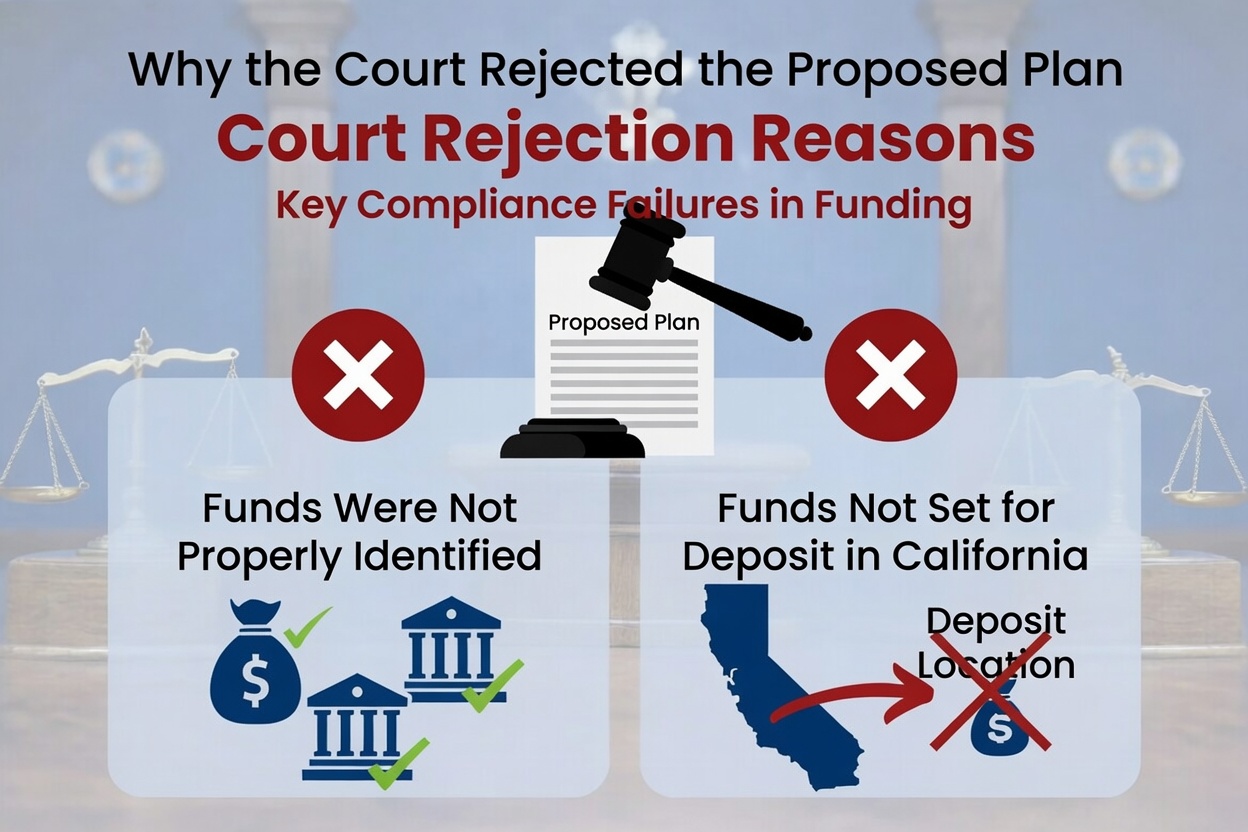
    Why the Court Rejected the Proposed Plan

    Funds Were Not Properly Identified and Not Set for Deposit in California

    The judge found that the plaintiff’s proposed order to deposit funds into a blocked account contained multiple legal defects:

    • The funds were labeled as belonging to “TL4J Finley Mathieu Account,” a non‑party entity not authorized under California law.
    • The proposed blocked account was located at Flatirons Bank in Colorado, despite Probate Code requirements that minor settlement funds be deposited in an FDIC‑insured account within California.
    • The structure resembled a Qualified Settlement Fund (QSF) even though defendants had explicitly rejected the use of a QSF during mediation.
    • The order lacked clarity regarding withdrawal procedures, oversight, and disposition of funds, rendering it too vague for approval.

    Court’s Direction Moving Forward

    Plaintiff Must Submit New Briefing and Orders

    The judge ordered the plaintiff to file:

    • New briefing and proposed orders for the disposition of settlement funds
    • A new proposed minor’s compromise order
    • A new proposed order to deposit funds in a blocked account

    All must be filed no later than July 17, 2026 and must:

    • Clearly identify that the funds belong to Finley Mathieu
    • Specify deposit into an FDIC‑insured California financial institution
    • Provide detailed instructions for scheduled withdrawals
    • Comply fully with Probate Code §§3602, 3610, 3611, and 3604

    Special Needs Trust Likely Path Forward

    Court Signals Preference but Requires Statutory Findings

    The judge noted that, based on plaintiff’s representations—particularly concerns about Medicaid eligibility—a special needs trust may best protect the minor’s interests. If plaintiff pursues this option, the court will require evidence satisfying Probate Code §3604, including:

    • Proof of a qualifying disability
    • Demonstration of unmet special needs
    • Justification that the trust funding amount is reasonably necessary

    Next Deadlines and Hearing

    Defendants to Respond; Court Sets August Review

    • July 31, 2026: Defendants must file objections or notices of non‑opposition
    • August 7, 2026 at 10:00 a.m.: Further hearing on the minor’s compromise and proposed orders

    Bottom Line

    Settlement Funds Remain Frozen Until Court Approves a Legally Compliant Plan

  • 🔥When Google’s AI Flags It Before You Finish Breakfast☕◆🥣

    This morning, after a few bites of breakfast, I typed a simple question into Google’s AI. Nothing formal. Nothing planned. Just a quick check to see whether my instincts matched what a mainstream AI system would say.

    The Question I Asked Google’s AI About Cioppa’s Press Release

    To make the test clean, I pasted the exact paragraph from the August press release — no edits, no commentary:

    “reallocate capital from a slow‑moving annuity into the best‑performing asset class of the past decade… Our Structured Strategy helps people reallocate capital…”

    Google AI’s response came back instantly — no hesitation, no hedging, no “it depends”:

    “Yes, this statement strongly risks being legally classified as providing investment advice.”Google AI Search Result

    Sources Google AI Cited

    • SEC.gov – Investment Advisers Act of 1940
    • NASAA – State securities regulators’ three‑prong test
    • LII (Cornell Law School) – Legal definitions and commentary

    🔭Why Google AI Flagged It So Clearly

    🔍1. Advice About Securities or Asset Classes

    Google AI highlighted Cioppa’s line:

    “reallocate capital from a slow‑moving annuity into the best‑performing asset class of the past decade.”

    It concluded this is a direct recommendation about asset allocation.

    🔍2. In the Business of Advising

    Google AI pointed to:

    “Our Structured Strategy helps people reallocate capital…”

    This shows a formalized business offering, not a casual remark.

    🔍3. Receiving Compensation

    Google AI explained that factoring companies earn money from the transaction itself, satisfying the compensation prong.

    This wasn’t my interpretation. This was Google’s AI, citing SEC.gov, NASAA, and LII, and concluding that the August statement meets the legal definition of investment advice.

    This Was Not a Fleeting Thought — It Was a National Press‑Release Campaign

    Cioppa didn’t say this on a podcast. He didn’t mention it casually in an interview. He didn’t float it as a personal opinion.

    He put it into national press releases — paid, distributed, intentionally crafted messaging designed to reach consumers across the country.

    When you choose that medium, you’re not:

    • spitballing
    • musing
    • or thinking out loud

    You are:

    • making a public recommendation,
    • tying it to a commercial service,
    • and distributing it through a national marketing channel.

    SIDEBAR: How Business Wire Distribution Actually Works

    Business Wire isn’t a single website — it’s a national and international distribution network. When a company publishes a release on Business Wire, it is automatically syndicated across a broad array of downstream outlets. This includes:

    U.S. National Financial Platforms

    • Yahoo! Finance
    • Morningstar
    • NASDAQ
    • Benzinga
    • MarketWatch (via feeds)
    • AP News partner ingestion
    • Google News ingestion

    Regional & Local News Outlets

    Business Wire pushes releases into:

    • Regional newspapers
    • Local business journals
    • City‑level news aggregators
    • FinancialContent‑powered sites (hundreds of them)

    International Distribution

    Business Wire’s global network republishes releases across:

    • France (ZoneBourse, CentralCharts, Boursica)
    • Germany (Wallstreet Online, Manager Magazin, Comdirect)
    • Italy (ANSA, Il Giornale)
    • Netherlands (NovumPR)
    • Poland (PAP)
    • Czech Republic (CTK)
    • Denmark (Ritzau)
    • Finland (STT)
    • Hungary (MTI)
    • Slovakia (TASR)

    Why This Matters

    A Business Wire release is not a local communication. It is a national and international broadcast, typically reaching dozens to hundreds of outlets automatically.

    For regulatory purposes, this means:

    • The message is public,
    • Intentionally distributed,
    • Commercial in nature,
    • And designed to influence consumer behavior at scale.

    In other words: A Business Wire release is treated as a formal, national‑level corporate communication — not a casual remark.

    Regulators treat press releases as formal statements of corporate intent.

    That’s why the AI flagged it so quickly — the medium amplifies the message.

    This Isn’t About Motive — It’s About Conduct

    Nothing in Cioppa’s public persona suggests he intended to cross regulatory lines. If anything, the August press release reads like someone who genuinely believed he was offering a modernized financial option.

    But intention doesn’t change the regulatory analysis.

    The language he used — in a national press‑release campaign — fits the legal definition of investment advice.

    Why Readers Can See It Too

    🔍1. The Recommendation Is Explicit

    “Reallocate capital” is not repositioning. It’s a call to action.

    🔍2. The “Structured Strategy™” Makes It a Business Activity

    Once you tie a recommendation to a branded service, you’re holding yourself out as being in the business of advising.

    🔍3. Compensation Is Embedded

    Factoring companies earn a discount rate and profit from the transaction. That satisfies the third prong.

    🔍4. The Audience Is Legally Vulnerable

    Structured settlement recipients are:

    • financially inexperienced
    • often injured
    • dependent on guaranteed income

    Regulators treat them as a protected class.

    🔍5. The BlackRock Name‑Drop Is a Suitability Shortcut

    “Bitcoin is embraced by BlackRock” is the kind of institutional‑validation language regulators scrutinize.

    🔍6. Our Steady Price Updates Show the Real‑World Impact

    We’ve kept a steady flame burning on this story — quietly, consistently — through performance updates and pricing analysis.

    The results speak for themselves.

    The Bottom Line

    When even a consumer‑facing AI — using SEC.gov, NASAA, and LII sources — instantly identifies the investment‑advice problem, it tells you how clear the issue is.

    And when you place that August national press release next to the performance data we’ve been updating for months, the risk to consumers becomes undeniable.

    This wasn’t a fleeting thought. It wasn’t a casual remark. It wasn’t repositioning.

    It was a nationally distributed investment recommendation tied to a commercial service.

    And the facts speak for themselves.

    • February 2023 — “Outside the Box Funding Sources Through Structured Settlements & Annuities” (Nick Lamagna Podcast) In this earlier interview, Cioppa describes structured settlement payment streams as “outside‑the‑box funding sources” for real estate investors — positioning guaranteed income as deployable capital long before the August 26, 2025 press release reframed annuity payments as something to be “reallocated” into Bitcoin. This episode shows the early version of the same narrative arc: reframing protected income streams as investment fuel.

  • The Bridge to Bitcoin — Expanded

    Latest Tale of the Tape

    A span measured only by arithmetic. Four products, four paths, one direction.

    Asset8/26/2025 Price6/24/2026 Price% Change
    Bitcoin (BTC)$111,802.66$59,360.00–46.9%
    IBIT$63.10$33.88–46.3%
    MSTR$351.36$94.26–73.2%
    BITX (2× Bitcoin ETF)$18.55$10.79–41.8%
    A person holds a press release about cryptocurrency investment amid Bitcoin price crash

    A Hobson’s Choice

    The numbers outline the choice without needing interpretation:

    • Lose almost half your money,
    • or lose almost three‑quarters of it,
    • or lose slightly less than half through a leveraged product whose long‑term math works differently than its label suggests.

    The only question left is the one you framed:

    How much of your hide are you prepared to see missing?

    The tape answers quietly.